Journey through the History of Delphi
At the foot of Mount Parnassus, in the striking natural landscape formed between two towering rocks, the Phocian cliffs, lies the Panhellenic sanctuary of Delphi and the most famous oracle of ancient Greece. Delphi was considered the omphalos (navel) of the Earth, where, according to mythology, two eagles sent by Zeus from the ends of the universe met to find the center of the world. For many centuries, it served as the spiritual and religious center and symbol of the unity of ancient Hellenism.
The history of Delphi dates back to prehistory and the myths of the ancient Greeks. According to tradition, there was originally a sanctuary dedicated to the female Earth goddess, with its guardian being the fearsome serpent Python. Apollo killed Python, and his own sanctuary was founded by Cretans who arrived at Kirra, the port of Delphi, accompanied by the god, who had transformed into a dolphin. This myth of Apollo’s domination survived in festive representations held at Delphi, such as the Septiria, the Dolphins, the Thargelia, the Theophania, and, of course, the famous Pythia, which were held to commemorate the god’s victory over Python and included musical competitions and athletic events.
The oldest findings in the Delphi area date back to the Neolithic period (4000 BC) and come from the Corycian Cave, a cave on Parnassus where the first worship rites took place. Inside the boundaries of the sanctuary, remnants of a Mycenaean settlement and cemetery were found. The traces of habitation are few and very fragmentary until the 8th century BC, a period during which the worship of Apollo definitively prevailed and the sanctuary and oracle began to develop. At the end of the 7th century BC, the first stone temples were built, one dedicated to Apollo and the other to Athena, who was also officially worshipped under the names “Pronaia” or “Pronoia” and had her own temple. According to literary sources and archaeological findings, Delphi also worshipped Artemis, Poseidon, Dionysus, Hermes, Zeus Polieus, Hygeia, and Eileithyia.
The sanctuary was connected with the institution of the Amphictyony, a federation of twelve tribes from Thessaly and Central Greece, which initially was a religious union but later acquired political significance. The Delphic Amphictyony had control over the property and operation of the sanctuary, as it appointed priests and other officials, always selecting them from the residents of Delphi. Under its protection and administration, in the 6th century BC, the sanctuary secured its autonomy against its contenders (First Sacred War), increased its Panhellenic religious and political influence, expanded in size, and reorganized the Pythia, the second most important Panhellenic games after the Olympic Games, which were held every four years.
The period from the 6th to the 4th century BC coincides with the golden age of the Delphic oracle. The oracles, which were considered the most reliable, were delivered by the Pythia, the priestess of the oracle, and interpreted by the priests of Apollo. Cities, rulers, and ordinary people rushed to consult the god and expressed their gratitude with splendid offerings, which gradually flooded the sanctuary. The fame of the oracle spread across the world, and its operations were believed to have shaped key historical events, such as the Deucalion flood, the Argonautic expedition, and the Trojan War. Its crucial role in the establishment of Greek colonies is also well documented.
However, the prestige and power of Delphi led to two more Sacred Wars, in the middle of the 5th and 4th centuries BC. In the 3rd century BC, a new political and military force emerged on the scene—the Aetolians, who expressed their dynamic presence in the sanctuary with various offerings. During the Roman rule (after 168 BC), Delphi was alternately favored and plundered by emperors, such as by Sulla in 86 BC.
The decline of the oracle began with the rise of the philosophical movement of rationalism in the 3rd century BC. However, the rituals of the oracle remained unchanged until the 2nd century AD, during the time of Hadrian. It was then that the traveler Pausanias visited the site, documenting in detail many remains of buildings, inscriptions, and sculptures. His thorough description greatly contributed to the reconstruction of the site. In 394 AD, a decree by the Byzantine emperor Theodosius I put an end to the oracle’s operation. With the rise of Christianity, Delphi became the seat of a bishopric but was abandoned in the early 7th century AD during the Slavic invasions. Gradually, the ancient sanctuary was covered and buried, and much later, a village called Kastri was built over its ruins. In modern times, the area became a destination for ancient history enthusiasts.
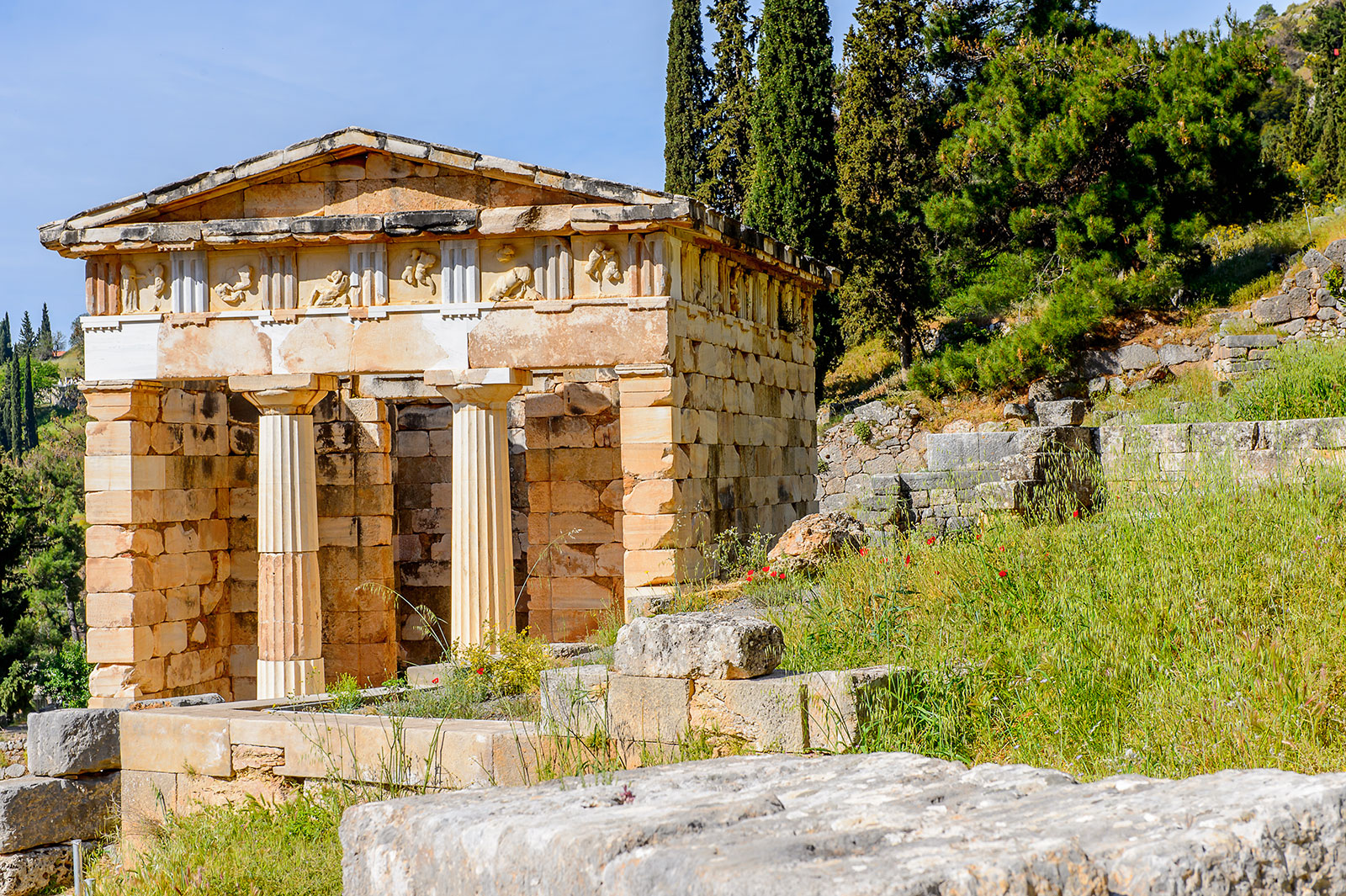
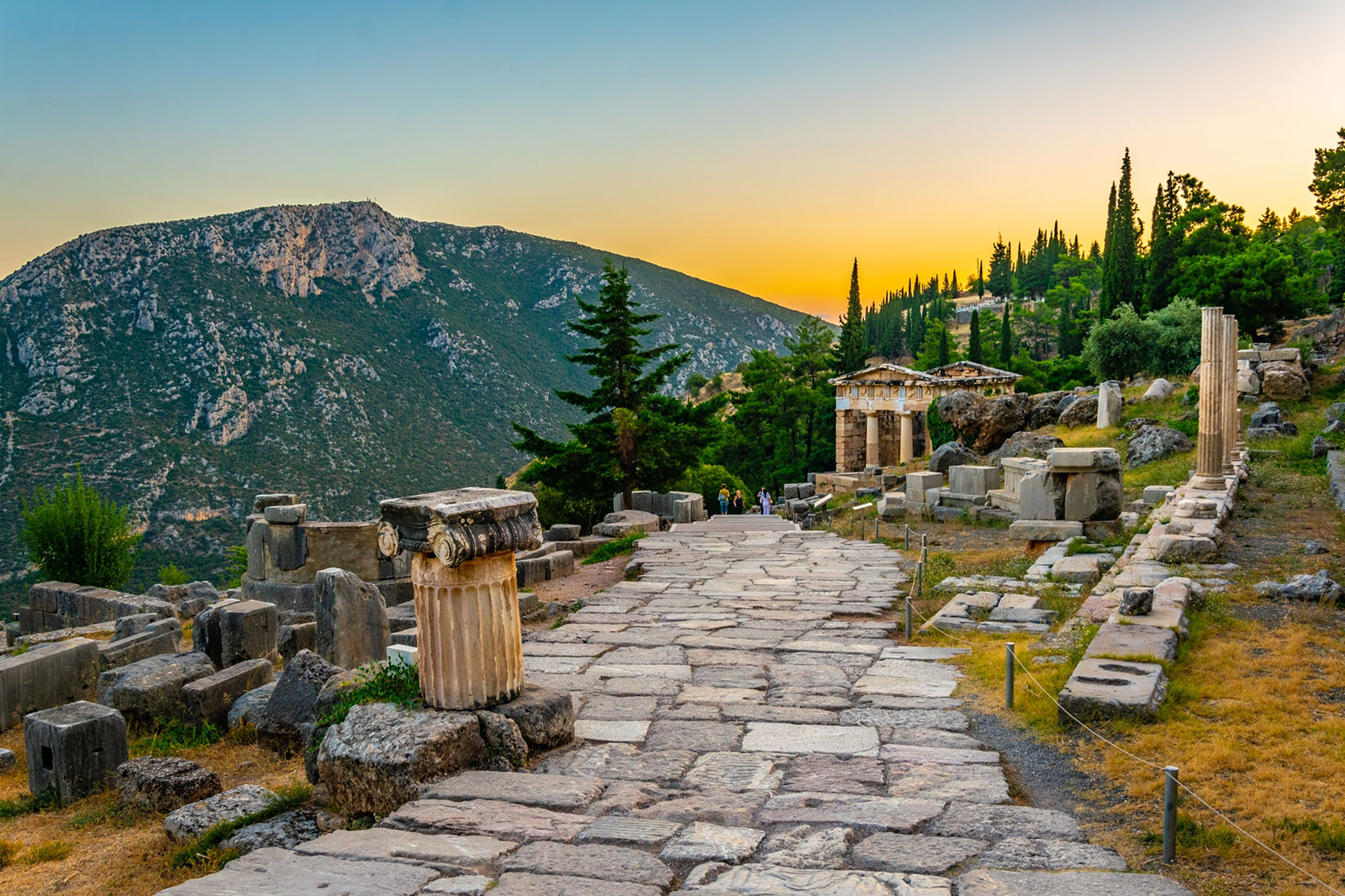
Archaeological research at Delphi began around 1860 by the Germans. In 1891, the French obtained approval from the Greek government to conduct systematic excavations, which began the so-called “Great Excavation” after the village of Kastri was removed. During this period, impressive findings were uncovered, including approximately 3,000 inscriptions revealing various aspects of ancient public life. Today, excavation and restoration activities continue at the two Delphi sanctuaries in collaboration between the Greek Archaeological Service and the French School. The only monument that had enough original material for almost complete restoration was the Athenian Treasury, which was restored by the French between 1903-1906 with funds from the Municipality of Athens. Other monuments that have been restored include the altar of the Chians, the Temple of Apollo, and the Tholos.
In modern times, Delphi became associated with the revival of the Delphic idea by the poet Angelos Sikelianos and his wife Eva, who presented two performances of ancient drama in 1927 and 1930, with the aim of creating a new spiritual “omphalos” of the earth.
Culture
Touring the Archaeological Site
The archaeological site of Delphi includes two sanctuaries, one dedicated to Apollo and the other to Athena, as well as other facilities, mainly athletic ones. Those arriving from Athens would first encounter the sanctuary of Athena Pronaia, i.e., the Athena located before the Temple of Apollo. Here, the famous Tholos stands, a circular building, along with the remains of three temples of the goddess, two of which were Doric and built on the same site, dating from the mid-7th century BC and 500 BC, and a newer, limestone temple built at the western end of the sanctuary after the earthquake of 373 BC.
Inside the sanctuary, there are altars dedicated to Zeus Polieus, Athena Ergane, Athena Zosteria, Eileithyia, and Hygeia, as well as remnants of a building attributed to the worship of the local heroes Phylacus and Autonous, who, in the form of giants, had repelled the Persian invasion of Delphi. There are also two treasures in the Doric and Aeolic style, with superstructures made of Parian marble. One of them, from the distant city of Massalia, preserved a characteristic capital with palm leaf motifs. The sanctuary also included a trophy commemorating the repulsion of the Persians, an outdoor statue of the emperor Hadrian, and a building known as “the house of the priests.”
Proceeding northwest, one would come across the gymnasium, an athletic training and educational center, with a palaestra and a complex of baths. The next stop was the Castalia spring, the sacred fountain of Delphi. Visitors would quench their thirst from their long journey and purify themselves before entering the oracle.
The central and most important area of the site always remained the sanctuary of Apollo. It was protected by a perimeter wall, with an entrance at its southeastern corner. From this point, visitors followed the Sacred Way, the main artery of the sanctuary, which led to the Temple of Apollo with its famous adyton, where the Pythia delivered the oracles. With the temple and the Sacred Way at its core, the sanctuary gradually grew and strengthened with monumental retaining walls. The sloping terrain of the site was organized into successive levels, framed by stoas (Attalus, Aetolians, Athenians), and accessible through corresponding gates in the perimeter. Among them, numerous offerings dedicated by Greek cities or wealthy individuals to mark various historical events or simply to express religious devotion to the god and his oracle can be found scattered throughout the site.
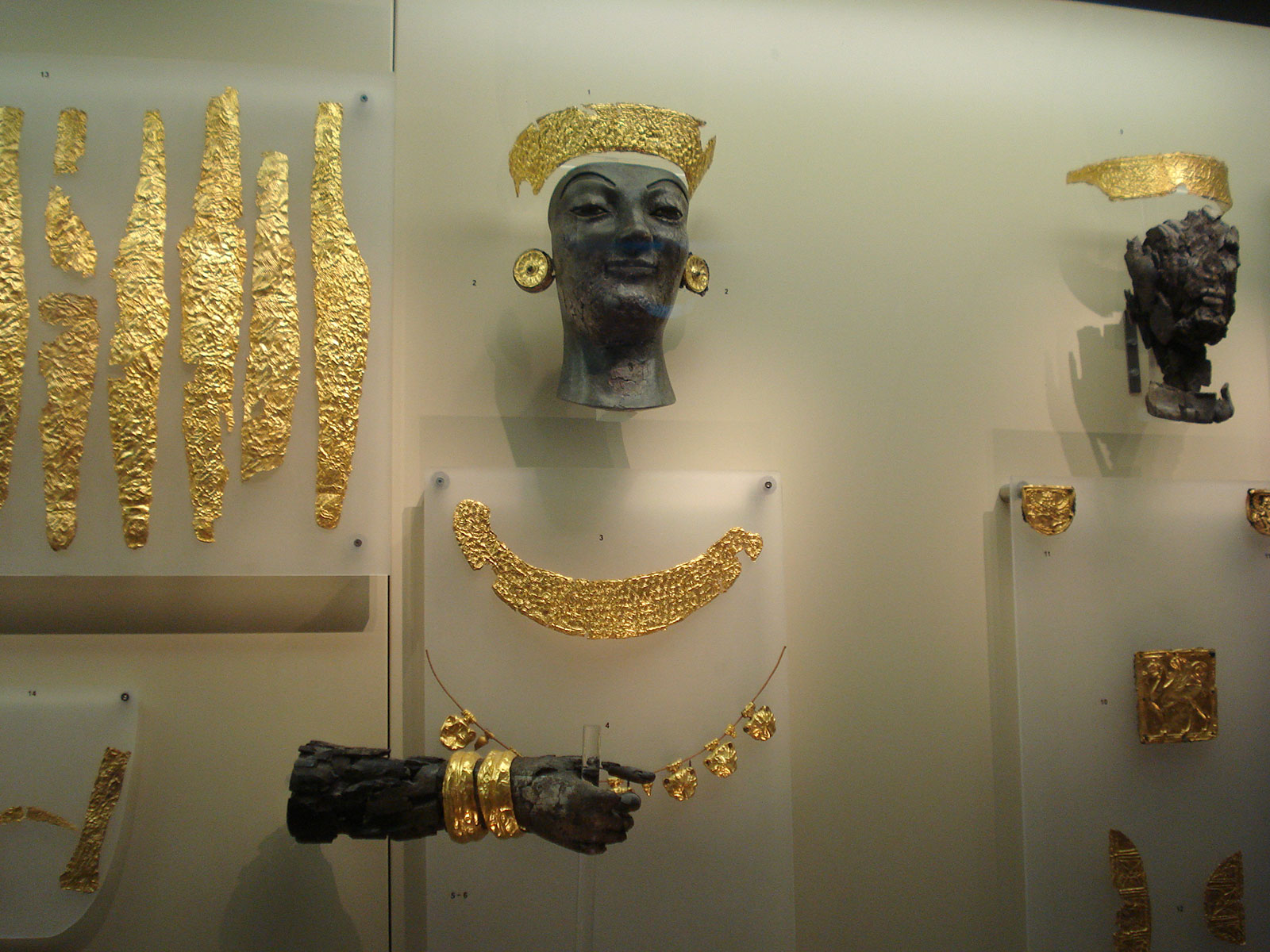
These works represent the technical skill and artistic progress of people from that era, from the depths of the East to the shores of the Mediterranean basin, and they also reflect the economic prosperity of the dedicants. They range from bronze or silver tripods (one of the symbols of the oracle) to complex, multi-figured sculptural groups made of marble or bronze. Among the architectural offerings, the treasuries, impressive and opulent, housed movable votives but primarily showcased the art of the dedicants’ homelands. The Sacred Way was lined with such offerings, placed densely along its length.
At the center of the sanctuary, on the large plateau formed by the great polygonal retaining wall, stood the magnificent Temple of Apollo. In front of its entrance, visitors could admire the impressive offerings primarily dedicated by wealthy individuals. Higher up, towards the northwest, stood the theater, where the dramatic and musical competitions of the Pythia took place, and even higher, outside the sanctuary’s perimeter, was the stadium, which hosted the athletic events.
Around and outside the two sanctuaries, the remains of the ancient settlement of Delphi are still visible. The settlement grew mainly during the Classical and Roman periods, and tombs from the corresponding cemeteries can also be found.