Holy Monastery of Agia Lavra
Located on the southwestern side of Kalavryta, just 5 kilometers from the historic town, the Holy Monastery of Agia Lavra stands as one of the region’s top attractions. A major national and religious pilgrimage site of paramount importance, it is also one of the oldest monasteries in Greek history.
Set in a majestic landscape, with Byzantine elements dominating the architecture, we are transported back in time to the era of the Byzantine Empire under Emperor Nikephoros Phokas, when the Athonite ascetic Eugenios founded the monastery, according to tradition. Despite the numerous destructions, fires, and pillages that marred its tumultuous history, the monastery rose again each time, even grander and more impressive.
The monastery’s history is forever tied to its immense contribution to the Greek War of Independence, as during the Ottoman rule it served as a center of national action.
Visitors can explore the monastery’s museum and relive its thousand-year history. The museum houses a stunning collection of treasures of incalculable national significance. Among the items on display are the sacred flag, weapons of the 1821 revolutionaries, the vestments and pastoral staff of Archbishop Germanos of Patras, the diamond-studded Gospel – a gift from Catherine the Great – the 1754 epitaph, the embroidered image of Saint George by “Kokona the Rologá”, significant religious objects, and a wealth of documents dating from 1688 to 1906.
Take a moment to rest under the ancient plane tree – a natural monument in itself – for reflection, emotion, and gratitude for this sacred Palladium of Orthodoxy. The Holy Monastery of Agia Lavra is not just a place of religious importance, but also a profound symbol of national heritage and resilience.
The Megalo Spileo Monastery
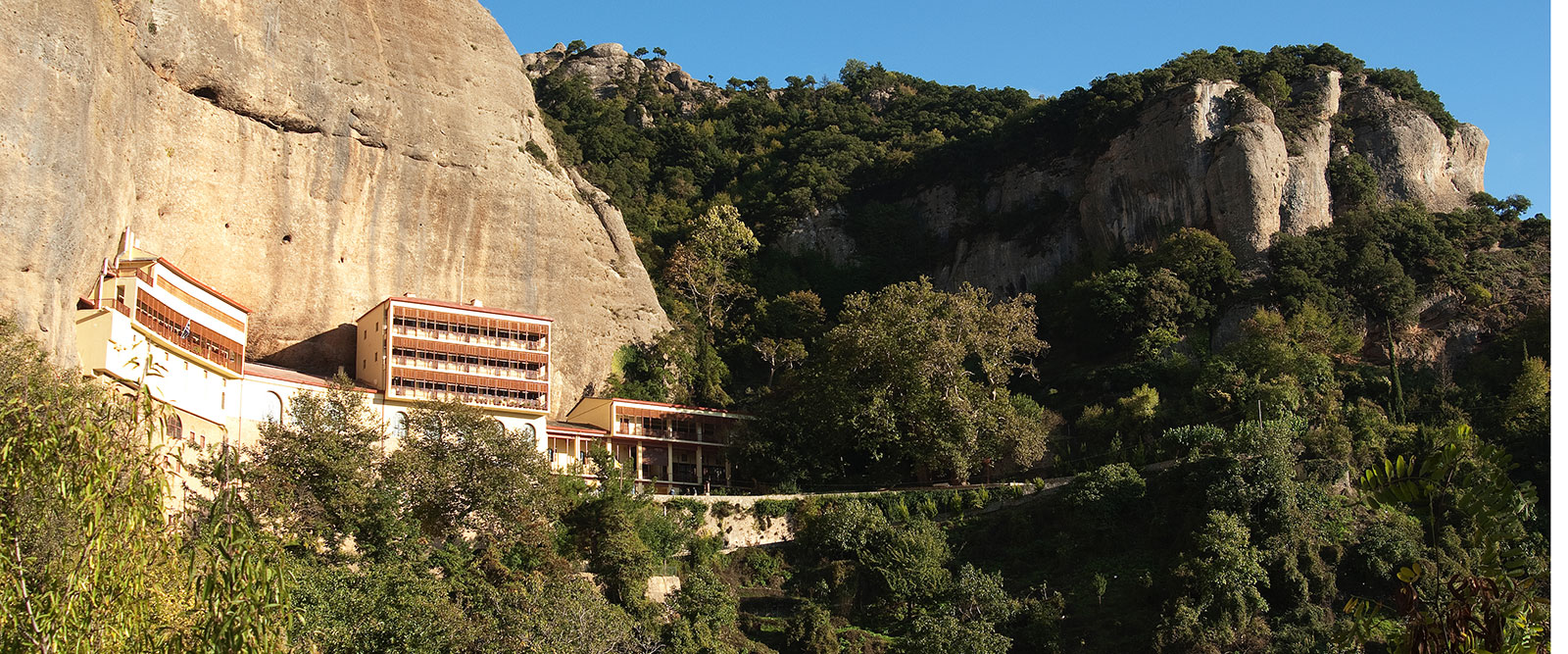
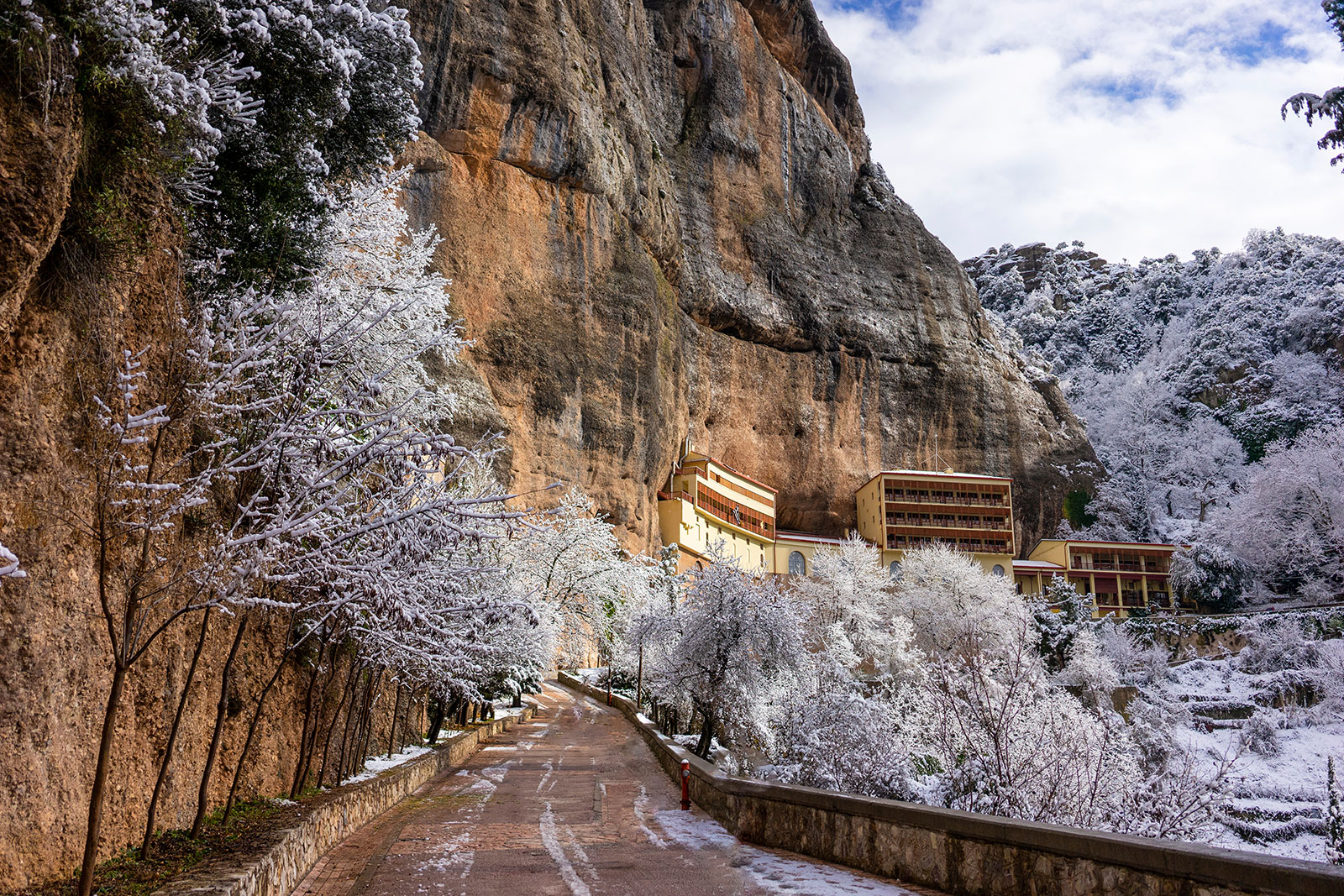
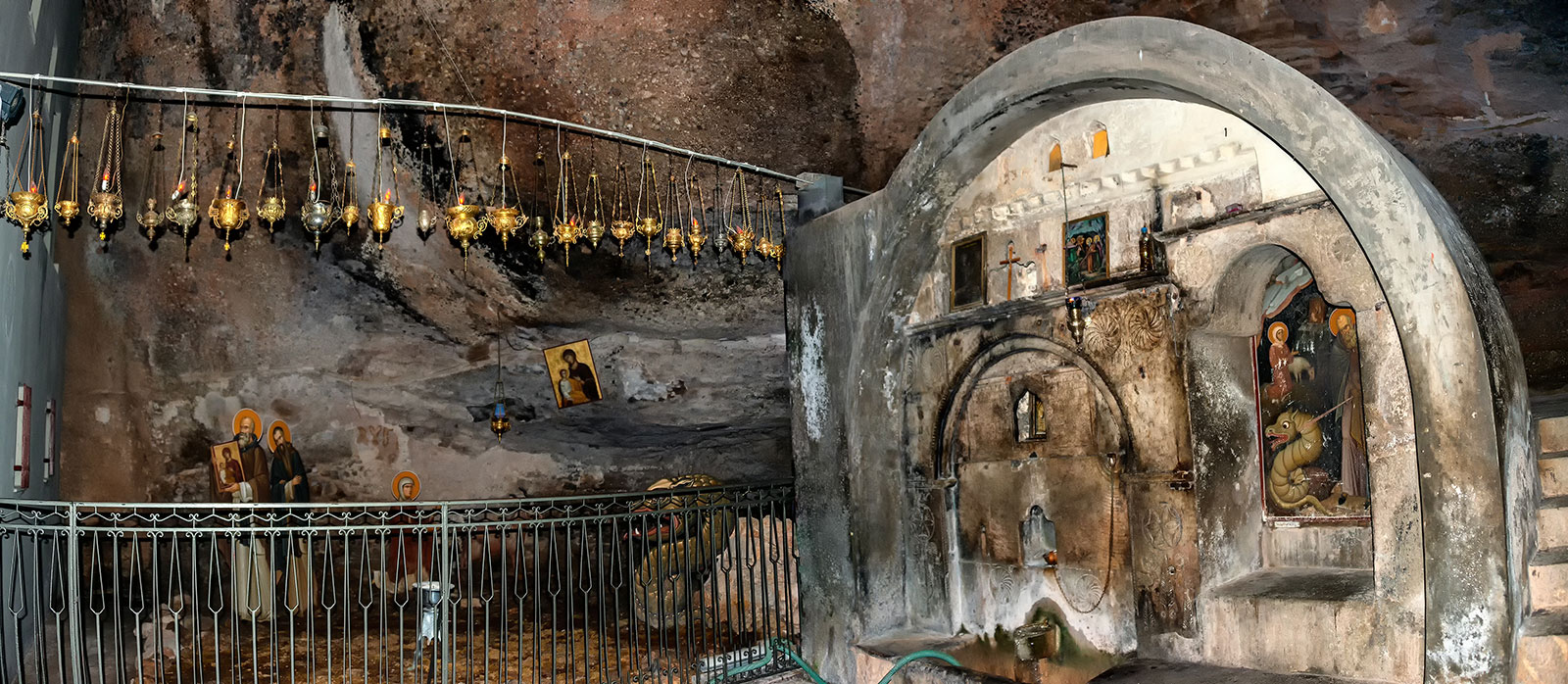
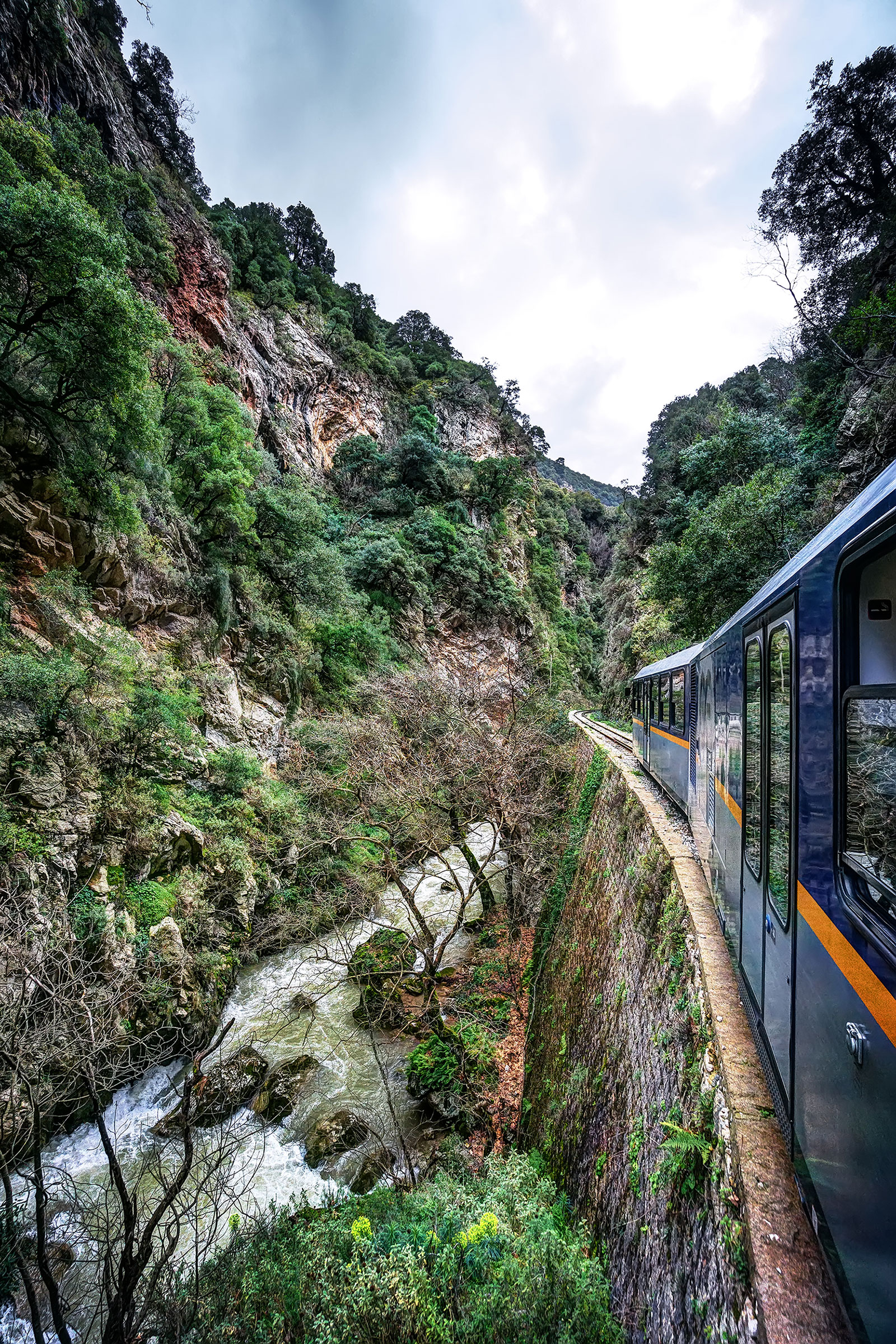
The Megalo Spileo Monastery is a historic and one of the most significant pilgrimage sites of Orthodoxy in Greece, located near Kalavryta. Situated ten kilometers northeast of Kalavryta, near the road connecting the National Road from Patras to Athens with Kalavryta, it is built into a large natural cave in the Helmos mountain range, above the steep gorge of the Vouraikos River, at an altitude of approximately 900 meters. It is also located close to the village of Kato Zachlorou, at a higher elevation. The monastery complex, a majestic structure with eight floors, blends harmoniously with the wild and impressive landscape of the area. The main church (Katholikon) of the monastery is carved into the rock, featuring a cross-shaped design and two narthexes. The main church contains murals from 1653, noteworthy marble mosaics on the floor, a wooden carved iconostasis, and other valuable artistic elements. The murals in the narthex date back to the early 19th century.
The monastery, considered the oldest in Greece, was founded in 362 AD by the Thessalonian monks, Symeon and Theodore. According to tradition, the two brothers saw separate visions while in Jerusalem, instructing them to travel to Achaia to find the sacred icon of the Virgin Mary, made of mastic and wax and painted by the Evangelist Luke. After several wanderings and revelatory dreams, they encountered a young shepherdess named Euphronía from the village of Galatá (Zachlorou), who led them to the cave where the sacred icon was found. The icon had been discovered by Euphronía through divine guidance and the direction of a goat from her flock that went to the cave for water from a spring there. This spring, later covered with marble, is known today as “The Maiden’s Spring,” a sacred site. The sacred icon was guarded by a fearsome dragon, which was struck by a lightning bolt when it attacked the monks attempting to clear the sacred space. The monks then constructed a small church and cells, with the help of the local people, who came to venerate the miraculous icon. Over time, the monastery became one of the most populous and prominent monastic communities and flourished greatly.
The monastery has faced numerous destructions due to fires, including in 840, 1400, 1640, and 1934, but the sacred icon was always miraculously preserved. Emperor Andronicus the Elder is said to have rebuilt the monastery in 1285 after a devastating fire. The monastery played a crucial role in the uprisings against the Turks, especially during the 1770 uprising, when the abbot of the monastery intervened to end a siege of Kalavryta, ensuring the safety of Turkish families. During the Greek War of Independence in 1821, the monastery was a symbol of Orthodoxy and resistance, never being captured despite several attacks, notably repelling the forces of Ibrahim Pasha in June 1827. The monks, led by Abbot Damaskinos, refused to surrender the monastery and gave a historic response to the Turkish demands, claiming they would either die fighting or be freed.
In modern times, the monastery was again destroyed by fire, and it was rebuilt in 1937 under the patronage of King George II, who also established its new wing. In December 1943, Nazi occupation forces looted the monastery and executed 16 people, including visitors, monks, and subordinates, and nine more monks were executed at a site called “Psilos Stavros.” The monastery was further rebuilt after World War II.
The monastery houses the miraculous sacred icon of the “Panagia Megalospilaiotissa,” which is attributed to the Evangelist Luke. According to historical accounts, the Evangelist Luke, after the death of Apostle Paul, worked in Achaia, possibly writing his Gospel and the “Acts of the Apostles” there. When he came to Achaia, he brought the sacred icon with him from Palestine, which was later hidden in the cave during Christian persecutions. It was rediscovered by Saint Euphronía in a miraculous way. The icon is a three-inch thick relief made of wax, mastic, and other materials, depicting the Virgin Mary holding the Christ child in her right hand and a Gospel in the other, with angels present around her. Despite multiple fires, the icon has been preserved and remains a revered object of veneration.
The Megalo Spileo Monastery stands not only as a spiritual center but also as a testament to the resilience and faith of the Greek Orthodox Church throughout the centuries.
Monastery of Makellaria
The Holy Monastery of Panagia Makellaria of Kalavryta is located in mountainous Achaea, in the northwestern part of the Municipality of Kalavryta, south of the village of Lapnagon, on a bare and steep rock, about 30 kilometers from the city of Kalavryta. It celebrates twice a year, on September 14th, the feast of the Exaltation of the Holy Cross, and more festively on August 15th, the feast of the Assumption of the Virgin Mary (15th of August).
According to an inscription from 1805, located in the narthex of the Monastery’s chapel, its founder is said to be the famous general of Justinian, Belisarius, who built the Monastery in 532 AD, likely to atone for the massacre of rebels during the famous “Nika Riots” in Constantinople. The original Monastery, dedicated to the Virgin Mary and called “Panagia Lithariotissa” or “Lithostrotitissa,” was destroyed by the Turks in 1458. According to tradition, due to its exceptionally fortified position, the Monastery became a refuge for the residents of surrounding villages, who, led by the fighter Gianno, resisted the Turkish attacks for many days. Despite the brave and fierce resistance of the defenders, the Turks eventually managed to capture it. After the horrific massacre that followed, the monks’ cells were filled with blood. Since then, the Monastery has been known as “Makellaria.” In 1784, the Monastery was renovated by the Hieromonk Neophytos.
The Monastery played a significant role during the Greek Revolution of 1821. Several of its monks fought against the Ottoman Empire. Near the Monastery of Makellaria, the victorious Battle of Kafkariá was fought on August 26-27, 1827, where the advancing forces of Ibrahim Pasha were repelled.
The Monastery’s katholikon (main church) is located atop the rock where the Monastery is built. It is dedicated to the Assumption of the Virgin Mary. It is a simple single-aisled church with a vaulted ceiling, lacking any particular architectural interest. Inside, there are two beautiful marble candle holders, made in 1813. Next to the katholikon is a newer but larger Byzantine-style church with a fine wooden carved iconostasis, dedicated to the Holy Trinity. In this church, the miraculous icon of “Panagia Makellariessa” is kept on a luxurious wooden shrine. There is also another small church within a cave, located slightly lower than the present-day Monastery, dedicated to the Transfiguration of Christ. There, water constantly drips from the rock above the Holy Altar, which the people believe to have healing power.
The Monastery’s most precious treasure is the miraculous icon of the Virgin Mary and the jar with the miraculous oil, which was found inside the rock when the Monastery was rebuilt after its destruction by the Turks in 1458. This jar is still preserved to this day. Significant relics of the Monastery, such as gilded reliquaries, Byzantine icons, and silver-plated Holy Gospels, were stolen during a robbery in September 1980. Additionally, the Monastery houses carbine pistols, yataghans, and guns of the local leaders and fighters who participated in the famous Battle of Kafkariá, where they defeated Ibrahim’s troops in 1827, as well as some uniforms of the fighters from the 1821 revolution.
The Monastery took its current form after World War II when it was renovated again by Hieromonk Agathangelos and Anthimos. After being closed for a long period, it began operating again on August 1, 2011, with the installation of two new nuns, Sister Markella and Sister Synglitiki, who took it upon themselves to revitalize the Monastery.