Archaeological Site of Olympia
In the western Peloponnese, in the beautiful valley of the Alpheus River, flourished the most renowned sanctuary of ancient Greece, dedicated to the father of the gods, Zeus. It extends across the southwestern slopes of the lush Kronios Hill, between the Alpheus and Cladeus rivers, which meet in this area. Welcome to Ancient Olympia!
Despite its isolated location near the western coast of the Peloponnese, Olympia became firmly established as the most important religious and athletic center in the Hellenic world. Here, the greatest competitions of ancient Greece, the Olympic Games, were held every four years in honor of Zeus, a tradition with pan-Hellenic significance that has endured from ancient times to the present day.
The origins of the worship and mythical contests held in Olympia date back to the depths of time. Local myths regarding the powerful king of the area, the famous Pelops, and the river god Alpheus, reveal the strong connections of the sanctuary with both the East and the West.
According to the UNESCO World Heritage site, there is no archaeological site in the world with such a direct connection to the present reality as Olympia. The ancient stadium of Olympia, where the Olympic Games were held in antiquity, and the monumental Temple of Zeus, the largest in the Peloponnese, are just a few of the site’s remarkable attractions.
Culture Touring the Archaeological Site of Olympia
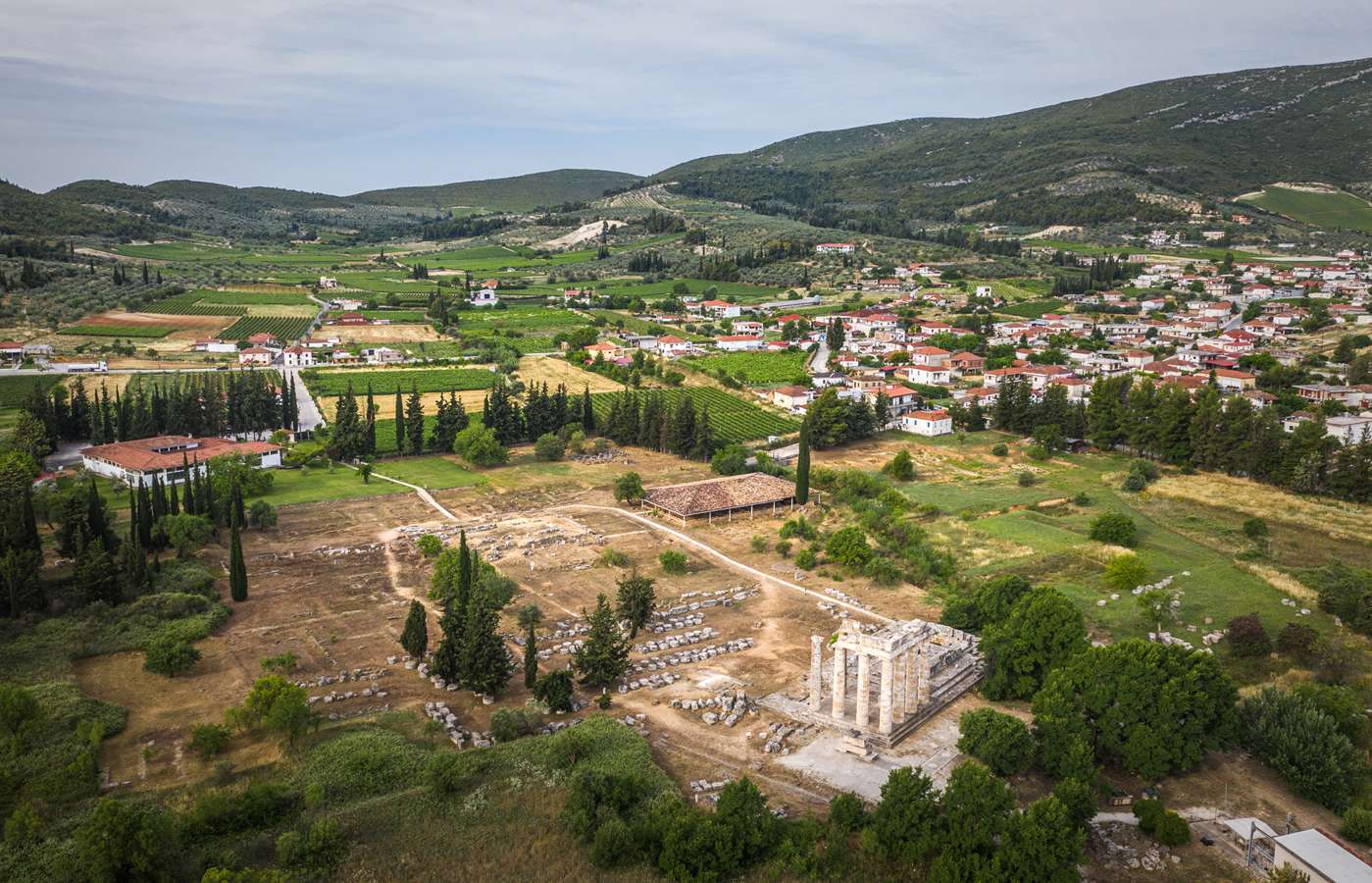
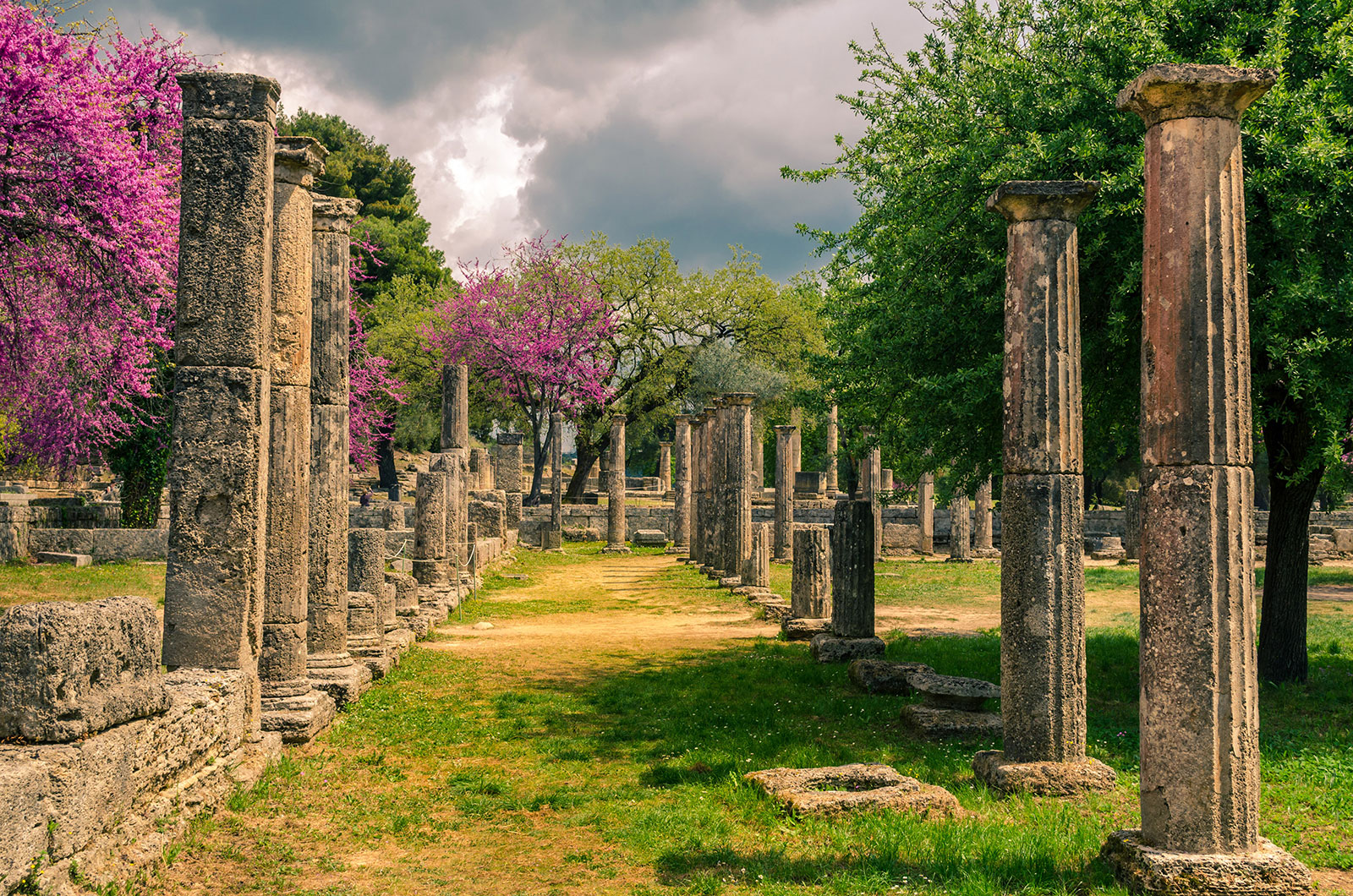
The archaeological site of Olympia includes the Sanctuary of Zeus, with the temples and buildings directly related to worship, and various structures built around it, such as athletic facilities used for the preparation and execution of the Olympic Games, auxiliary buildings for utility and administration, as well as secular buildings.
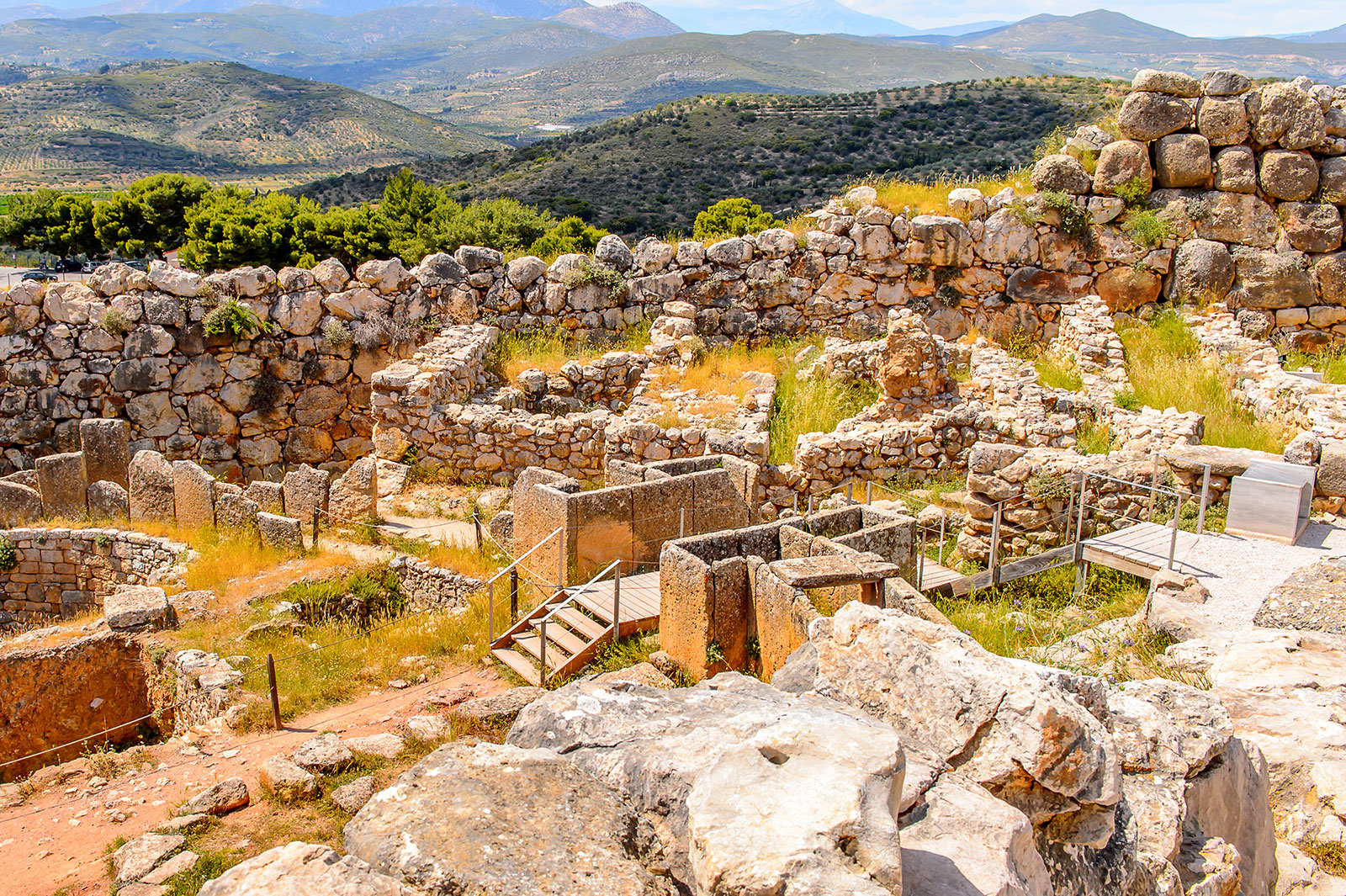
The Altis, the sacred grove, occupies the central part, and within it develops the core of the sanctuary, with the temples, treasuries, and the most significant buildings of the area. It is separated from the surrounding area by a wall, which, by the end of the 4th century BC, had two gates on its western side and one to the south, while its eastern boundary was the Stoa of Echoes, which separated the sacred area from the stadium. During the Roman period, the wall was expanded, and two monumental propylaea were created on its western side.
In a prominent position within the sacred area stands the giant Temple of Zeus, and to the north, the older Temple of Hera. On the northern side was the Temple of Rhea-Cybele, dedicated to the mother of the gods, and behind it, at the foot of Kronios Hill, are the treasuries dedicated by Greek cities, primarily colonies. To their west stands the Nymphaeum, the magnificent waterworks dedicated to the sanctuary by Herodes Atticus.
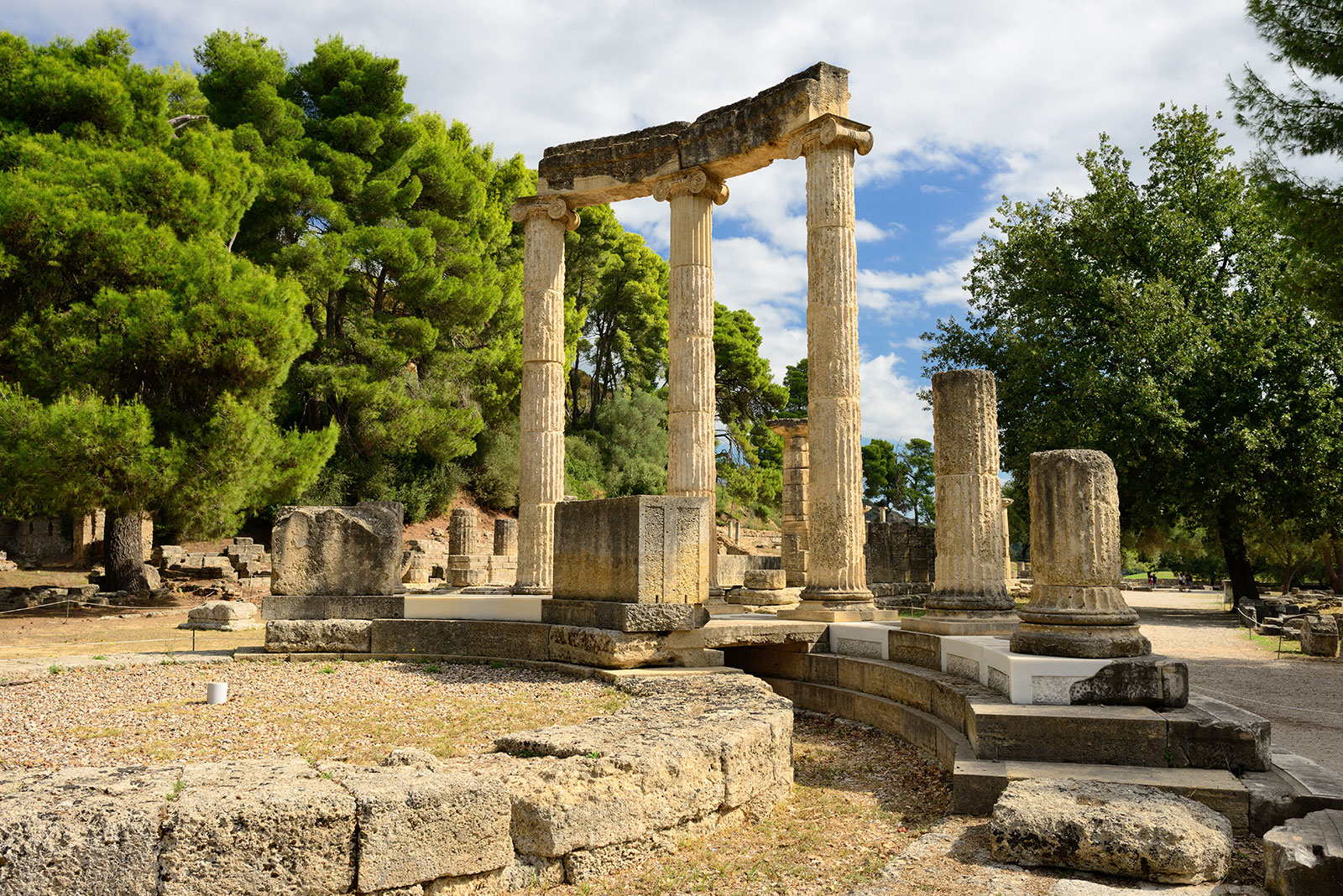
Within the Altis, there was also the Pelopion, a tomb monument dedicated to the hero Pelops, the Prytaneion, which was the seat of the sanctuary officials, and the Philippieion, the elegant circular building dedicated by King Philip II of Macedon.
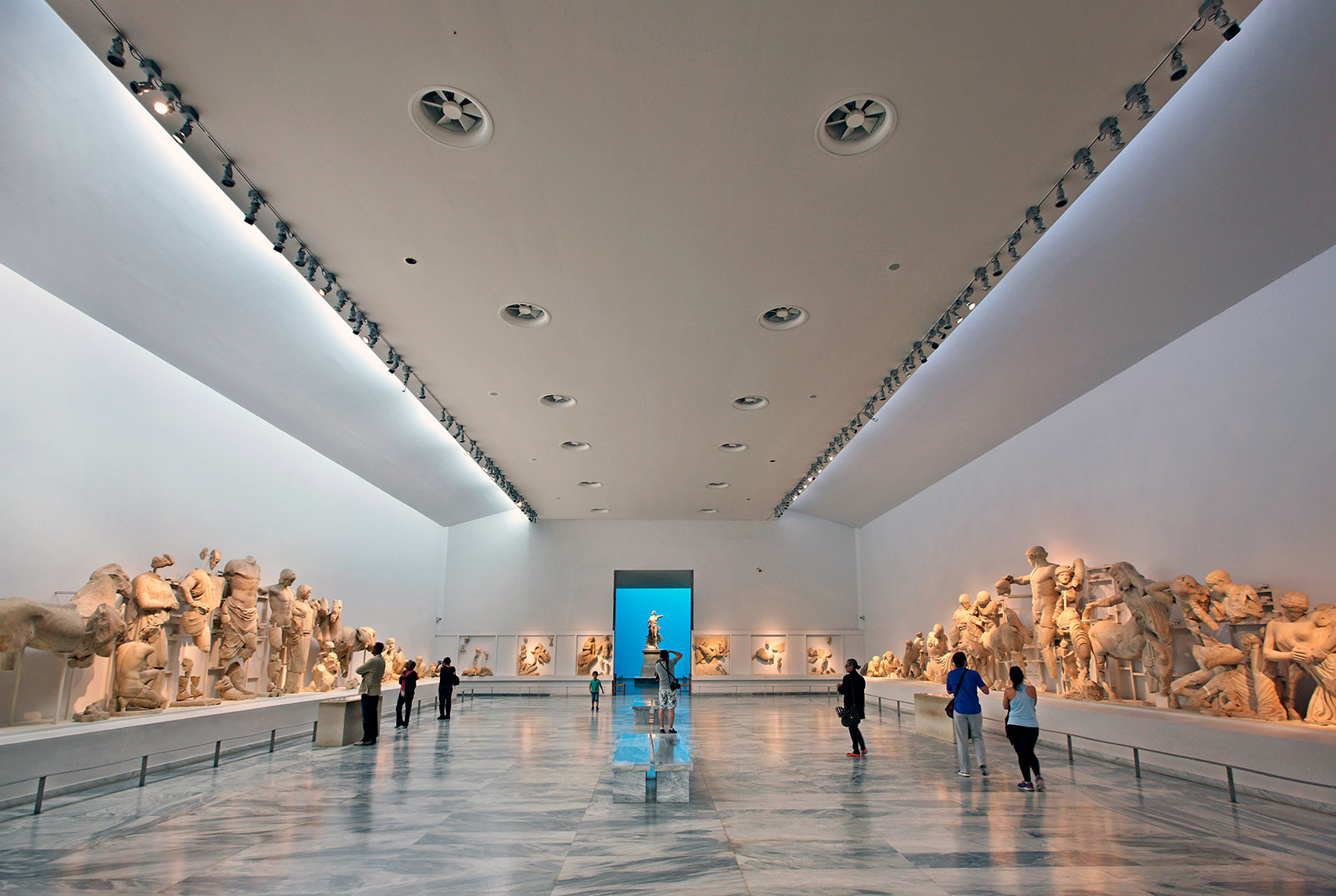
In ancient times, to the southeast of the Heraion (Temple of Hera), there was also the large altar of Zeus, a very important monument, but no traces remain, as it was formed by the accumulation of ashes and disintegrated when the sanctuary ceased to function. The remaining area within the wall was filled with altars, statues of gods and heroes, statues of Olympic victors, and dedications from prominent individuals and Greek cities, among which was the famous Nike of Paeonius, which you can admire at the Archaeological Museum of Olympia.
Outside the southern wall of the Altis, there is the Bouleuterion, and further south, the South Stoa, which served as the southernmost building of the wider sanctuary and the main entrance to the sanctuary from that side. In the western part of the site, there are buildings serving the sanctuary’s staff, athletes, and official visitors, separated from the Altis by the Sacred Way: the gymnasium and the palaestra, training areas, the workshop of Phidias, which was transformed into a basilica during the Early Christian period, the Greek baths with the swimming pool, the Roman baths, the Theekoleon (residence of the priests), the Leonidaion (a guesthouse for the officials), and the later Roman guesthouses.
To the east of the Altis stretches the stadium, where the Olympic Games took place. In antiquity, south of the stadium, there was also the hippodrome, of which no trace remains today because it was swept away by the Alpheus River. In the same area, there are architectural complexes of baths and villas, such as the famous villa built by Nero when he stayed in Olympia to participate in the Games.
Temple of Zeus
The magnificent Temple of Zeus was the most important building in the Altis in Ancient Olympia and occupied a prominent position in the center of the site. It was the largest temple in the Peloponnese and is considered the perfect expression, the “canon,” of Doric temple architecture. It was built by the Eleans in honor of Zeus, using spoils from their victorious wars against the cities of Triphylia.
Its construction began in 470 BC and was completed in 456 BC. This date is confirmed by an inscription of the Lacedaemonians, who, after their victory over the Athenians and their allies in the Battle of Tanagra (457 BC), dedicated a golden shield that was displayed beneath the central apex of the temple’s pediment. The architect of the temple was Libon of Elis, though the artist of the pediments remains unknown. The temple is oriented east-west and is peripteral, with six columns on the short sides and thirteen on the long sides (9×13). The height of the columns was 10.43 m, and their lower diameter was 2.25 m. The columns and walls were made of local shell limestone and covered with white marble concrete, while only the sculptural elements of the pediments, the roof tiles, and the lion-head water spouts were made of marble.
The temple consists of a pronaos, naos, and opisthodomos. Both the pronaos and the opisthodomos are distyle in antis, and a mosaic floor dating to the Hellenistic period with a depiction of Tritons is preserved in the pronaos. In front of the entrance to the pronaos, in a small square area paved with hexagonal marble slabs, the crowning of the Olympic victors took place. The naos is divided into three aisles by two rows of double columns, with seven Doric columns in each.
At the back of the naos was the gold and ivory statue of Zeus, one of the Seven Wonders of the Ancient World. It was made by Phidias around 430 BC and stood over 12 meters tall. The god was depicted seated on his throne, holding a scepter in his left hand and a winged Nike in his right. His bare body was made of ivory, while his robe and throne were made of gold, with reliefs of mythological scenes. After the abolition of the Olympic Games, the statue was moved to Constantinople, where it was destroyed by fire around 475 AD. Its form is known to us from depictions on ancient coins and from the description of the traveler Pausanias (5.11).
The temple had a rich sculptural decoration, an excellent example of the severe style. The eastern pediment depicts the chariot race between Pelops and Oenomaus, with Zeus at the center as the god of the sanctuary and judge of the race, while the western pediment depicts the Centauromachy, the battle between the Lapiths and the Centaurs, with Apollo at the center. The twelve metopes, located six above the entrance of the pronaos and opisthodomos, depict the labors of Heracles, the mythical son of Zeus. The external metopes of the temple’s peristyle were unadorned. Later, 21 gilded bronze shields, dedicated to the temple by the Roman consul Mummius in honor of Zeus, were hung on these metopes in commemoration of his victory over the Greeks at the Isthmus (146 BC).
The central apex of the eastern pediment featured a gilded Nike by the sculptor Paeonius, while one gilded cauldron was placed on each of the side apices. The temple was severely damaged when it was set on fire by order of Theodosius II in 426 AD, and later, in 522 and 551 AD, it collapsed during two major earthquakes.
The first excavation of the monument took place in 1829 by the French mission, and its full uncovering was completed during the German excavations. The sculptural decoration has been largely restored and is on display at the Archaeological Museum of Olympia. Fragments from the relief metopes are housed at the Louvre Museum since the 19th century, when they were brought there by the French mission of Maison.
Temple of Hera
The Temple of Hera is one of the earliest examples of monumental temple architecture in Greece. It was built at the northwest corner of the Altis sanctuary, on the southern slopes of Kronios Hill, where a strong retaining wall was constructed for its protection. It was dedicated to the sanctuary by the people of Skillounta, an ancient city in Elis.
Pausanias mentions that it was built about eight years after Oxylus took the throne of Elis, around 1096 BC. However, this dating does not align with the temple’s actual chronology, which is later. According to one view, the first temple of Hera was built around 650 BC, was small, Doric, and had only a cella and pronaos, and around 600 BC, the opisthodomos and peristyle were added to it. Today, the prevailing view is that the temple was constructed around 600 BC with a unified architectural plan. Over time, it underwent several alterations, and during the Roman period, it was transformed into a kind of museum, housing some of the most valuable works of the sanctuary, including the famous Hermes of Praxiteles.
The temple is characterized by its heavy proportions, as it has a particularly elongated floor plan and
the arrangement of its columns in the form of a peristyle with six columns on the short side and sixteen columns on the long side. Inside the temple stood a wooden statue of Hera, created by the artist Polycletus.
The most impressive feature of the Temple of Hera is its highly specialized plan, reflecting both the temple’s important role in ancient Olympia and its ties to the sanctuary.