Half-day excursions
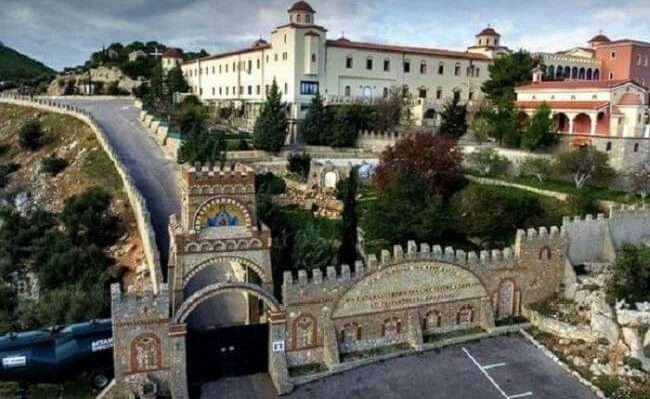
The Holy Monastery of Panagia Gorgoepikoou in Mandra (also known as Gorgoypikoou) is a 20th-century ecclesiastical institution and monastery located in the area of Mandra, Attica. It belongs to the Holy Metropolis of Megara and Salamina. It is a female monastery to which many miracles are attributed by the faithful, all of which are linked to the sacred icon of the Most Holy Theotokos. The monastery is situated on a hill that dominates the area, with a view of the Thriassion Plain and the Eleusis Bay.
The Holy Monastery of Panagia Gorgoepikoou is dedicated to the worship of the Virgin Mary, as it houses the icon of the Most Holy Theotokos, a replica of the original icon of the Virgin Mary found in the Docheiariou Monastery of Mount Athos.
The monastery is one of the newer buildings in Attica, as its establishment was decided in 1975 by the will of four monks who wanted to create a place for spiritual exercise and prayer in the region. The monastery is a conventual community for women and belongs to the Holy Metropolis of Megara and Salamina. It is located in the area of the Thriassion Plain and celebrates on September 8th, on the feast of the Nativity of the Virgin Mary.
The sacred icon of Panagia Gorgoepikoou was painted on Mount Athos before 1900. The image depicts the Virgin Mary holding the Divine Child in her arms, sitting like on a cherubic throne, with a gentle smile, sweet eyes, and a faint smile on her lips. According to sacred tradition, around 1800, a monk from Mount Athos traveled to Asia Minor, where Athonite monasteries had dependencies, to sell painted icons. Among these icons was the one of the Virgin Mary with the title Gorgoepikoou. The icon was bought in the city of Smyrna by a devout family, and over the years, it was passed down to the firstborn. Eventually, it came into the hands of Ifigeneia Anapliotou.
One day in 1907 – when Ifigeneia was still an infant – the parents were having lunch on the lower floor of their house when a loud noise came from the upper floor, where the crib with the baby was. Anxious, they saw that the icon had moved on its own from the iconostasis and had stood upright on the crib’s railing while the baby was asleep. They called the priest and held a solemn prayer to the Virgin Mary. This event was celebrated every year on the same day in commemoration of that miracle, on September 8th, with an all-night vigil in their home.
During the uprooting of the Greeks from the Ionian region, the family brought the miraculous icon to Greece, covered with a white cloth. Initially, the refugees arrived in Mytilene and, after a few years, ended up in Athens. The icon proved to be very miraculous. On September 8th, many years after the family’s arrival in Greece, a fire broke out in the room where Ifigeneia kept the icon. Many items were completely burned, except for the icon of the Virgin Mary, which remained unharmed amidst the flames.