Ancient Messene
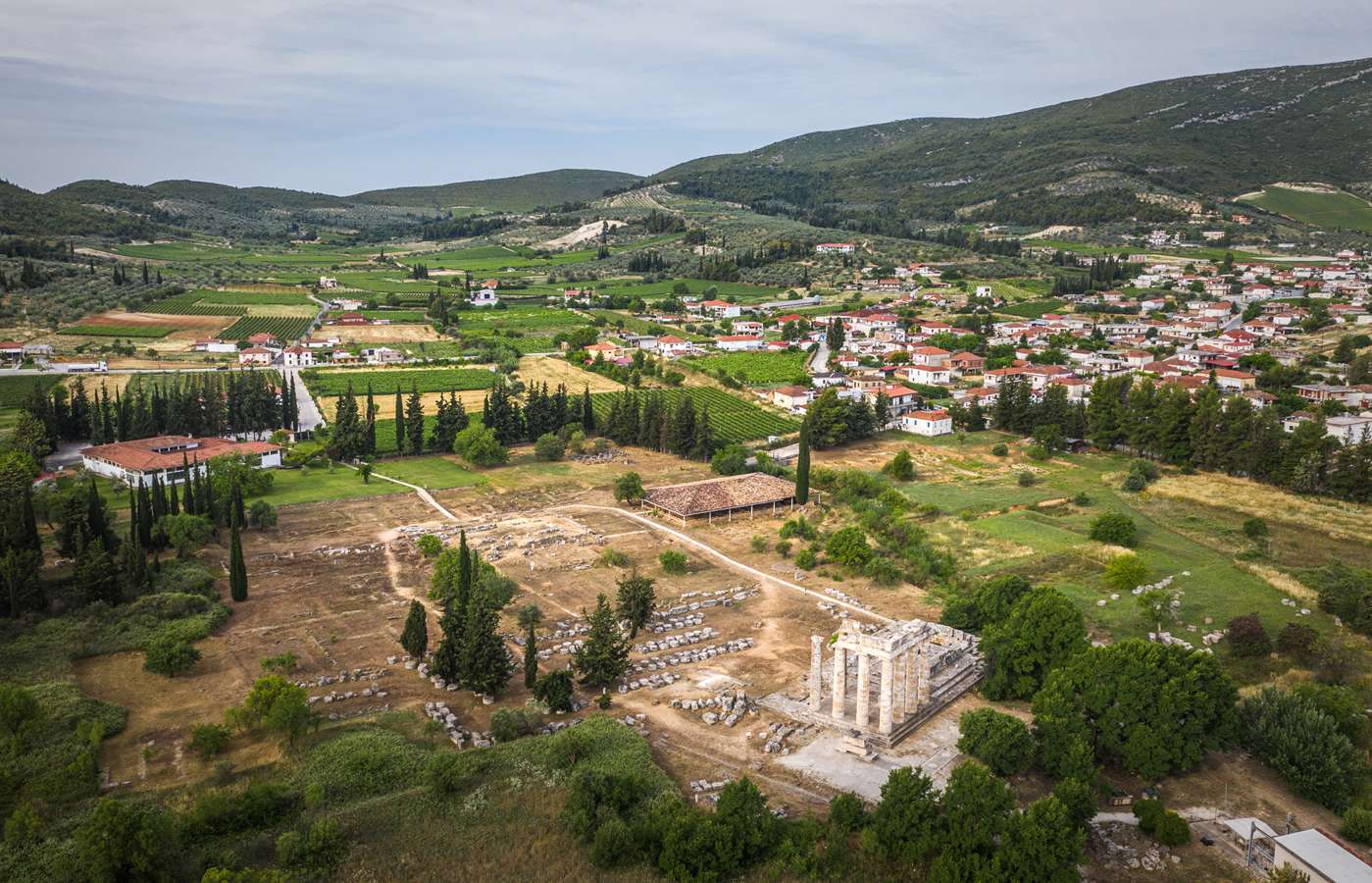
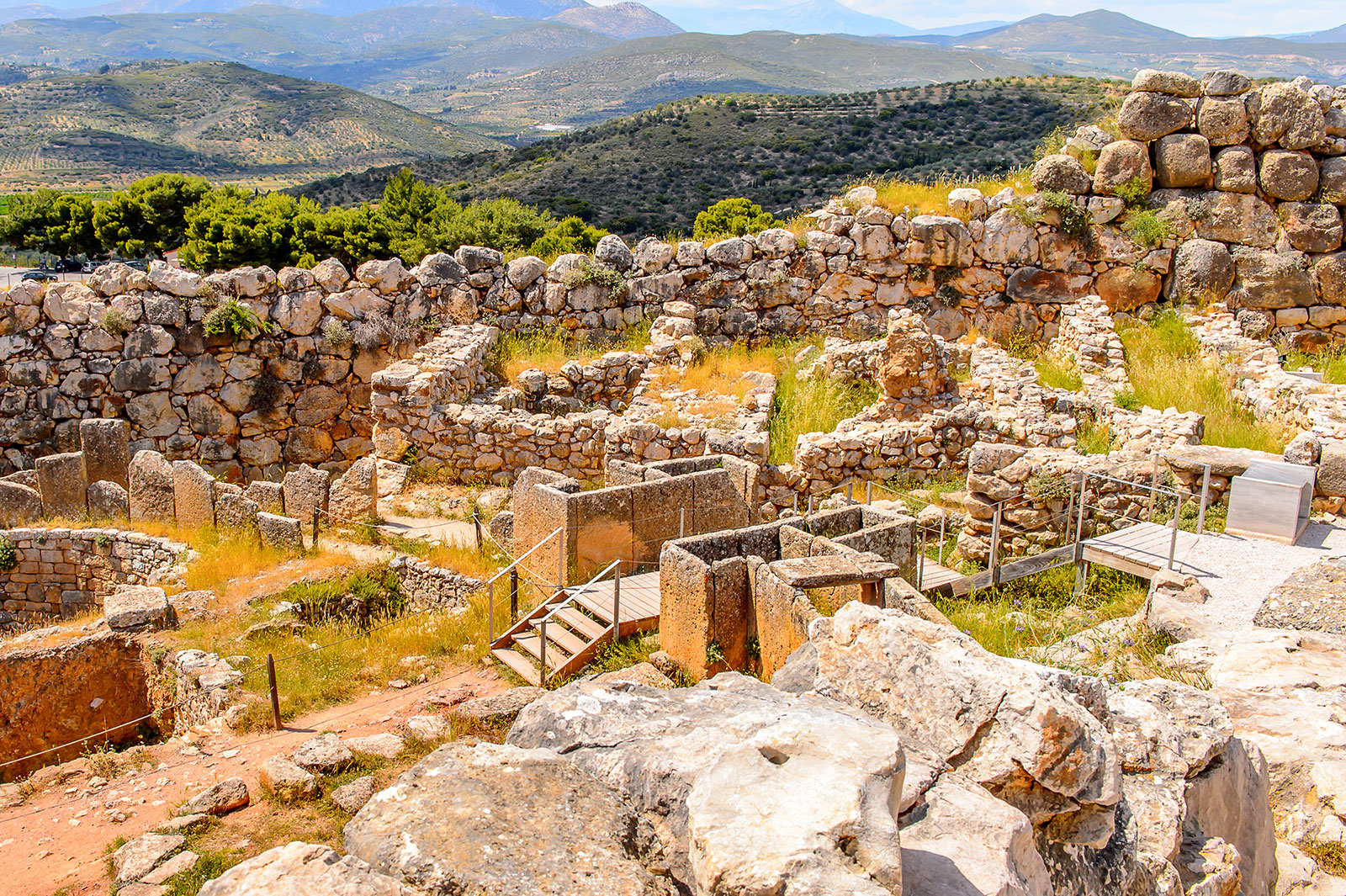
Located 30 kilometers from Kalamata, on the western foothills of Mount Ithome, near the modern village of Mavrommati, lies Ancient Messene, one of the most important archaeological sites in Greece.
Ancient Messene has been excavated and gradually revealed since the time of the Revolution, and due to its size and significance, it provides fascinating insights into its glorious past. It is a rare archaeological site where visitors are impressed by the sight of temples, houses, walls, and public buildings, which are preserved at such great heights and in excellent condition. The city was built in 369 BC by the Theban general Epaminondas, following the Battle of Leuctra, where he defeated the Spartans, invaded Laconia, and freed the Messenians from Spartan domination. It is said that this particular site was chosen for the city’s foundation after discovering the location of the will of Aristomenes, a Messenian hero, with the intervention of priests and seers. The city was named after the mythical, pre-Dorian queen of the country, who was the daughter of the Argive king Triopas and the wife of the Lacedaemonian Polycaon. According to Pausanias, Messene was deified around the 10th century BC and gradually became one of the city’s principal deities.
All buildings in Messene follow the same orientation and are part of a grid created by horizontal (east-west) and vertical (north-south) streets. This urban planning system is known as the Hippodamian plan, named after its original designer, the architect, urban planner, geometer, and astronomer from the 5th century BC, Hippodamus of Miletus. Notably, this predetermined pattern, based on the principles of equality, equal citizenship, and equal distribution—virtues of the democratic polity—is characterized by extreme geometric precision, and it adapts to the special geomorphological and climatic conditions of the location, harmoniously integrated into the natural environment. The core idea of the Hippodamian urban planning system, stemming from the ideal of democracy, was for all citizens to have equally sized and suitably placed plots, with access to public and sacred buildings and shared spaces, emphasized by monumental dimensions and rich decoration. On these very principles, in 369 BC, Theban Epaminondas and his Argive allies built the new capital of autonomous Messene, named after the first mythical pre-Dorian queen of the country, Messene, daughter of the Argive king Triopas and wife of the Lacedaemonian Polycaon.
According to tradition, the foundation of the sanctuary of Zeus Ithomatas at the summit of Ithome is also attributed to Queen Messene (Pausanias 4.26-33). Pausanias also informs us that by the reign of Glaucus (10th century BC), Messene had been deified and worshipped. It became one of the principal deities of the city, alongside Zeus Ithomatas. The temple dedicated to her was revealed in the southwestern part of the agora. It was a peripteral temple with 6 by 12 sandstone Doric columns. In the cella, there was a golden statue of the goddess and a fresco by Omphalion, a student of Nicias, depicting thirteen mythical kings and queens of the country.
Ancient Messene remained the cultural center of Messenia until 395 BC, when the invasion of the Goths under Alaric is thought to have dealt the final blow to the city.
Monuments of the Site:
- Theatre
The first monument one encounters when descending from the Museum toward the archaeological site is the theatre. It was also used for mass political gatherings. Inside the theatre, the meeting between King Philip V of Macedon and Aratus of Sicyon took place in 214 BC. According to a testimony by Livy (39.49.6-12), many inhabitants of Messene gathered in the city’s theatre, demanding that the famous general of the Achaean League, Philopoemen of Megalopolis, who had been captured by the Messenians in 183 BC, be brought there for public display. The auditorium is built on an artificial embankment made up of a strong semi-circular mound.
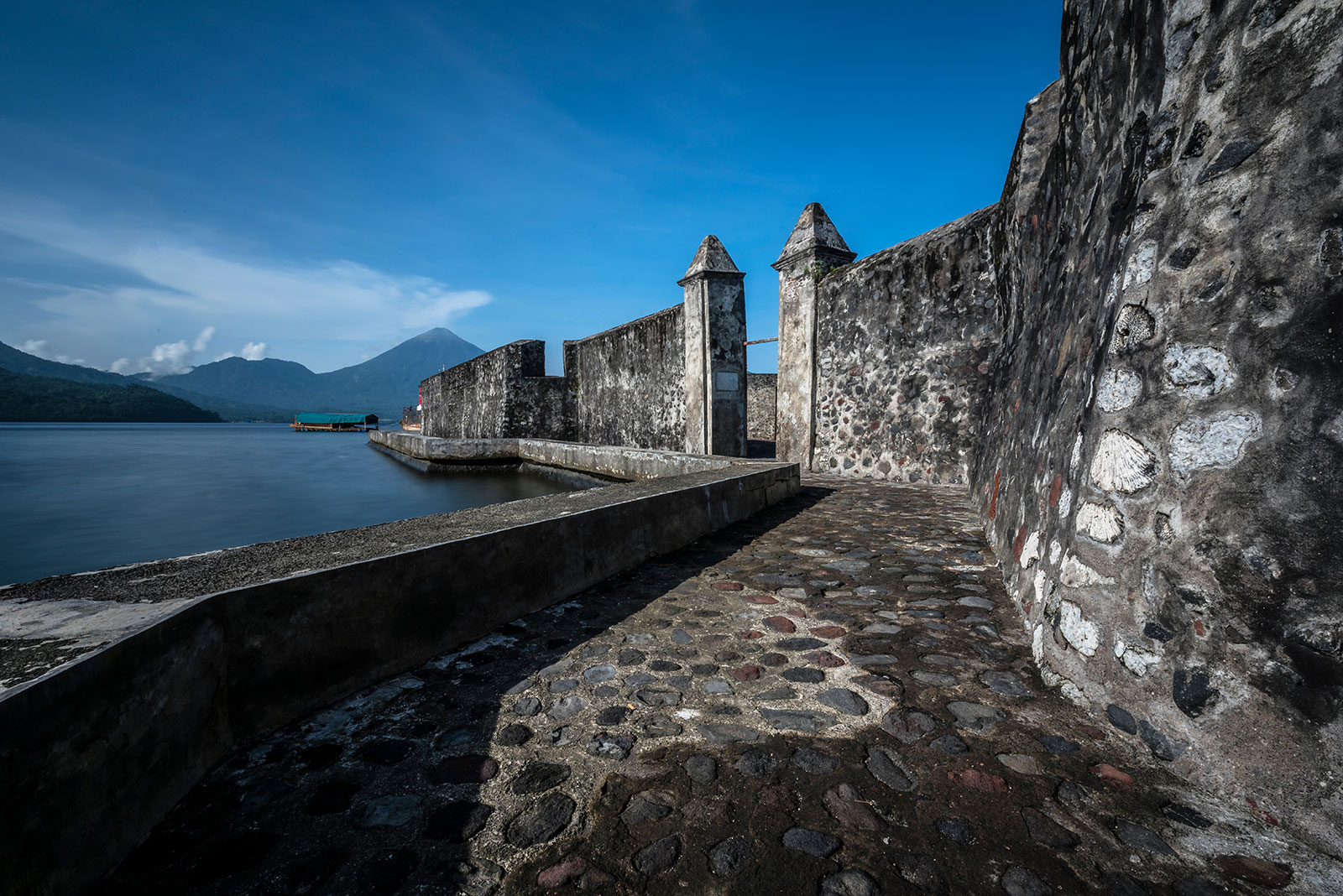
The fortress-like appearance is enhanced by the high, pointed gates with staircases leading up. These elements, along with the fact that the embankment of the auditorium was entirely visible and accessible from the outside, make the Messene theatre a remarkable structure, foreshadowing the colossal theatres and amphitheaters of the Roman period. A large portion of the western embankment of the auditorium remains, featuring pointed gates at regular intervals (approximately every 20 meters), which led with staircases to the upper tier. From there, descending staircases led to the orchestra and simultaneously defined the seating areas. The outer face of the embankment is constructed in the same manner as the towers and defensive walls of the city. The imposing wall of the eastern passage is also built with great care and is excellently preserved to a height of five meters, consisting of ten rows of rectangular blocks. It did not merely function as a support wall for the auditorium but also served as the northern wall of a large rectangular building, a scene structure measuring 31.46 x 8.07 meters. Similar architectural remains of a scene structure were found at the theatre of Arcadian Megalopolis. At the level of the scene’s foundation at Messene, three parallel grooves were uncovered, with continuous concave indentations for the wheels of a mobile stage used in the Hellenistic period. The existence of a mobile stage in ancient Greek theatres, known as “pigma” (compare with the word “para-pigma”), is confirmed for the theatre of Sparta as well. Just behind the northern wall of the scene structure at Messene, there is a paved ascent leading to the middle tier of the auditorium. This adds to the architectural originality of the Messene Theatre.
- The Fountain of Arsinoe
Between the Theatre and the Agora, a large fountain was uncovered. The traveler Pausanias (4.31.6) informs us that the fountain of the Agora was named after Arsinoe, the daughter of the mythical king of Messene, Leucippus, and the mother of Asclepius. It received water from the Klepsydra spring. The fountain consists of an elongated basin about 40 meters long, situated just in front of a retaining wall. Between the basin and the embankment, there was a shallow portico supported by Ionic half-columns. A semi-circular platform (stage) at the center of the basin bore a collection of bronze statues. Two additional basins are situated at a slightly lower level than the first, symmetrically placed on either side of a paved courtyard.
The facade of the first construction phase of the fountain (late 3rd century BC) was closed with a Doric colonnade, which was removed in the second phase in the 1st century. In the third and final phase of repairs and modifications, square projections were added symmetrically at the ends of the front side during the reign of Emperor Diocletian (284-305 AD). The fountain followed the fate of other public and sacred buildings in the city, which were abandoned around 360-370 AD. The eastern part of the fountain remained standing and was used during the early Christian period, as evidenced by constructions in the upper basin and a watermill built in front of the fountain in the first half of the 6th century AD.
- The Agora
The Agora, and specifically the Temple of Zeus Soter, whose statue is mentioned by Pausanias (4.31.6), is associated with fragments of armor made of local sandstone with a plaster coating, which bear a winged thunderbolt of Zeus inside a rhomboidal frame. Fragments of Doric stone members and sculpted metopes come from the Temple of Poseidon, also mentioned by Pausanias. One of the metopes, from the 3rd century BC, depicts Andromeda bound to a rock and the dragon guarding her. Another, also from the 3rd century BC, shows a sea-horse with a colossal twisted fish-tail, carrying Triton or a Nereid on its back. In the Agora, there were also the temples of Aphrodite and the Mother of the Gods (Cybele). The Doric peripteral temple of the deified first queen of the country, Messene, has been uncovered. Pausanias describes the golden statue of the goddess and the fresco by Omphalion in the back of the cella. Along the southern side of the temple, there are a series of inscribed bases for the erection of bronze statues of Roman emperors (Claudius, Germanicus, Hadrian, Marcus Aurelius, Faustina the Younger, Galerius, etc.). Along the northern side of the same temple, seven columns were found bearing decrees concerning land distribution. Immediately to the north of the temple of the goddess Messene, the remains of the Bouleuterion are preserved. In front of its southern façade, there were columns with decrees in honor of Messene’s judges.
- The Sanctuary of Demeter and the Dioscuri
At the southwest corner of the Agora, near the Asclepius sanctuary, a building was uncovered, measuring 24×24 meters. Excavations within revealed the foundations of a religious structure dating from the 4th-3rd century BC, surrounded by annexes. Beneath the floors of the central building’s rooms, a vast number of terracotta votive plaques and figurines were uncovered, exhibiting a great variety of motifs. The plaques were discarded together with fragments of pottery and animal bones in cavities of the natural rock. It is certain that the sanctuary was initially dedicated to the worship of a Hero and later to a female chthonic deity—Demeter. Pausanias (4.31.10) mentions a “sacred temple of Demeter” and statues of the Dioscuri in Messene, which, according to the sequence in his description of monuments, must have been located to the south of the Agora near the Asclepius sanctuary, where the temple we are describing is situated. An inscription dating to the reign of Augustus-Tiberius from the Sebasteion also refers to repairs made to the sanctuary of Demeter.
- The Asclepius Complex
Pausanias presents the Asclepius sanctuary as a museum of works of art, mainly statues, rather than as a typical temple for the treatment of the sick. It was the most prominent space in Messene, the center of public life in the city, functioning alongside the adjacent Agora. Over 140 pedestals for bronze statues of mainly political figures and five platforms surround the Doric temple and altar, with many more placed along the porticoes. An almost square outdoor space (71.91×66.67m) is framed by four porticoes, open toward the central outdoor space. Each portico on the north and south sides had 23 Corinthian columns on the façade supporting an entablature composed of an Ionic architrave and a frieze with reliefs of bucranions alternated with floral motifs and rosettes. The porticoes on the east and west sides were similar but had 21 columns each. Inside each portico was a second row of columns with 14 columns on the north and south sides and 13 on the east and west.
In the eastern wing of the peristyle courtyard is a complex of three buildings: the small roofed theatre-like Ecclesiasterion, the Propylaea, the Synedrion or Council House, and the archive room of the Secretary of the Council. Along the western wing are a series of rooms—Houses—described by Pausanias as containing statues of various deities in the following order from south to north: Apollo and the Muses, Heracles-Thebes-Epaminedes (House N), Tyche (House M), Artemis Phosphoros (House K).
The northern wing of the Asclepius complex is capped by a large two-room building constructed on a high platform, accessible by a central monumental staircase that culminates at a propylaea with a pediment. The two rooms of the building, located on the right and left sides of the northern staircase and divided identically into five rooms, have been identified with the Sebasteion or Caesareion from the inscriptions. They were dedicated to the worship of the goddess Rome and the emperors. At the eastern end of the northern wing, at the level of the portico, stands a well-built building, House H, with a pedestal for statues. The construction of the Asclepius complex, which likely occurred immediately after the events of 215/14 BC, seems to be part of a grand architectural program modeled after the Athenian Acropolis, aimed at promoting the Messenians as a distinct nation in the Peloponnese with deep roots in the pre-Dorian and Dorian past. Almost all of the sculptures from the Asclepius complex were works of the sculptor Damophon, except for the golden statue of Messene and the iron one of Epaminondas (Paus. 4.31.10).
The majority of the central outdoor space of the Asclepius complex is occupied by the imposing Doric peripteral temple and its large altar. The temple was a peripteral Doric structure (6×12 columns) with a pronaos and opisthodomos, each with two columns between the antae. The external dimensions of the monument are 13.67×27.94 meters, and its total height was about 9 meters. It rests on a three-stepped crepidoma. On the eastern side, where the entrance is, there is a ramp. The cella, pronaos, and opisthodomos are built of local limestone, while the frieze is made of coated sandstone. The adyton was separated from the rest of the temple by a barrier, and at its depth was a sculptural religious composition. No votives associated with the healing god Asclepius were found. This supports the view that the Asclepius of Messene was not primarily worshipped for his healing powers but for his political role as the “Messinian citizen” (Paus. 4.26.7). He was placed within the genealogical tree of the mythical kings of Messene, both before and after the arrival of the Heracleidae in the Peloponnese. His mother was Arsinoe, daughter of Leucippus, who gave her name to the Arsinoe spring in the Agora.
a. The Ecclesiasterion
The Ecclesiasterion is a small theatre-like structure with a semicircular auditorium embedded in a rectangular shell and a circular orchestra, 9.70 meters in diameter, and a stage, 21 meters wide. It had a proscenium with three openings in the front and an exit staircase at the eastern end. The auditorium, shaped larger than a semicircle, is divided by a diazoma into upper and lower sections. The lower auditorium consists of eleven rows of stone seats, divided into three sections by two staircases. Two more staircases are located at the ends of the auditorium near the passages. Two entrances from the rising road to the east lead one to the orchestra with a descending staircase and the other directly to the diazoma between the lower and upper sections. The auditorium is surrounded by a strong retaining wall, which on the eastern and northern sides is built at the lower part with smooth upright stones and at the upper with pseudo-isodomic vaulted masonry, also found in Priene in Asia Minor. A covered staircase at the northwest corner of the retaining wall led to the upper diazoma from the northern side. At the eastern end of the orchestra, in front of the staircase leading to the eastern entrance, a large pedestal for an equestrian bronze statue in honor of the Hellenarch Saithidas was placed during the 2nd century AD.
b. The Propylaea
The Propylaea leads from the ascending eastern road to the lower-lying Asclepius sanctuary. Approximately in the middle of its length, it features a transverse wall with three doors: a larger central one and two smaller ones at the ends. The thresholds, with grooves for bolts and pivots, as well as for securing wooden doorposts, are preserved. To the east of the wall, there was a projection with four square pillars supporting Corinthian columns. Between the external columnar arrangement and the transverse wall with the triple doors, the floor is preserved, consisting of large square stone slabs. The projection, facing the Asclepius sanctuary, had two Corinthian columns. In late antiquity (3rd/4th century AD), this western projection was roughly repaired. The two dissimilar bases of Corinthian columns that remain in place originate from this later repair.
c. The Council House (Bouleuterion)
The Bouleuterion served as the primary gathering place for the councilors, representatives of the cities of autonomous Messene. It is nearly square in shape, measuring 20.80 × 21.60 meters, and had a four-pitched roof supported internally by four pillars. Three sides (north, east, and south) were enclosed with walls, 1.20 meters thick, while the western side had an entrance with two large triple doors. Along the three enclosed sides, a continuous stone bench with attached rubble masonry and sculpted lion-foot ends at the two sides is preserved. The total length of the bench (56 meters) allowed seating for 76 councilors, the number of members of the sacred senate.
d. The Archive Room
The Archive Room, measuring 16.45×19.75 meters, is fully constructed from the early Byzantine period. Given the public political character of the eastern wing of the Asclepius complex and its proximity to the city’s Bouleuterion, it is highly likely that it had a similar public function. According to an inscription found at the eastern entrance of the room, it is believed that it housed the Archive of the Secretary of the Council.
e. The First Sanctuary of Orthia
In the northwest of the Asclepius complex, a prostyle temple was uncovered, measuring 8.42×5.62 meters, with an almost square cella, a shallow broader pronaos, and a ramp in the middle of the four-columned façade. Around the temple’s façade, votive pedestals and inscribed columns were found. Along the northern side, two treasure hoards were discovered, containing bronze coins from Messene and silver coins from the Achaean League, dating from the mid-2nd century BC, as well as many terracotta figurines, mostly depicting Artemis the Huntress and Phosphoros. Fragments found to the north of the temple likely belonged to a marble votive statue of Orthia. After the construction of the Asclepius sanctuary, the Orthia temple ceased functioning, and the goddess’s worship was transferred to House K in the western wing of the complex, namely to the newer Artemisium.
6. The Eastern Road
The excavation along the eastern side of the Asclepius revealed a wide road running approximately 80 meters in length, oriented in a north-south direction. The road, 12 meters wide, features a built-in drainage system covered by large limestone slabs. It is bordered to the east by the Asclepius and to the west by a new building block that has yet to be excavated. At the intersection with the east-west road, which runs between the northern side of the Asclepius and the southern side of the Agora, a rectangular limestone base was uncovered, located 6.50 meters from the northeast corner of the Ecclesiastical Hall. This base has a circular notch in the middle of its upper surface, intended for the insertion of a column that was found nearby and installed in its place. The base measures 1.358 meters in height and 0.48 meters in lower diameter, with a four-line inscription on the upper part that reads:
Artemis
Dionysius
Dorias
Dionysodoros.
A stone figure of Hecate, 0.73 meters in height, depicting Artemis in three different forms around a small column, was found next to the inscribed column, where it had presumably been placed with the interposition of a crown.
a. The Christian Settlement
To the northeast and east of the Asclepius, along the road, a densely built-up settlement was uncovered, which forms part of a settlement from the 5th-7th centuries AD. This settlement extended into the Archive Hall of the Asclepius. The settlement continues south along the entire length of the eastern road and north into the Agora, where, according to scattered architectural pieces, there were at least two Early Christian basilicas. This settlement includes over forty Christian graves found periodically to the northwest and north of the Asclepius, containing characteristic period vessels and copper fibulae as grave goods. Scattered Christian graves were also discovered among the buildings, where fragments of marble Christian inscriptions were found. The walls of the Christian buildings were roughly constructed using various stones, architectural fragments (from the western wing of the Asclepius and surrounding Hellenistic buildings), and fragments of inscriptions and sculptures. Among these, the stone trunks of two female statues from the mid-2nd century BC stand out.
b. The Burial Enclosure
A funerary monument from the Hellenistic period in the form of a rectangular enclosure, consisting of a stepped base, upright stones, and a crown, with a series of box-shaped graves inside, was uncovered at the eastern boundary of the above road. According to an inscription on the crown, the monument belonged to six men and four women who likely fell during the capture of Messene by Nabis of Sparta in 201 BC. Messinian women had also participated in the battle against Demetrius of Pharia, the general of Philip V, who unsuccessfully tried to seize the city in 214 BC. Other individuals were later buried in the same enclosure, as evidenced by successive inscriptions of names, extending into the Imperial Roman period. The graves contained the skeletons of the buried men and women, accompanied by interesting and quite rich grave goods: pottery and glass vessels, metal objects, gold jewelry, and bone pins, some of which had faces, lyres, and pine cones as their ends. Three lead urns from the 1st century BC contained the remains of cremated bodies.
7. The Hierothysium
The traveler Pausanias, heading south from the Asclepius toward the Gymnasium, first mentions the Hierothysium, a building that housed statues of the twelve gods, a bronze statue of Epaminondas, and “ancient tripods,” which Homer refers to as “fireless” (Pausanias 4.32.1). The Hierothysium, as the word itself suggests, must have been closely related to the hierothytes, elected annual officials of the city responsible for celebrating the Ithomian and other religious festivals, who are mentioned in many inscriptions of Messene in relation to the agones (games) organizers and the chalydophoroi (cup-bearers). On the coins of the city, the tripod typically accompanies the image of Zeus Ithomatas, the main deity of Messene. The presence of a statue of Epaminondas among the twelve gods in the Hierothysium reflects the significance attributed to him by the Messenians as a hero equal to the gods and the founder of their city. Immediately south of the Asclepius, a large building complex began to be uncovered, approximately 50 meters wide and about 70 meters long.
The northern wall of this complex adjoins the Baths south of the Asclepius, while it is surrounded by roads to the east and west. The complex consists of several (more than four) distinct architectural units. The northwestern unit is characterized by the presence of an open colonnaded space with spacious rooms around it, which take the form of androns. The likely function of these rooms as spaces for ritual banquets aligns with the character of the Hierothysium as a dining hall for the hierothytes and agones organizers during religious festivals, as well as a space for the establishment of statues of the twelve gods and the statue of the hero-founder Epaminondas. The location of this building complex corresponds geographically to the position of the Hierothysium that Pausanias saw on his journey.
8. The Stadium and the Gymnasium
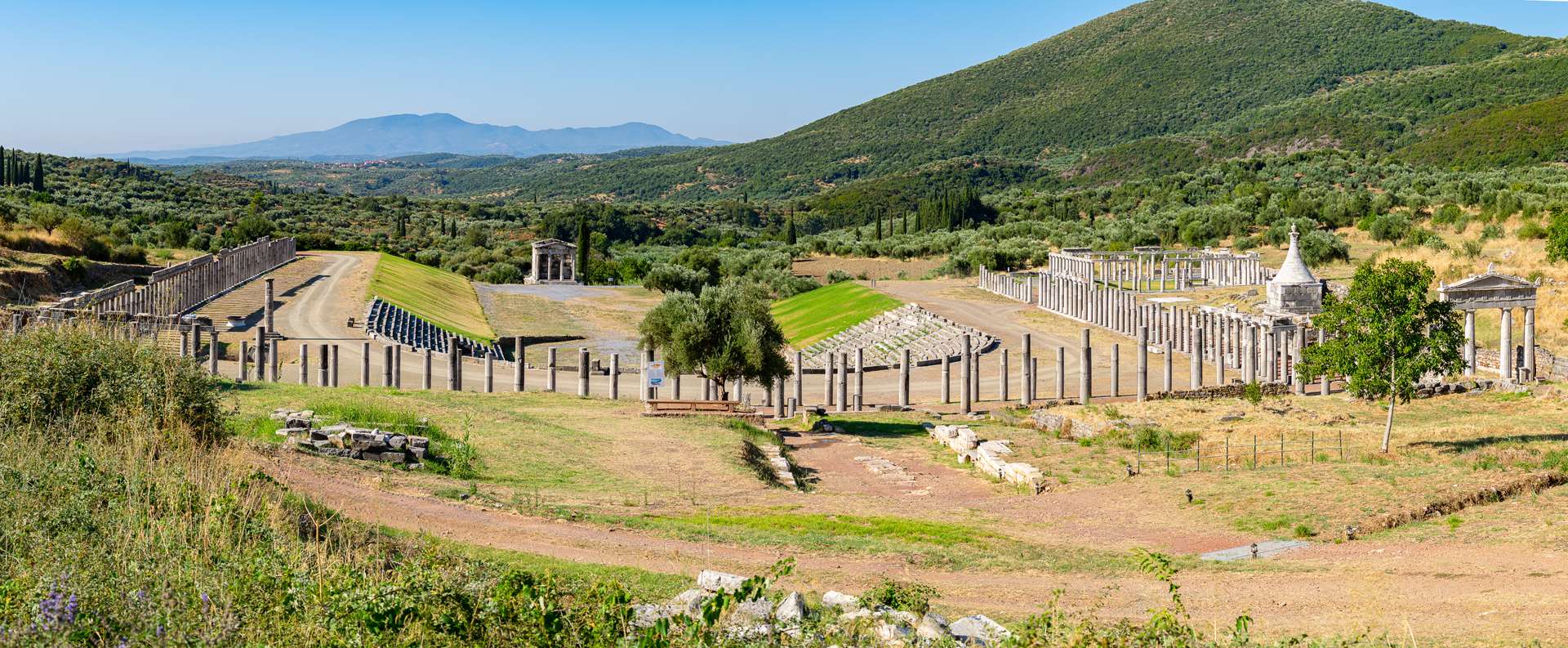
The Stadium and the Gymnasium are among the most impressive architectural complexes in terms of preservation. The northern, horseshoe-shaped part of the Stadium includes 18 rows of seats, each with 18 tiers, separated by staircases. It is surrounded by Doric colonnades, most of whose columns remain in their original positions. The northern colonnade is double, while the eastern and western ones are single. The colonnades belong to the Gymnasium, which formed a unified architectural complex with the Stadium. The western colonnade does not seem to extend all the way to the end of the track and is interrupted after about 110 meters by its northern edge. It is connected to a colonnaded courtyard in the Doric style, with sides approximately 30 meters long, which can be recognized as a palestra. Inscribed bases between the columns of the western colonnade displayed statues of Gymnasiarchs, and many lists of youths were found around. In the Hellenistic period, gymnasiums became busy centers of public life in the city and places for displaying significant works of art, as evidenced by the recent finds from the Gymnasium.
West of Room XI of the Western Colonnade of the Gymnasium, and at a higher level, the tomb monument K3 was uncovered, with eight cist graves inside, symmetrically arranged in pairs around a square container. The numerous architectural fragments of its superstructure indicate that it had the form of a square chamber (approximately 4.66×4.66 meters) with a conical roof, at the top of which stood a Corinthian column with a bronze work affixed to the surviving capital. The form of the monument is entirely unusual for Greek standards. On the lintel of the entrance, which has the shape of an Ionic cornice, the names of the deceased, both men and women, are preserved, who were honored with such an elaborate monument.
Tomb K1, located to the north, is also a funerary monument, as it was proven. Its eastern side was adorned with a frieze depicting animals in sequence and a high-relief composition of a lion devouring a deer. Inside the chamber of monument K1, which was sealed by a stone door, similar to Macedonian tombs, seven cist graves were uncovered, which, despite being looted, preserved significant grave goods, including gold jewelry.
9. The Heroon of the Stadium
An integral part of the Stadium is the Heroon, which took the form of a prostylos, four-columned Doric temple. It is located on the southern side of the Stadium, built on a rectangular platform that protrudes from the wall like a bastion. This temple-like structure was funerary in nature, serving as a kind of hero-shrine or mausoleum, fitting into the tradition of Anatolian mausoleums. In some aspects, it is also related to the Heroon of Calydon. A prominent individual, rich and influential, to whom the Messenians, according to Pausanias (4.32.2), granted hero-like honors, was the Messianian lifelong high priest and ruler of Greece, Saithidas. Therefore, it is certain that the Heroon-mausoleum of the Stadium belonged to the Saithidas family. In it, the distinguished members of the family were buried and received heroic honors, from the founding of the Heroon in the 1st century AD until at least the time of Pausanias’ visit (155-160 AD).
10. The Sanctuaries of Ithome
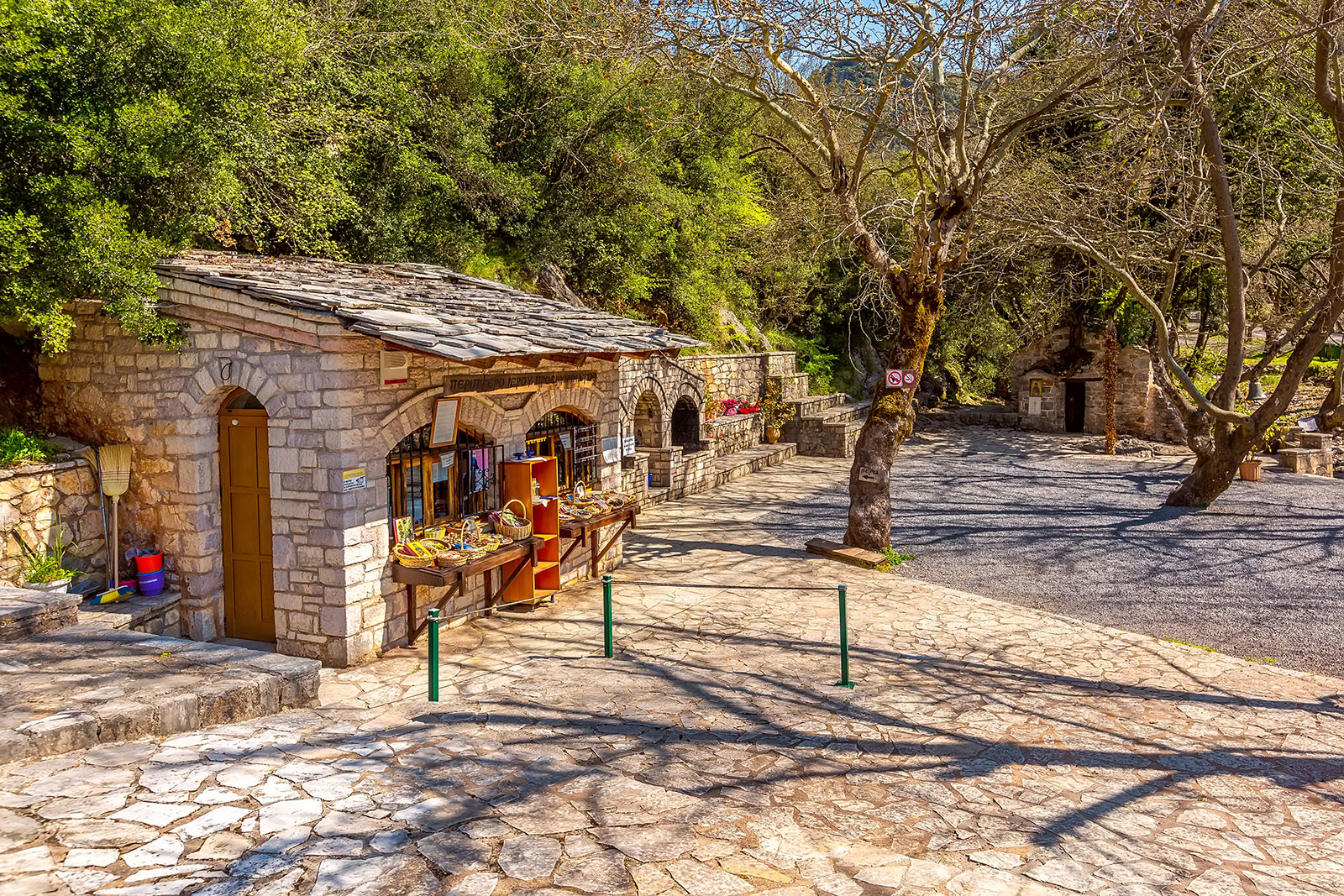
The Monastery of Vulkanos, which is dedicated to the Dormition of the Theotokos, is built on the summit of Mount Ithome, where the sanctuary of Ithomatas Zeus once stood in antiquity. According to tradition, its foundation is attributed to monks who sought refuge there to escape from the iconoclasts in 725 AD, during the reign of Leo the Isaurian. Another tradition, which traces the foundation of the Monastery to the time of Andronicus Palaiologos, states that the construction of the monastery at this location was due to Empress Andronicus. The image of the Theotokos, believed to have been preserved to this day, is considered miraculous. It bears the inscription “the Guide, called in the mountain Vulkanos” and is attributed to the Apostle Luke. In 1638, the katholikon (main church) of the monastery was decorated with frescoes by the brothers Dimitrios and Georgios Moschos, renowned iconographers from Nafplio. The name Vulkanos or Vourkanos first appears in the Synaxarion of Saint Nikon the Repentant in the 10th century. According to one testimony, “Zeus built a land and a fortress, which they called Velkian, which seems to appear in Vourkanos, destroyed” (S. Lampros, N. Hellenomnimons 3, 1906, 140). The monastery’s surviving sigillia bear the names Dorkanos (1583), Vourkanos (1630), and Vulkanos (1769 and 1798). On March 5, 1625, the monks, “unable to endure in the katholikon” of the Monastery of Vulkanos, evidently due to difficulties in access, water supply, and living conditions on the mountain summit, purchased a large flat area from the “father of Memetaga Efendi” of Androusa for ten thousand five hundred groshes. This area, located near a spring of water, was where they established the New Monastery of Vulkanos. The deserted village where the monastery was built had the Albanian name Tzemi or Tzumi and was located east of Saint Basil.
The sanctuary of Ithomatas Zeus, located at the highest peak of Ithome, is where the old monastery of Vourkanos was built. To the east, the foundations of the sanctuary of Ithomatas Zeus are still visible. A bronze foot of a votive tripod found near the monastery indicates that the worship of Ithomatas dates back to at least the Geometric period. According to Pausanias (4.31.2), in ancient times, a musical contest was held there, as one can infer from the verses of Eumelos, a 6th-century BC poet. Therefore, the functioning of the sanctuary well before the establishment of Messene in 369 BC is certain. The statue of Zeus, depicted on the coins of Messene with a thunderbolt in his right hand and an eagle in his extended left hand, represents the form of Ithomatas. The annual eponymous priest kept the statue of the child Zeus in his home. It seems that the type of Zeus wielding the thunderbolt was the cult statue, while the small statue of the child Zeus, crafted by the sculptor Ageladas (late 6th-early 5th century BC) for the Messenians of Nafpaktos, was brought to the sanctuary by the repatriated Messenians in 369 BC. According to tradition, the Messenian general Aristomenes sacrificed three hundred prisoners to Ithomatas, including the king of the Lacedaemonians, Theopompus (Clement, Protrepticus 36R). This human sacrifice brings to mind similar practices made for Lycaean Zeus in Arcadia. In honor of Ithomatas, games, known as the Ithomata, were held, and their organization was entrusted to the agonothetes. The stadium served as the location for these events.