Half-Day Excursions
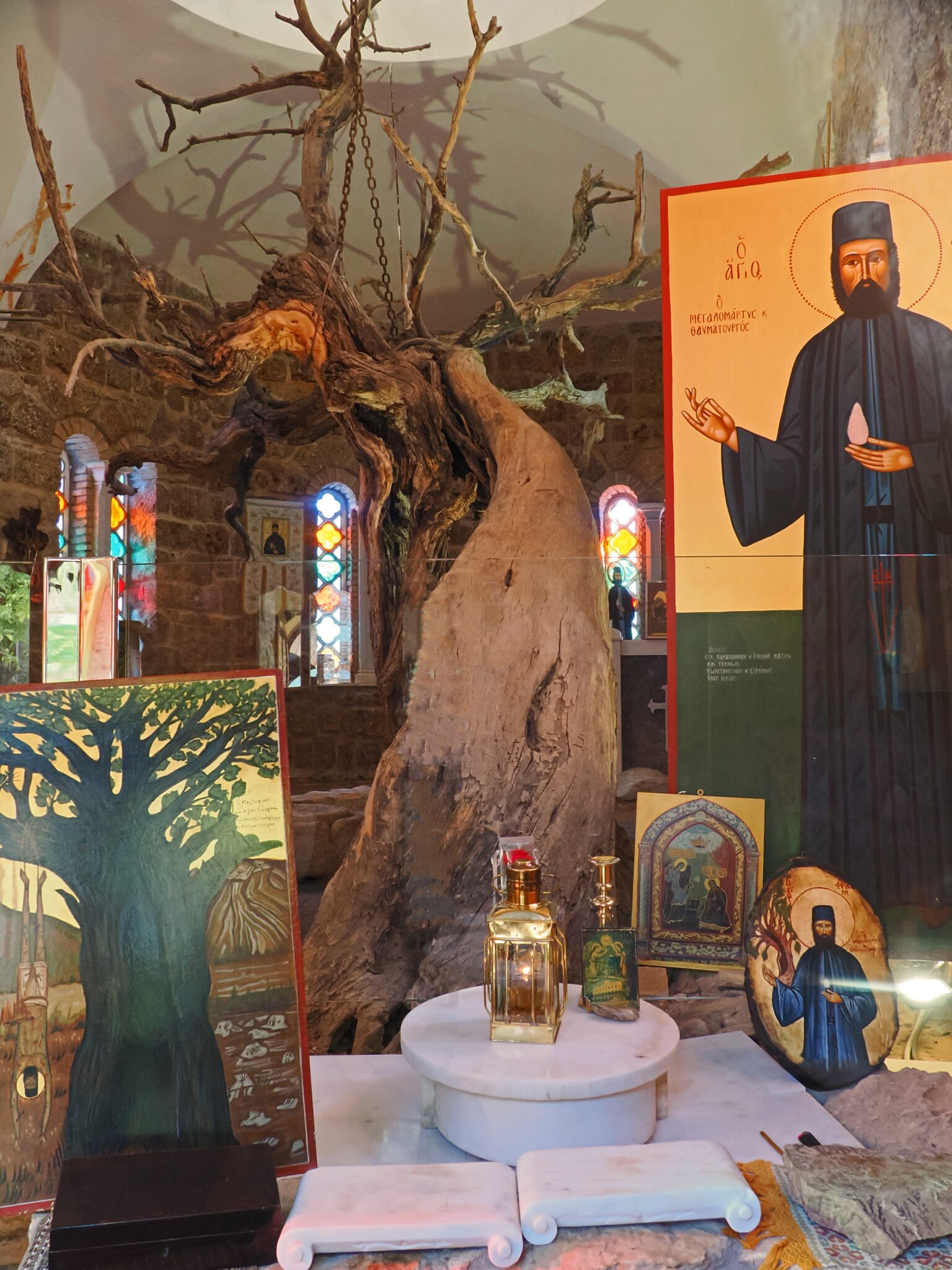
The Monastery of Saint Ephraim in Nea Makri, also known as the “Evangelismos of Theotokos,” is a women’s monastery located on the mountain of Amomos in Attica. It is situated in the area of Xylokeriza, east of Mount Pentelicus. The old monastery, which was destroyed and stood at the same site, was a male monastery and had been functioning since the 10th century CE. During that time, many hermitages existed on this “mountain of purity.” The monastery celebrates several important days: on January 3rd, the day the relics of Saint Ephraim were found, on March 25th for the Annunciation, and on May 5th, commemorating the day of Saint Ephraim’s last martyrdom.
The monastery belongs to the Holy Metropolis of Kifisia, and within its courtyard is the tomb of the famous 20th-century Greek artist, Photis Kontoglou. The current abbess is the nun Theodosia.
The monastery has been in existence since 1576, when it was originally known as “Agia Paraskevi,” though this name was later changed. As “Genesion of Theotokos” and a “Patriarchal Stavropighian Monastery,” it is documented in the Patriarchal Sigillion of May 10, 1611, from the Ecumenical Patriarch Neophytos. This manuscript can be found in the National Library of Athens.
In 1945, it was rebuilt by Abbess Makaria Desypri as the “Genesion of Theotokos.” On January 3, 1950, the relics of Saint Ephraim were discovered by her, and in 1975, by ministerial decree, it was officially named “Evangelismos of Theotokos,” which had been its original name. It is also noteworthy that the miraculous revelation of its name occurred during this period.
In 1945, after divine inspiration, Nun Makaria found the ruins of the old Evangelismos Monastery and built her cell there. It is said that she began cleaning the church to restore it after receiving this divine guidance.
Most of the icons in the monastery are donations and dedications. The “portable icon of Saint Ephraim,” which is located to the left of the church entrance, is a work by Photis Kontoglou, which he unfortunately did not complete before his passing.
In 1950, the relics of Saint Ephraim were found, marking 524 years since his death. The monastery continues to be a place of spiritual significance and a center for pilgrimage, especially for those seeking the healing power and miracles attributed to Saint Ephraim.