In the Dimitsana Museum, housed in the Library, visitors can view textiles, looms, folk art items, and an archaeological collection. Just outside Dimitsana is the Open-Air Museum of Hydropower, which aims to highlight the traditional water-powered installations that were once widespread in the area.
Dimitsana
Dimitsana is a historic village in the Peloponnese, the capital of the province of Gortynia in the region of Arcadia. Following the implementation of the “Kallikratis” plan, it is now the seat of the Municipality of Gortynia. According to the 2021 census, the village has a population of 322 permanent residents. It has been designated as a traditional settlement.
Location
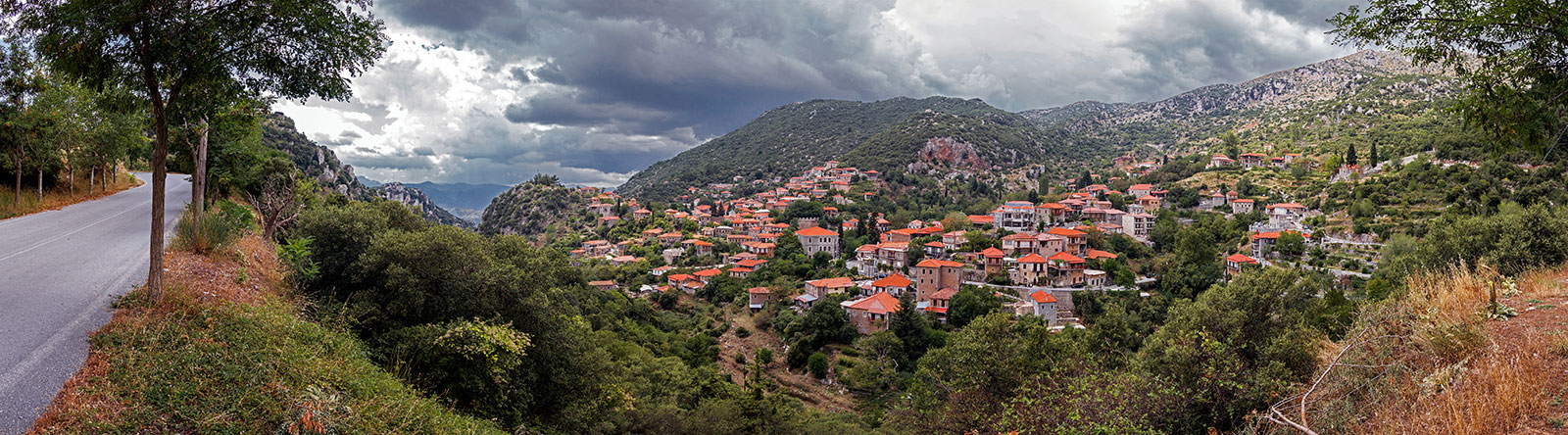
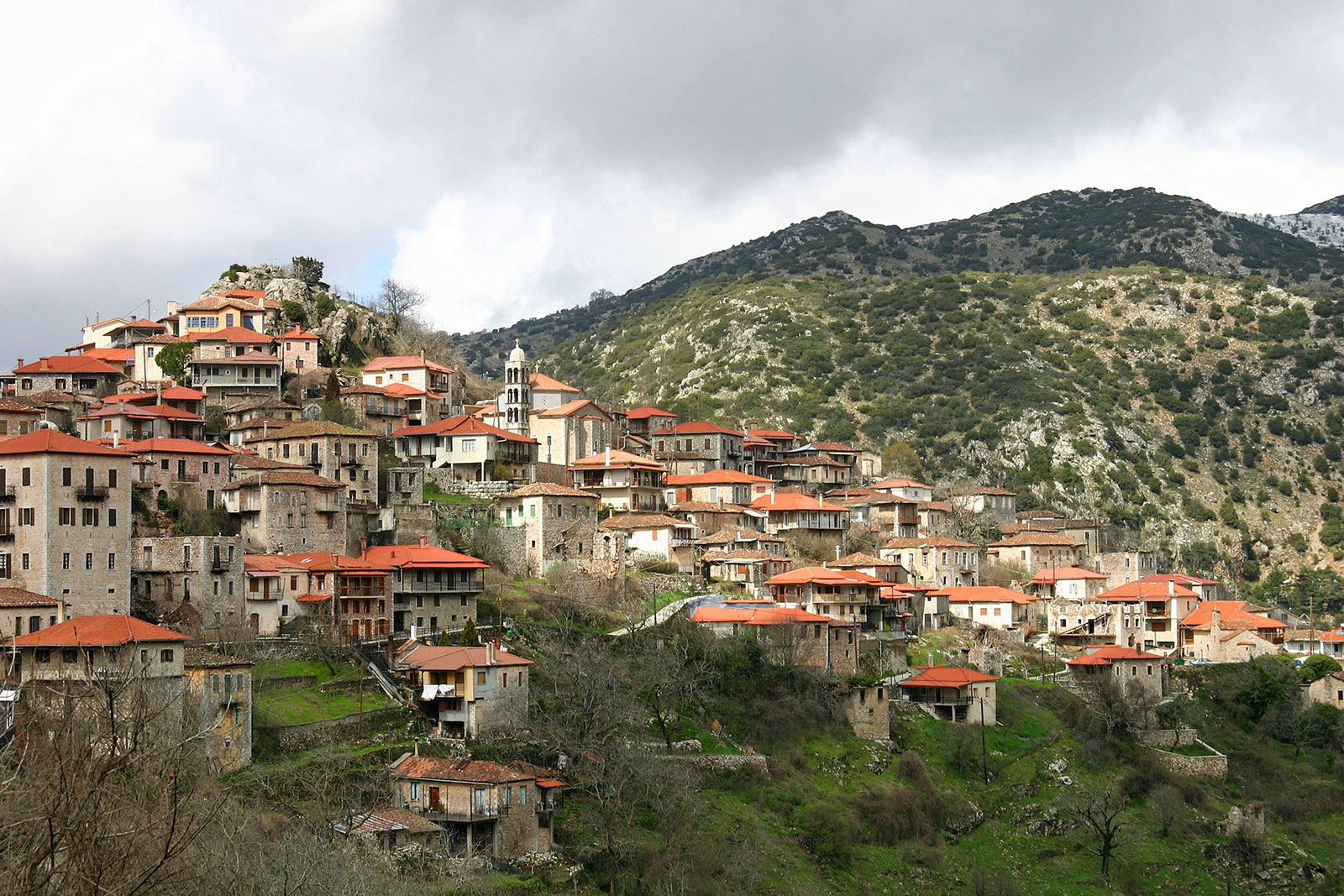
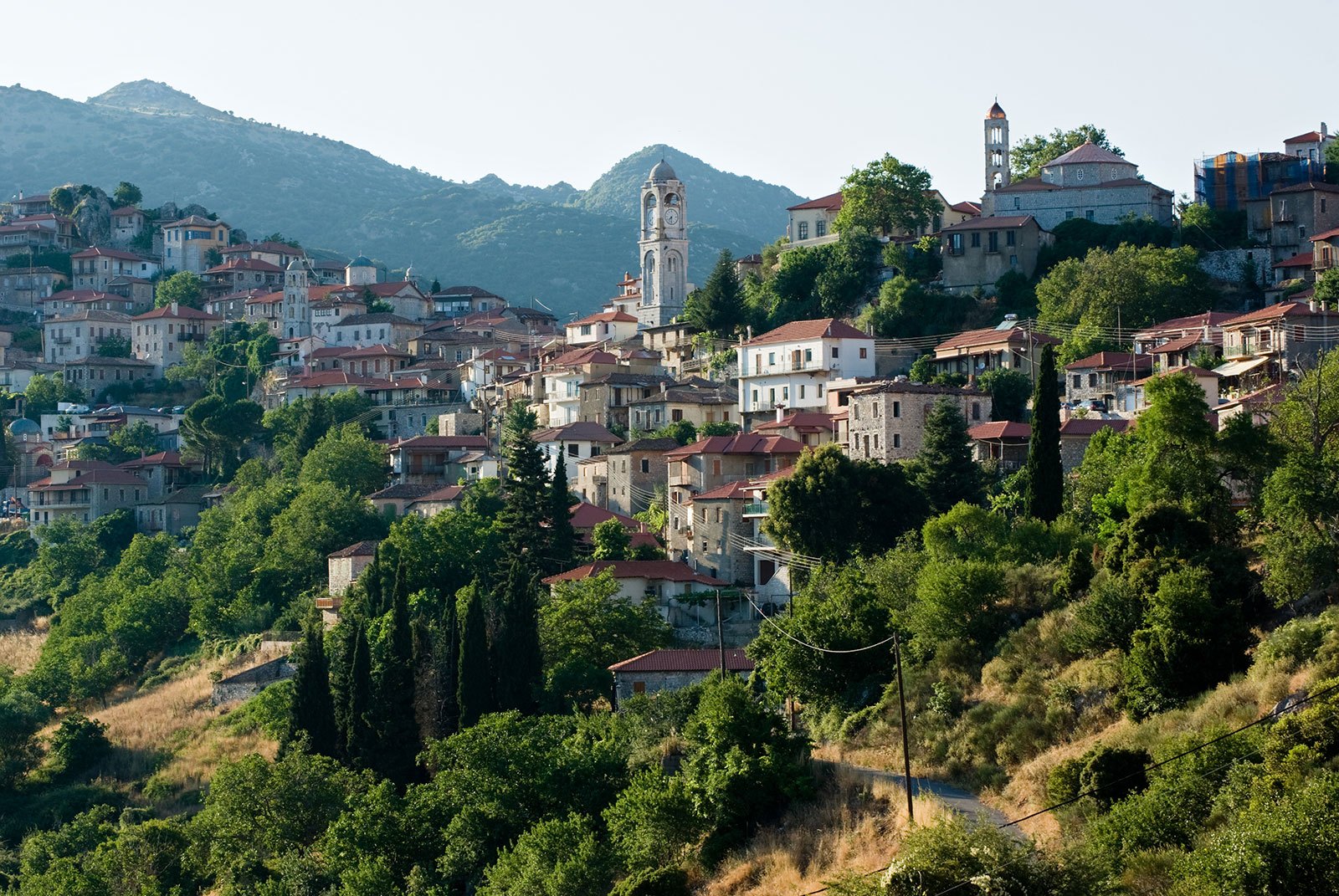
View of the settlement
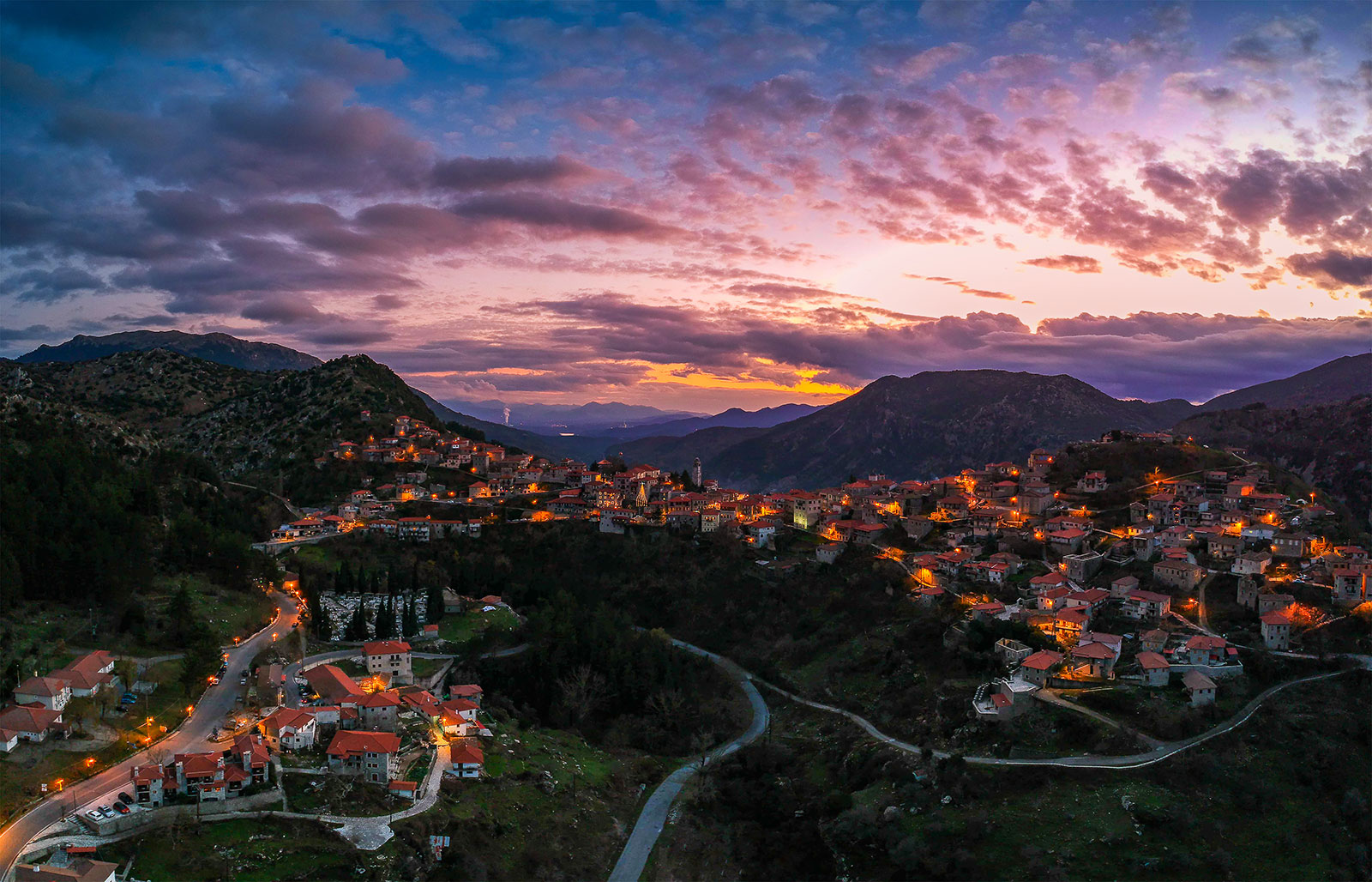
Dimitsana is built in a mountainous location, perched on a ridge at an altitude of 946 meters. From the southern side, it offers a magnificent view of the plains of Megalopolis and Mount Taygetus. It serves as the seat of the expanded Municipality of Gortynia, though until recently, it was the seat of the Municipality of Dimitsana. The history of Dimitsana dates back to the Homeric era when the small Arcadian city of Teuthis was located at its site.
It is part of a community that includes the villages of Paliochori, Karkalo, and the monasteries of Aimialon and Philosofou, with a total population of 740. Before World War II, Dimitsana had double the population, reaching 2,000 in 1960. However, many of its inhabitants emigrated and settled in America, Australia, and other parts of the world.
During the Ottoman era, Dimitsana played an important role with the “hidden school” and in 1821 with the “Dimitsanitiko gunpowder” that it produced. It is the birthplace of the Ethnomartyr Patriarch Gregory V, whose statue stands prominently in the central square of the village, a donation by Maraslis. The homes of both Gregory V and Metropolitan Germanos of Patras are still preserved.