The trail from Peristeria to the cave is 1.7 kilometers long, meaning it can be comfortably completed in an hour and a half. In the last section of the route, the trail reaches a specially designed area with a spring of drinking water and a wooden bridge, which marks the beginning of the gorge. To walk in the gorge, you’ll need galoshes or shoes that can get wet.
Kyparissia
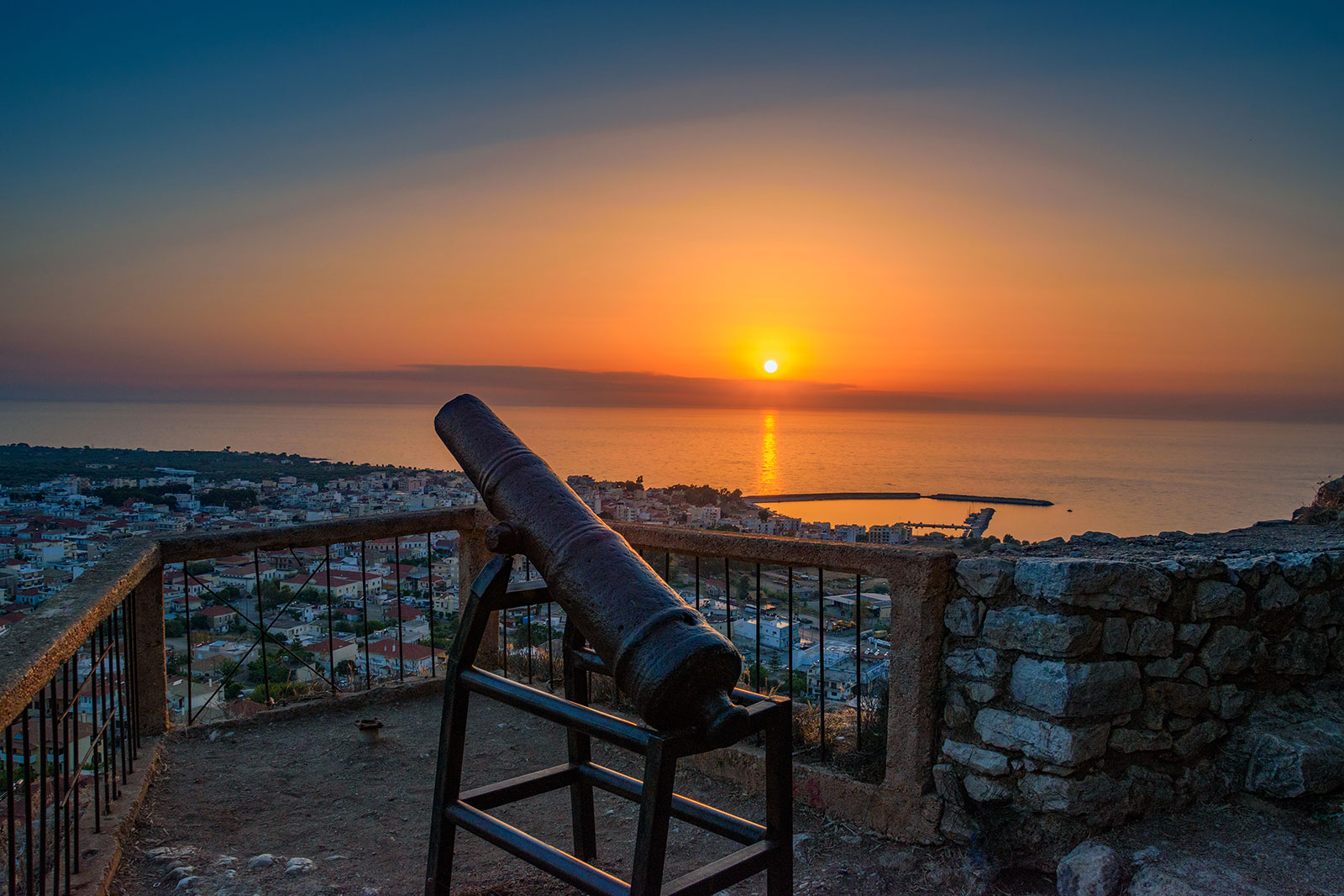
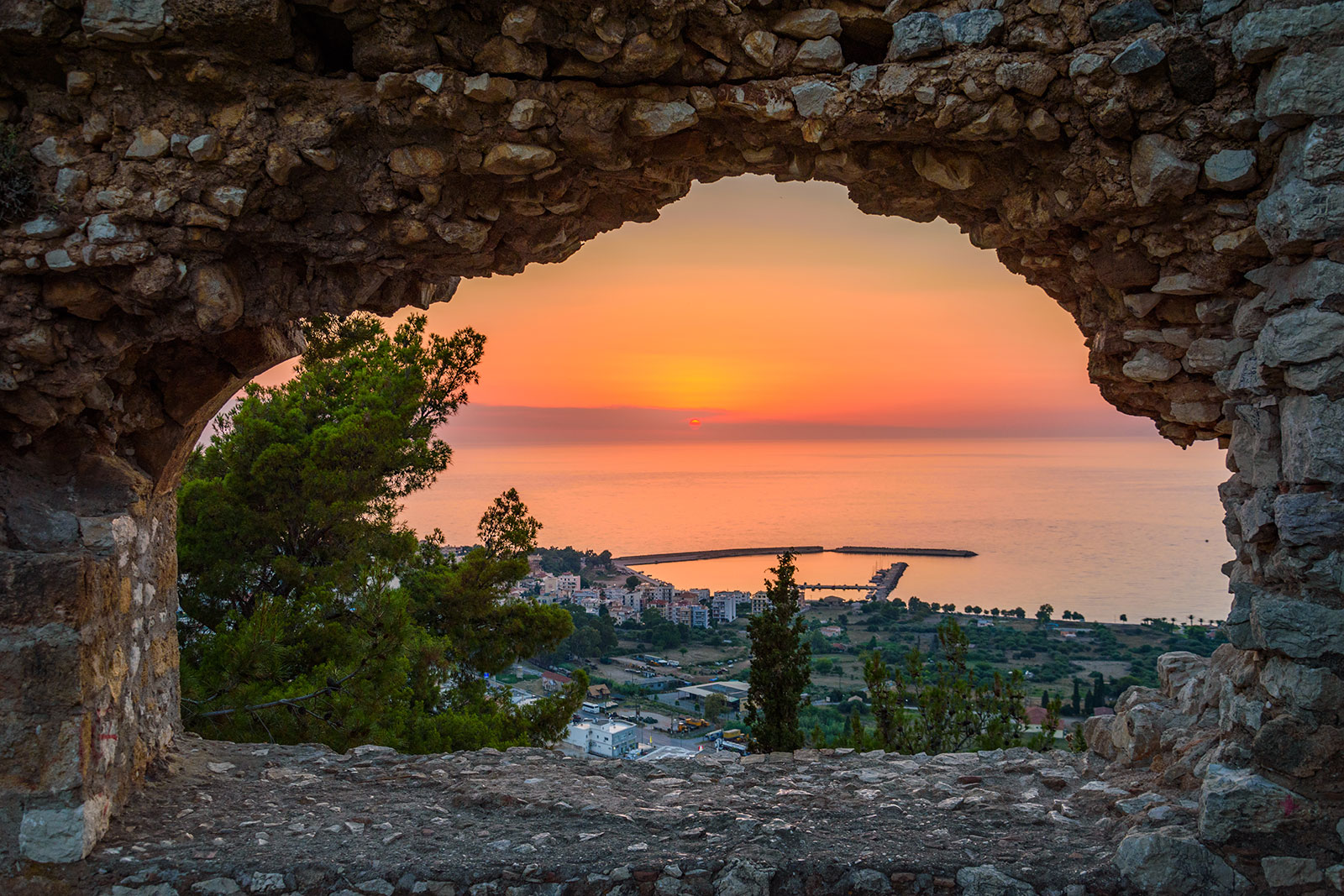
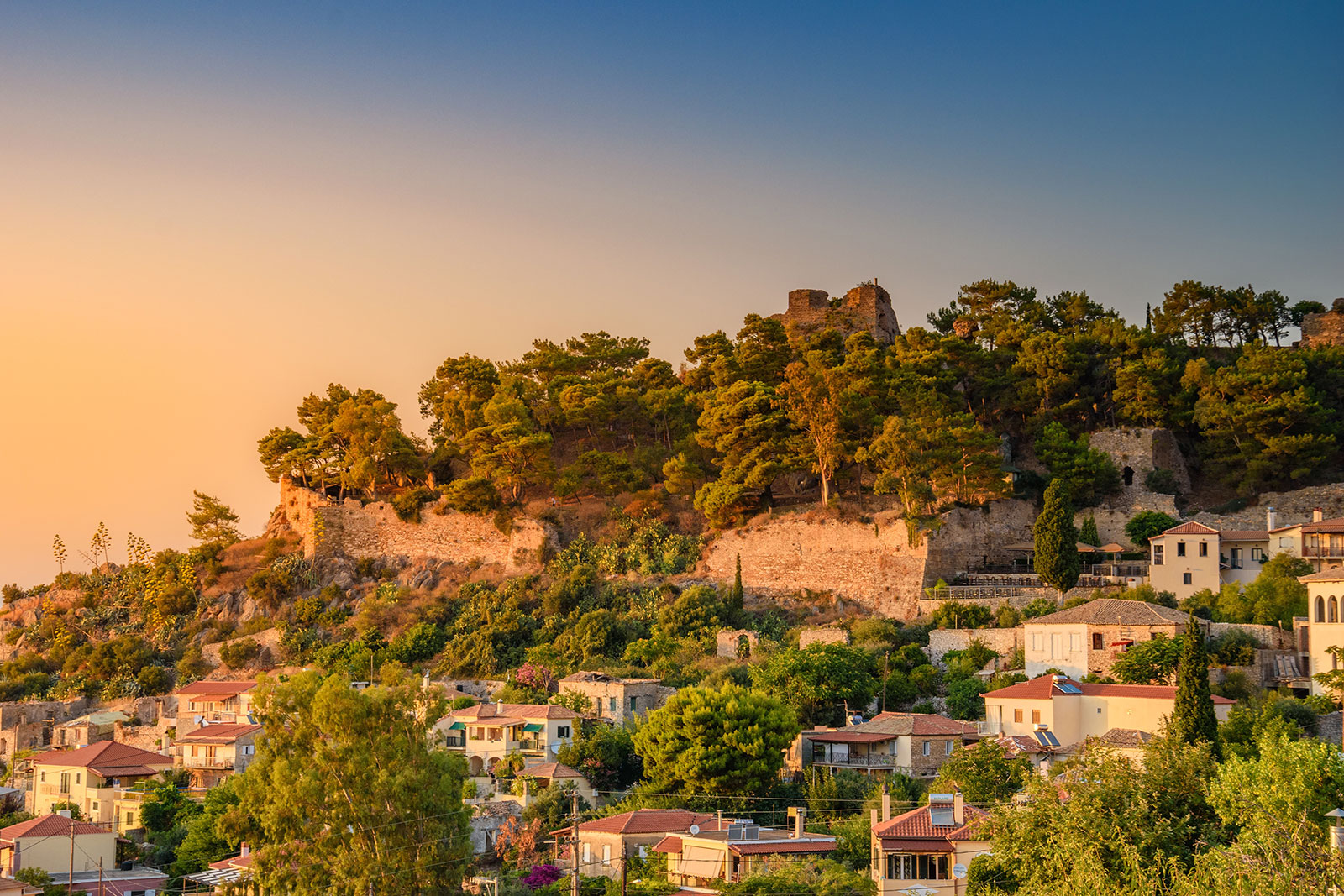
Sunset at the Castle
Kyparissia is mentioned by Homer, and in the Middle Ages, it was called Arcadia – probably because many Arcadians came and settled here to escape the Slavic invasions. The myth says that the town took its name from Cyparissus, the friend of Apollo, who, while hunting, accidentally shot and killed the deer Apollo had given him. Devastated, he begged the gods to let him die, and Apollo, feeling sorry for him, turned him into a tree, which was then dedicated to Pluto and became – and remained – a symbol of mourning for centuries.
The Castle
High up, where the Upper Town ends, the walls of the Frankish castle begin, with the wonderful nickname “Castle of the Giants” – or more plainly, “Castle of Arcadia.” Built on Cyclopean walls with huge stones, the castle as you see it today was built by the Franks, on the site of an older Byzantine castle, which had been constructed over the ruins of the Ancient Acropolis. This was believed to have been built by the Giants, which explains the name that has survived through three castles and over three thousand years.
The last Frankish ruler of the Peloponnese died at the Castle of the Giants, marking the end of the Frankish domination of the Morea, which lasted 200 years, from 1205 to 1432. Afterward, the castle was taken by the Byzantines, then the Ottomans, followed by the Venetians, and again the Ottomans. Today, the castle still preserves, in relatively good condition, its walls, the tower on the eastern side (also known as the Justinian Tower), and some embrasures. Access is easy: a paved road takes you directly to the castle gate.
The Old Railway Station
It was the last station on the Peloponnese line when trains still ran south of Corinth, and this knowledge gives railway enthusiasts a sense of a “final frontier,” enhancing the romanticism that abandoned railway stations naturally possess. Outside the station, there is an exhibition of a steam engine, Zs 7536, from 1926, while part of the station now houses the cultural center “Trainotechnion O Stathmos,” founded by actor Nikos Kalogeropoulos.
The Special Case of Peristeria
Eight kilometers outside Kyparissia, there is a hill that archaeologists call the “Mycenae of Western Peloponnese.” Four impressive tholos tombs from 1600 BC have been excavated here, each with its treasures, including gold and bronze vessels, crowns, jewelry, grave goods, and swords – all of which are now displayed at the Archaeological Museum of Chora, near the Palace of Nestor. Rightfully so: This was the king during a period when researchers believe the area of present-day Messinia experienced a population explosion, which resulted in a population of 100,000 people and 250 villages. The atmospheric archaeological site of Peristeria, with its tholos tombs, also offers a spectacular view of the Neda Gorge.
The Stalactite Gorge
From the northern corner of Peristeria, a trail leads to the stunning Stalactite Gorge, named after the cave where it ends, and its stalactites. It is an easy, idyllic route that will excite both beginner and advanced hikers, as it passes through a postcard-like natural landscape, under ancient plane trees and alongside running waters – the river here is called Arkadikos, in case you’re wondering.