The Thermopylae are a coastal pass in Greece. The area is named after nearby hot springs and the narrow and difficult passages through which one could approach the region, the gates, which were the Eastern, Middle, and Western gates.
There were major festivals and sanctuaries in ancient Greece. At the Thermopylae, there was a sanctuary dedicated to the worship of Demeter. The name seems to come from the mythical hero Heracles, who fell into the waters of the springs to relieve himself from the pain caused by the poisoned tunic of Nessus, which had stuck to his body. Since then, fumes have risen from the springs.
The pass leads from Locris to Thessaly, between Mount Oeta and the Maliakos Gulf.
For the Ancient Greeks, this place was sacred. There was also a double spring dedicated to Persephone—the Scyllian Spring—at the foot of the gorge, next to the Middle Gate, the narrowest part of the Thermopylae.
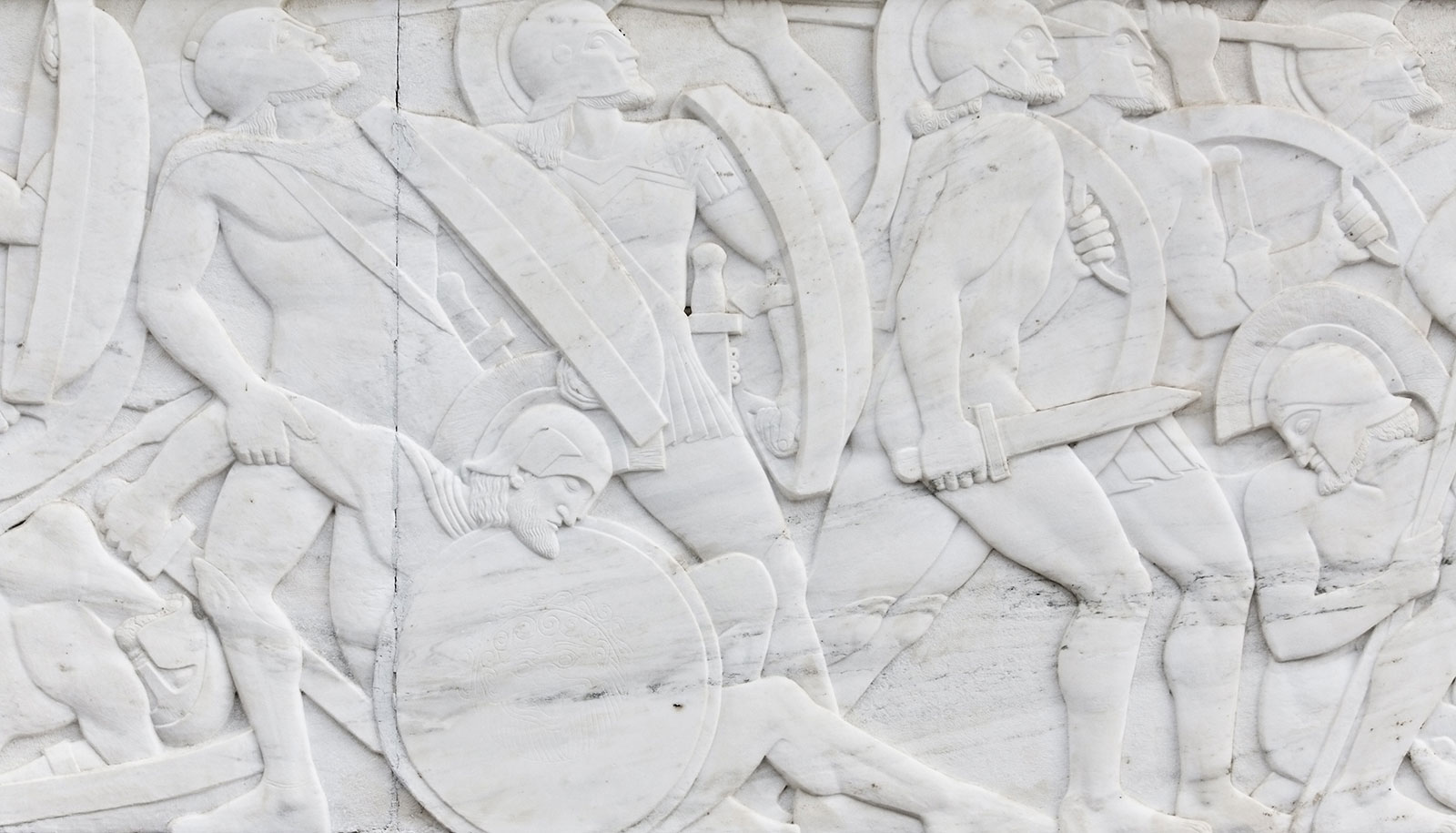
The Thermopylae are mainly known for the Battle of Thermopylae in 480 BC, between the Greek and Persian armies.
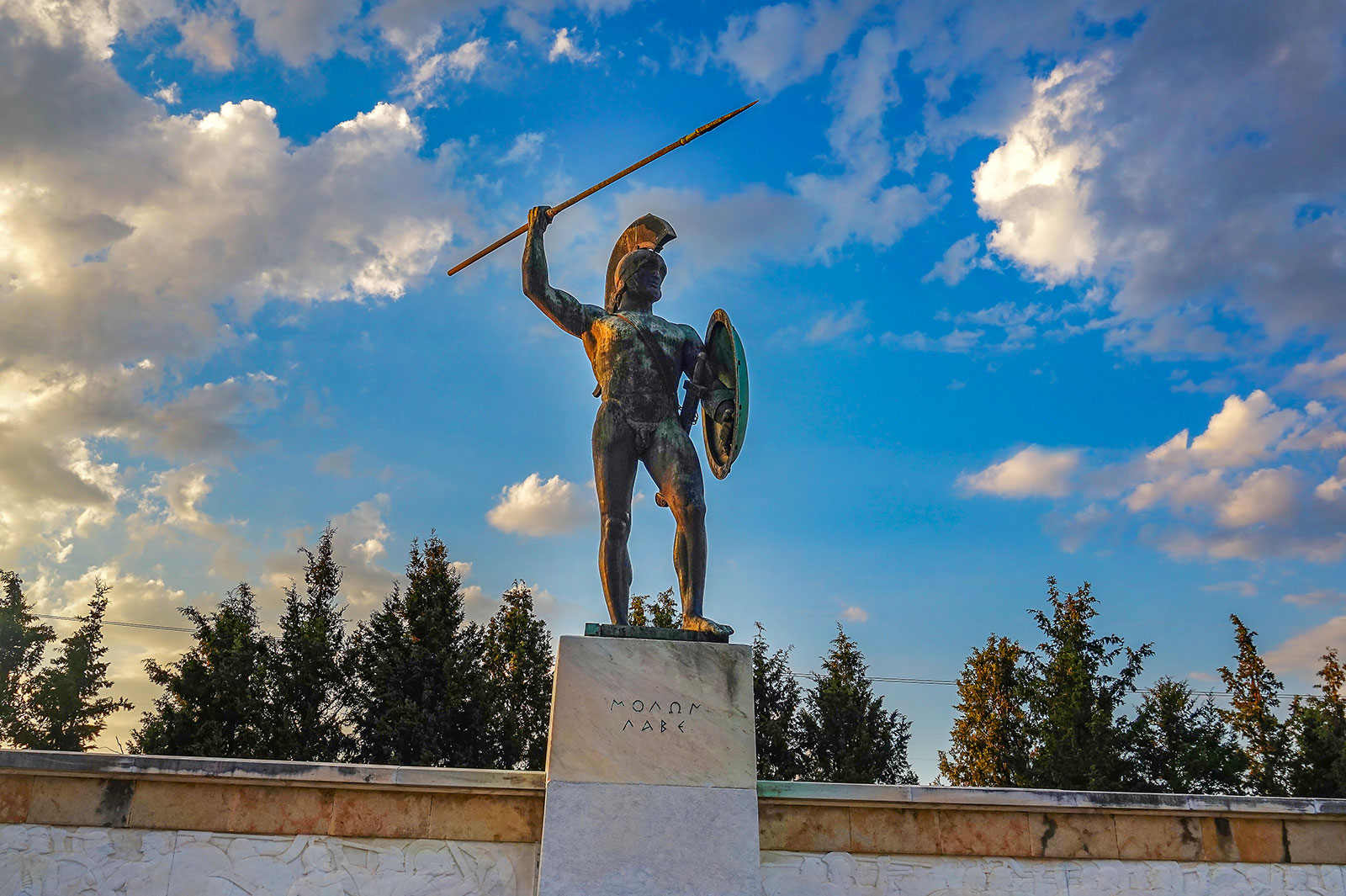
The monument with the statue of Leonidas (2022).
In the time of Leonidas, in 480 BC, the pass was a narrow path (about 12 meters wide) below the hill, which the Greek soldiers tried to strategically use to block the overwhelming Persian army. Today, the pass of Thermopylae spans from 1.5 to 3 kilometers in width, due to deposits at the mouth of the Spercheios River.
The hot springs, from which the pass gets its name, still exist on the slopes of the hill.
Finally, as Konstantinos Kavafis states in the phrase “Honor to those who in their lives have set and guard the Thermopylae,” the word “Thermopylae” means faith in principles and values, high goals.