Half-day excursions
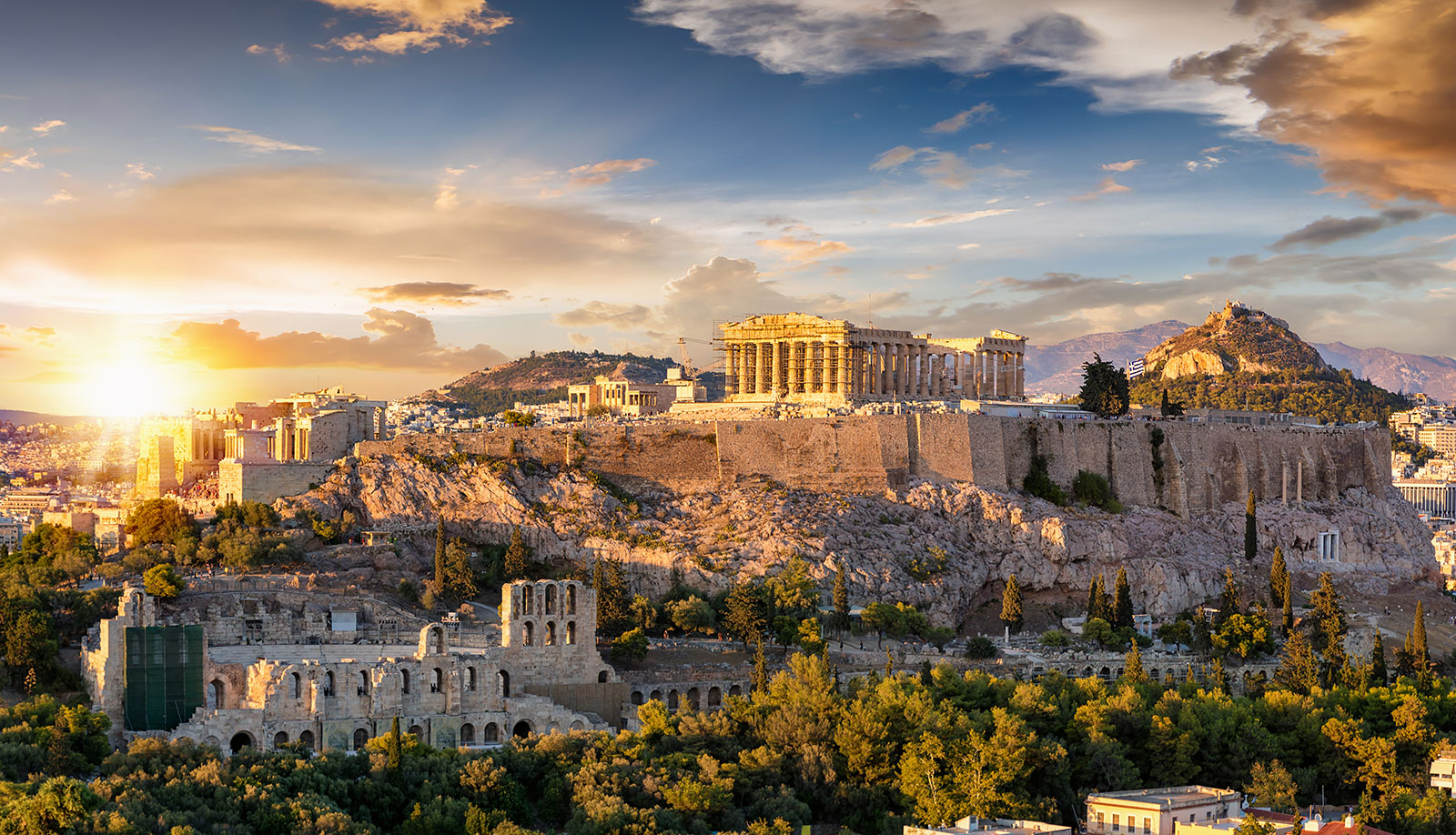
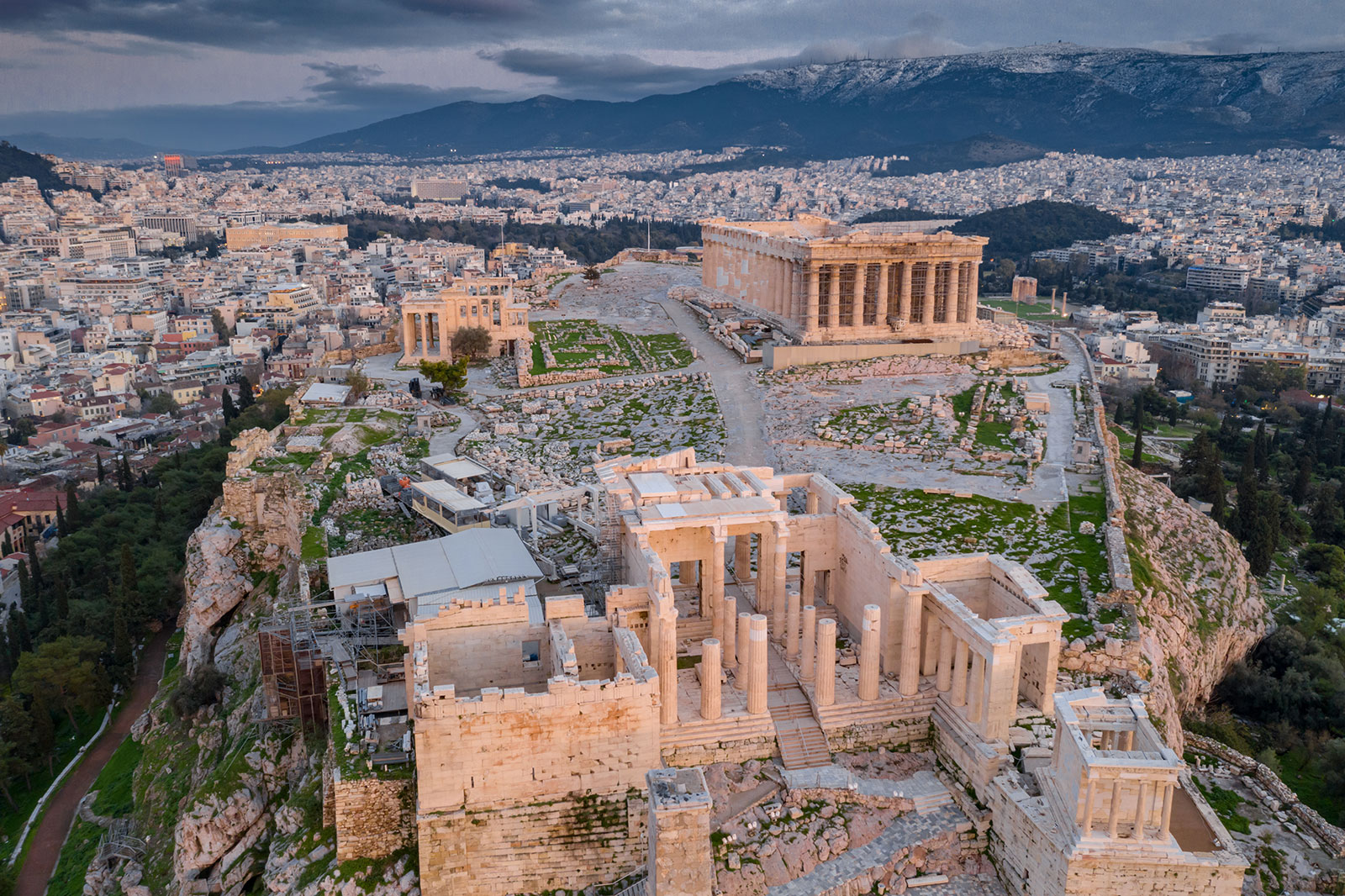
The temple that the Athenians dedicated to their city’s protector, Athena Parthenos, is the most magnificent creation of Athenian democracy during its golden age and the most perfect in terms of composition and execution among the buildings of the Sacred Rock. It was constructed between 447–438 BC as part of the larger building program carried out on the Acropolis under the initiative of Pericles, and it was built on the site of earlier temples dedicated to Athena. The Periclean Parthenon (Parthenon III) succeeded a previous temple, the marble Pre-Parthenon (Parthenon II), which began construction after the victory at Marathon around 490 BC but was never completed, as it was destroyed by the Persians in 480 BC. This, in turn, had been built on the site of an even earlier temple, the original Parthenon (Parthenon I), which was built around 570 BC.
Today, visitors can admire the marble Parthenon of the Periclean period, designed by Ictinos, with Callicrates as his associate. The responsibility for the sculptural decoration and the gold and ivory statue of Athena, which stood inside the temple, as well as the entire architectural program of the temple, was entrusted to the famous sculptor Phidias.
The temple is a double peripteral Doric temple, presenting many original and unique elements in its architectural design. It features a main temple, a rear chamber on the west side, porches on the west and east sides, and wings with 8 columns on the short side and 17 columns on the long side. The diameter of the columns was the same as that of the columns of the earlier Parthenon II, allowing for the reuse of the marbles prepared for it. To construct the temple, the narrow side had to be widened, but no larger columns were required. The interior expresses an innovative concept, combining older and new elements: in the naos, where one entered from the east, there was a double Doric colonnade in the shape of a “P”, and at the back of the temple was the gold and ivory statue of Athena Parthenos, depicted fully armed, holding Nike in her right hand to present to the Athenians. In the western chamber, where the city’s treasure was kept, four Ionic columns were placed. The roof of the temple was a gabled roof, covered with marble tiles. At the ends of the long sides, there were marble acroteria in the shape of a flower, and in the four corners, marble pseudohydrorohas in the shape of lion heads. The pediments of the temple were adorned with sculptural compositions inspired by the life of the goddess Athena. In the eastern pediment, the birth of the goddess from the head of her father, Zeus, is depicted, with the presence of all the gods of Olympus. In the western pediment, the contest between Athena and Poseidon for the guardianship of the city of Athens is shown, with gods, mythological kings, and heroes of Attica present. The 92 metopes, alternating with triglyphs, are positioned above the architrave of the outer colonnade of the temple and below the cornice. They are decorated with relief scenes, the oldest among the architectural sculptures of the Parthenon. The themes they depict come from Greek mythology and represent mythical battles: on the eastern side, the Gigantomachy is shown; on the northern side, the Trojan War; on the western side, the Amazonomachy; and on the southern side, the Centauromachy. The frieze, another Ionic element combined with the Doric style, runs around the upper part of the naos and porches of the temple, and its decoration portrays the magnificent Panathenaic procession, the most important festival of the Athenians in honor of the goddess Athena.
The Parthenon retained this form until the 5th century AD, when it was converted into a temple dedicated first to Holy Wisdom (Hagia Sophia) and later to the Virgin Mary. During the Ottoman period, it was turned into a mosque. In 1687, during the siege of the Acropolis by Morosini, the Parthenon was blown up by a Venetian bomb, and much of it collapsed. It also suffered significant damage in the early 19th century, with the looting and removal of its sculptural decoration by Lord Elgin, resulting in a large portion of the sculptures being taken to the British Museum.