Monastery of Megalo Spileo (Great Cave)
The Megalo Spileo is a historic monastery in Kalavryta, one of the most important pilgrimage sites of Orthodoxy in Greece.
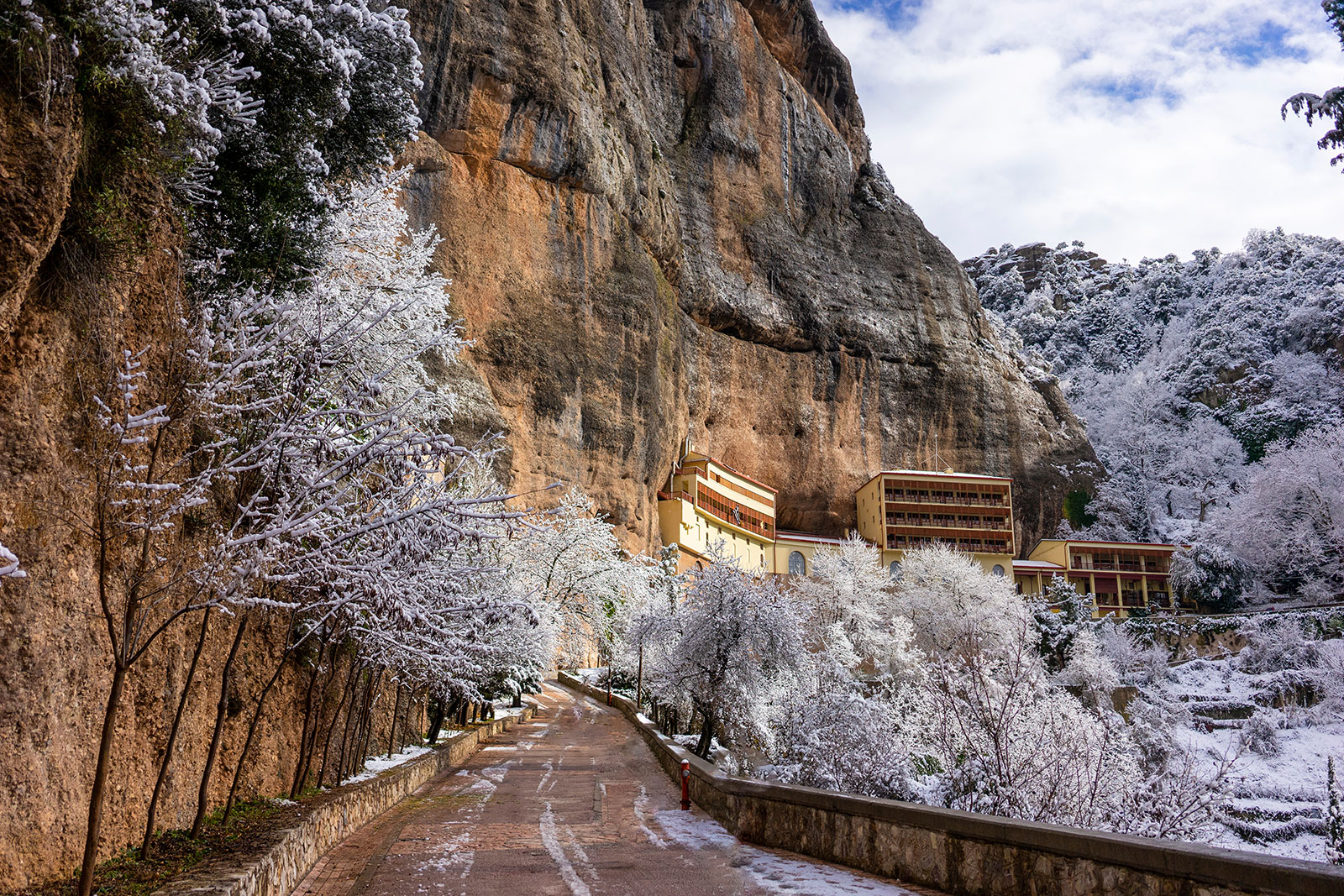
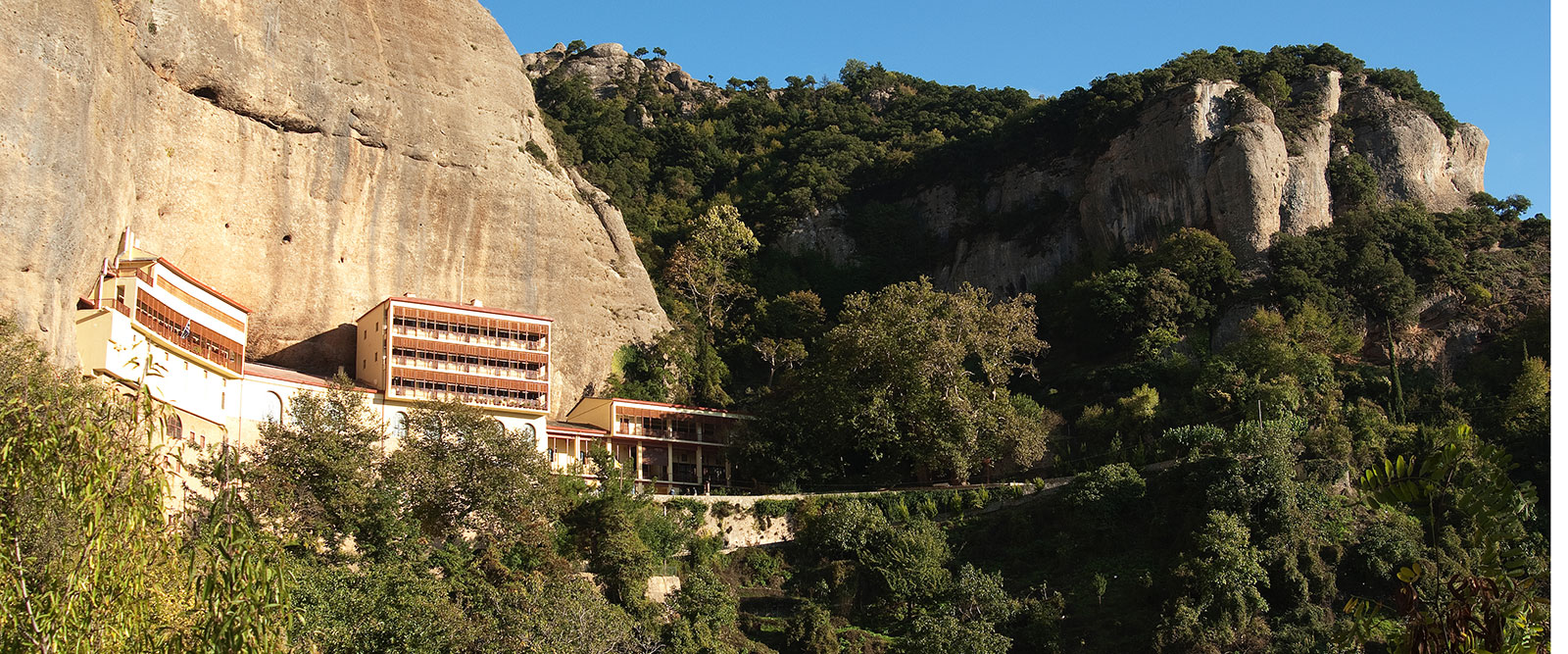
The Monastery is located ten kilometers northeast of Kalavryta, near the road that connects the National Road Patras – Athens with Kalavryta. It is built at the opening of a large natural cave (from which it gets its name) in the Chelmos mountain range, above the steep gorge of the Vouraikos River, at an altitude of about 900 meters, and is also in close proximity to and higher than the village of Kato Zachlorou. Perfectly harmonized with the rugged and impressive landscape of the area, the eight-story complex of the Monastery captivates even the most indifferent visitor. The main church of the Monastery, carved into the rock, is a cross-shaped temple with two narthexes. The main church has frescoes from 1653, remarkable marble mosaics on the floor, a wooden carved iconostasis, etc., while the frescoes in the narthex date from the early 19th century.
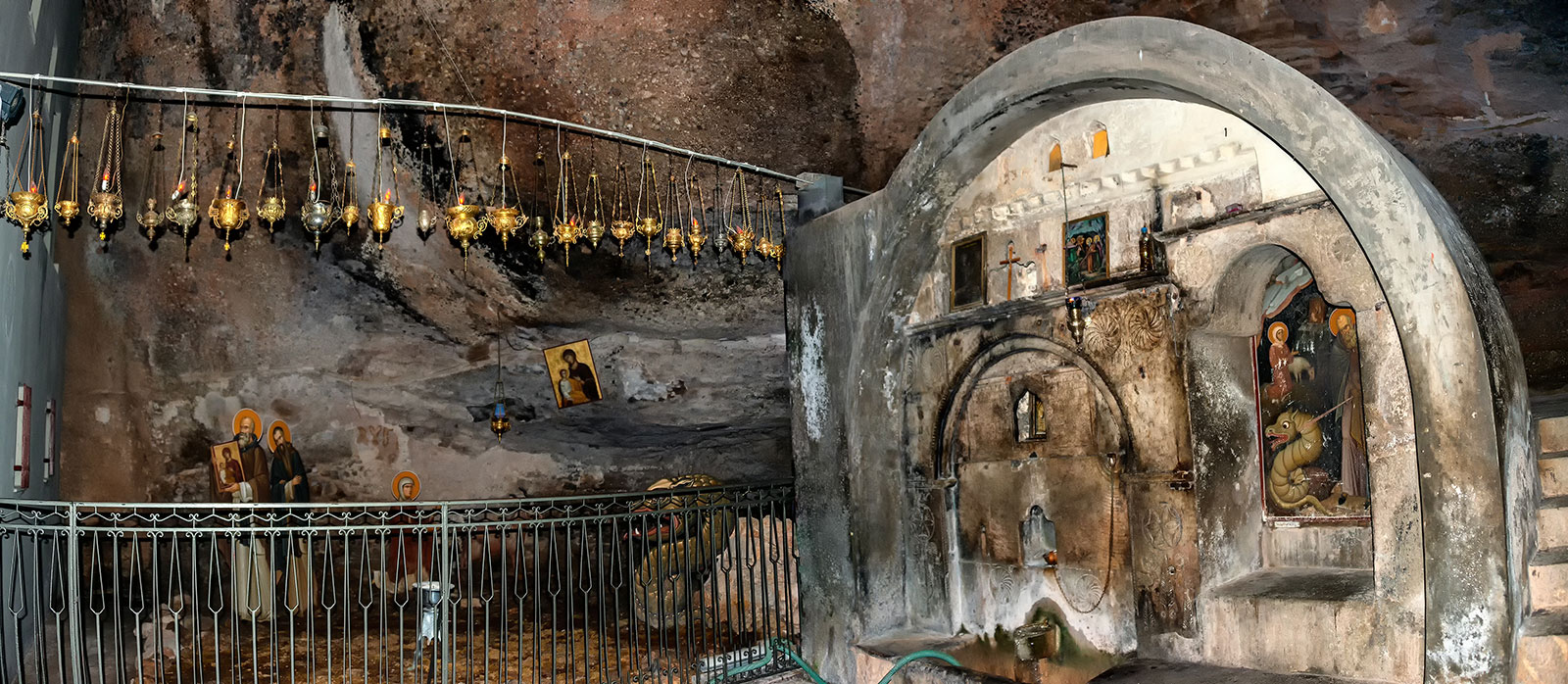
The Monastery, considered the oldest in Greece, was built in 362 AD by the Thessalonian monk brothers, Symeon and Theodore. While the two brothers were in Jerusalem, each separately saw a vision with the command to go to Achaia and find the sacred icon of the Virgin Mary made of mastic and wax, painted by Evangelist Luke. After several wanderings and revealing dreams, they met a shepherd girl named Euphronia from the village of Galata (Zachlorou) in 362 AD. Euphronia led them to the cave where the sought-after sacred icon was found, which she herself had discovered through “Divine Providence,” following the guidance of a goat from her flock, which went to the cave to drink from the spring located there. This spring, now made of marble, is known as the “Spring of the Maiden” and is a source of holy water. Euphronia is honored as a Saint. According to tradition, the sacred icon was found next to the spring, guarded by a terrible dragon, which was killed by a lightning strike when it attacked the two monks who were trying to clear the sacred site of dense vegetation. The two monks then built a small temple and several small cells with the help of the faithful who gathered to venerate the miraculous icon of the Virgin Mary. Many of the faithful remained for spiritual exercises. Over time, the Monastery became one of the most important monastic centers and reached great prosperity and prestige. The original church remained until 1934, when it was destroyed by a fire. The Monastery’s properties included real estate in Constantinople, Smyrna, Thessalonica, and large estates in Achaia and Ilia, called “Metochia.” The Monastery was destroyed at least four times by fires, in 840, 1400, 1640, and 1934, but the Sacred Icon was always miraculously preserved. Emperor Andronicus the Elder is said to have rebuilt the monastery in 1285 after a devastating fire.
Megalo Spileo played a significant role in the uprisings against the Turks. In 1770, Metropolitan Parthenios of Patras, leading armed forces, besieged Kalavryta. At that time, the abbot of the Monastery of Megalo Spileo, with other monks and carrying the cross, went to Kalavryta, where, through his mediation, the siege was lifted, and the Turkish families were safely escorted out. Thanks to this act of the abbot, when the revolution was later suppressed and Albanian hordes ravaged the Peloponnese, the Monastery managed to survive and save many Greek lives.
During the Greek War of Independence in 1821, the Monastery became a beacon of Orthodoxy and Hellenism and a center of resistance against the occupiers. Despite many attacks, it was never conquered. A notable event was the repulsion of Ibrahim Pasha’s advance in June 1827. On June 21, Ottoman commanders Sami Efendi and Sehnecip Efendi, under Ibrahim’s orders, called on the monks to surrender the Monastery, stating among other things:
“Abbot, you should consider this movement of the Romans, it will not find success in its head, so think carefully, as you are wise, that you will not find a good end and you will be defeated.”
On June 22, the historic response of the then abbot Damaskinos to the Turks was: “… it is impossible for us to surrender as we are sworn to our faith; we will either be freed or die fighting, and according to our oath, the sacred oath of our Homeland cannot be broken. … if you come here to fight and defeat us, it is no great harm, for you will defeat priests, but if you are defeated… it will be your disgrace, and then the Greeks will be encouraged and pursue you everywhere…”
Indeed, Ibrahim’s army, which had the support of some Greek traitors under Neneko, was forced to withdraw after a hard battle on June 24, thanks to the brave defense from the Petmezai and Fotako. The Monastery, where many non-combatants had sought refuge, was not captured by the Turks, who suffered many casualties, unlike the Greek forces. After the victorious outcome of the battle, the invaders withdrew from the wider Kalavryta region.
In 1895, George Paraskeyopoulos, now Saint Gervasius of Patras, attended the School of the Monastery.
In modern times, it was once again destroyed by fire and rebuilt in 1937, under the patronage of King George II, who also laid the foundation for its new wing. In December 1943, Nazi occupation forces looted the Monastery and executed 16 people, visitors, subordinates, and monks. Another nine monks were executed at the site “Psilos Stavros” (High Cross). The remaining cells from the 1934 fire were also burned. After the war, new buildings were erected.
Among the sacred relics of the Monastery, the miraculous sacred icon of the “Virgin of Megalo Spileo” holds a prominent position. It is the work of Evangelist Luke (one of the three that he created and are preserved to this day). According to reliable historical testimonies, Evangelist Luke, after the death of the Apostle Paul, acted, like Apostle Andrew, in Achaia, where he likely wrote his magnificent Gospel and the masterpiece “Acts of the Apostles.” When he came to Achaia, he brought with him from Palestine this specific sacred icon (blessed by the Virgin herself), which he later gifted to the first Christians. During the persecutions, these Christians sought refuge in the Cave, where they hid the icon. When they died or were killed for Christ, the icon remained in the Cave until it was discovered in a miraculous way by Saint Euphronia. The icon is bas-relief, three centimeters thick, and made from wax, mastic, and other materials. It bears a colored robe with golden embroidery. Due to the many fires, it has darkened over time. The Virgin’s body is turned to the right, with her head inclined toward her Son, holding him in her right hand (Deixiotopousa), while with her left hand she lightly holds her Son’s left palm, and with her right hand, He holds the Gospel. On the right and left of the wax icon, angels are depicted with fear. In the four corners of the icon, on the right, Seraphim with six wings, and on the left, multi-eyed Cherubim.