Acrocorinth
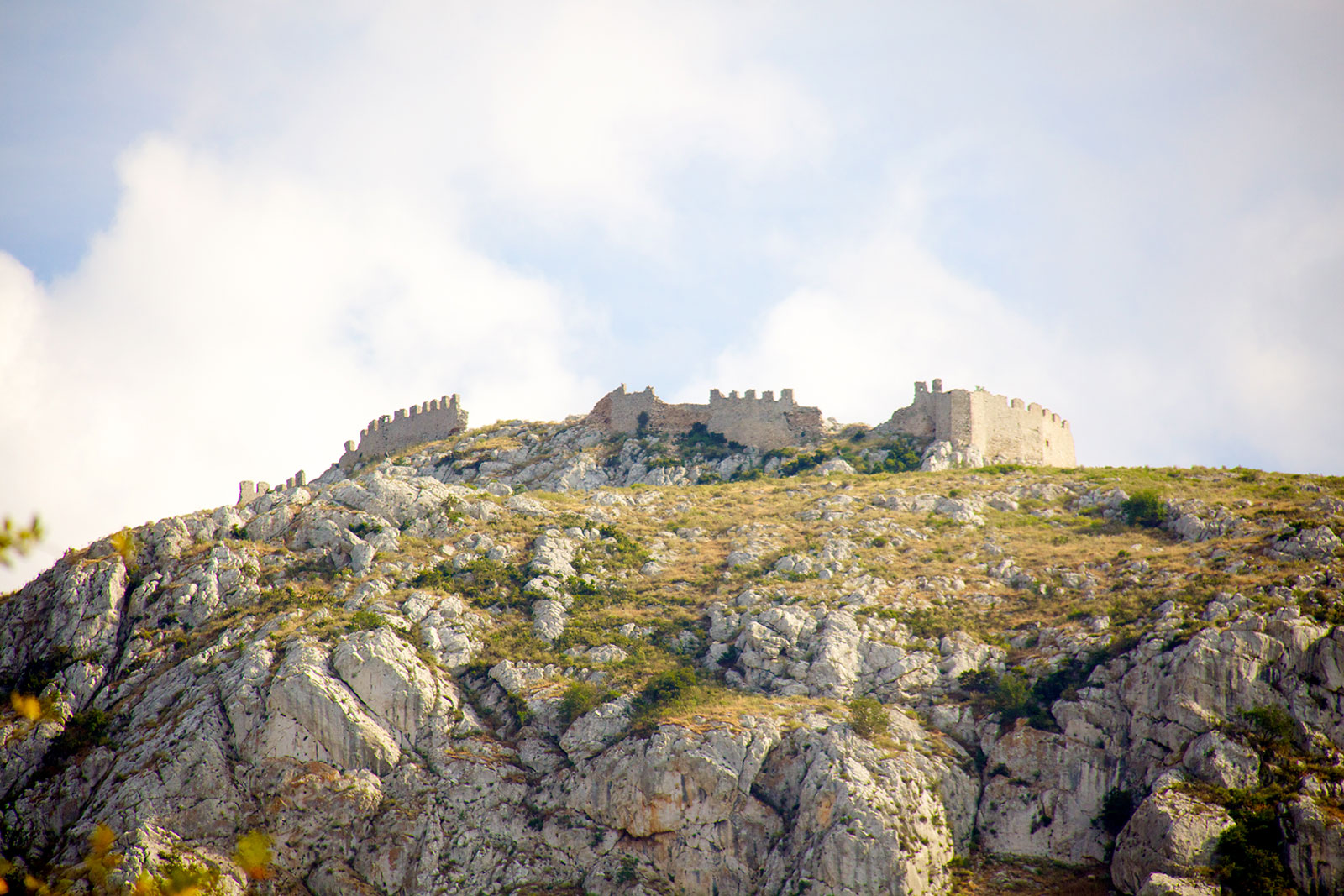
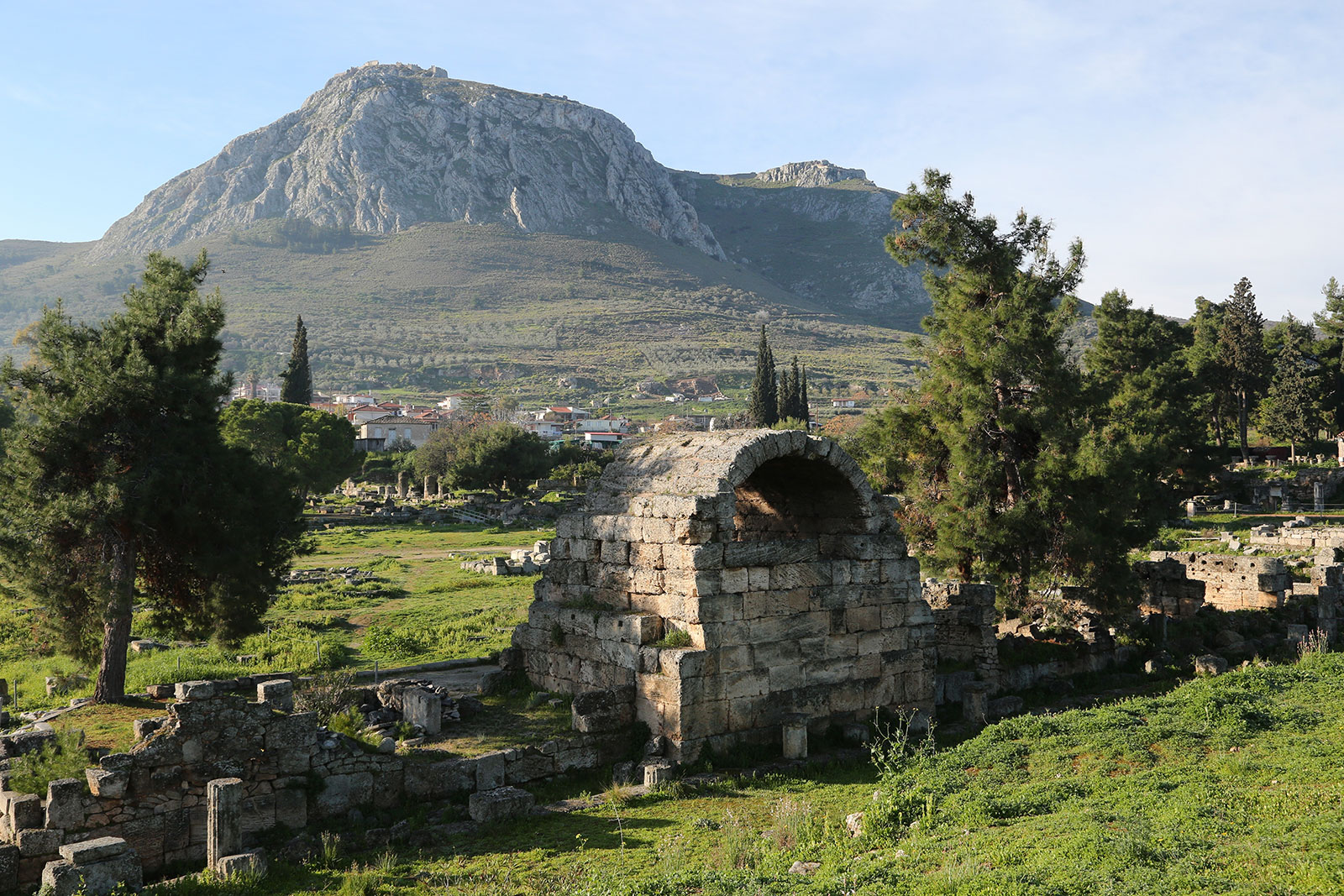
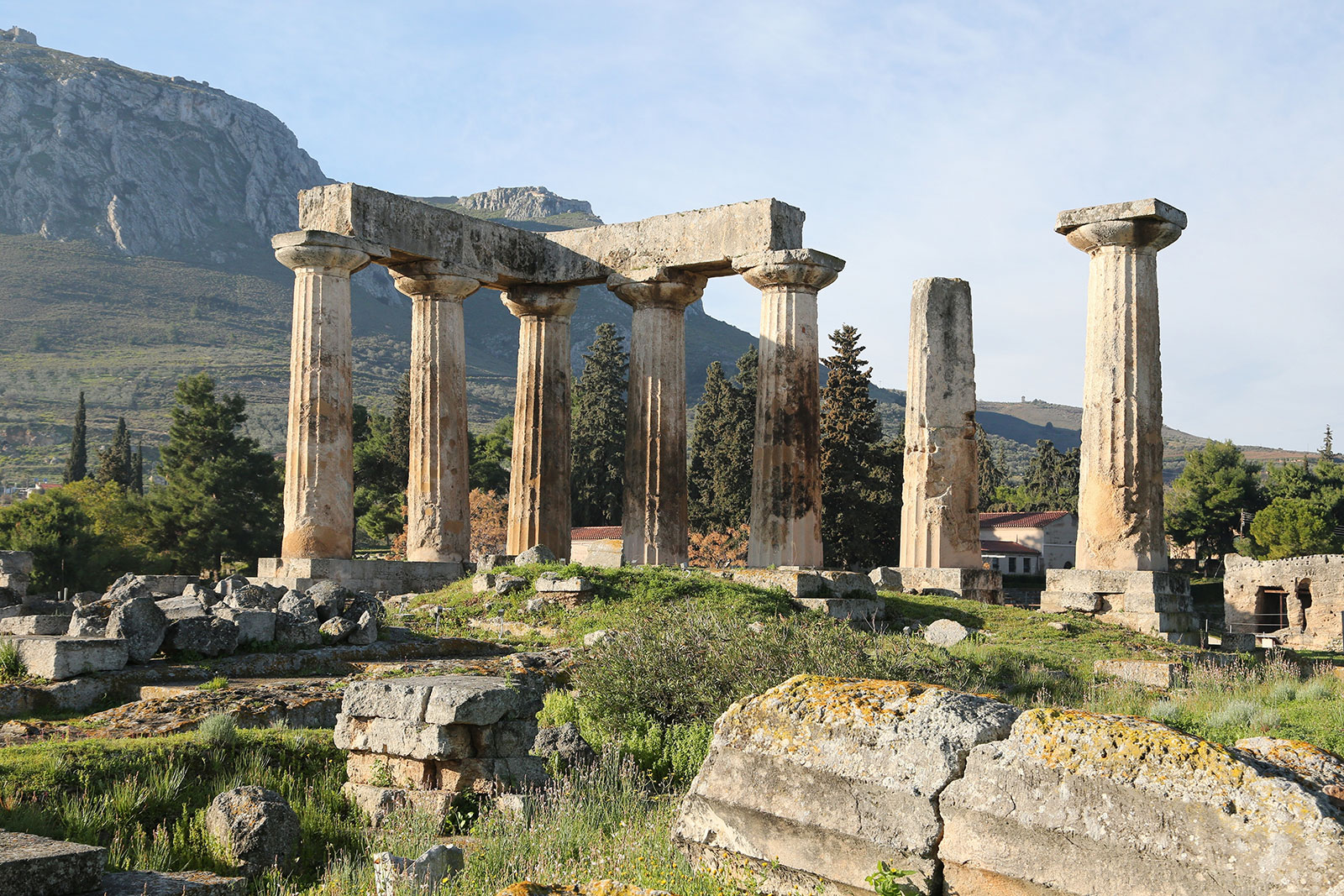
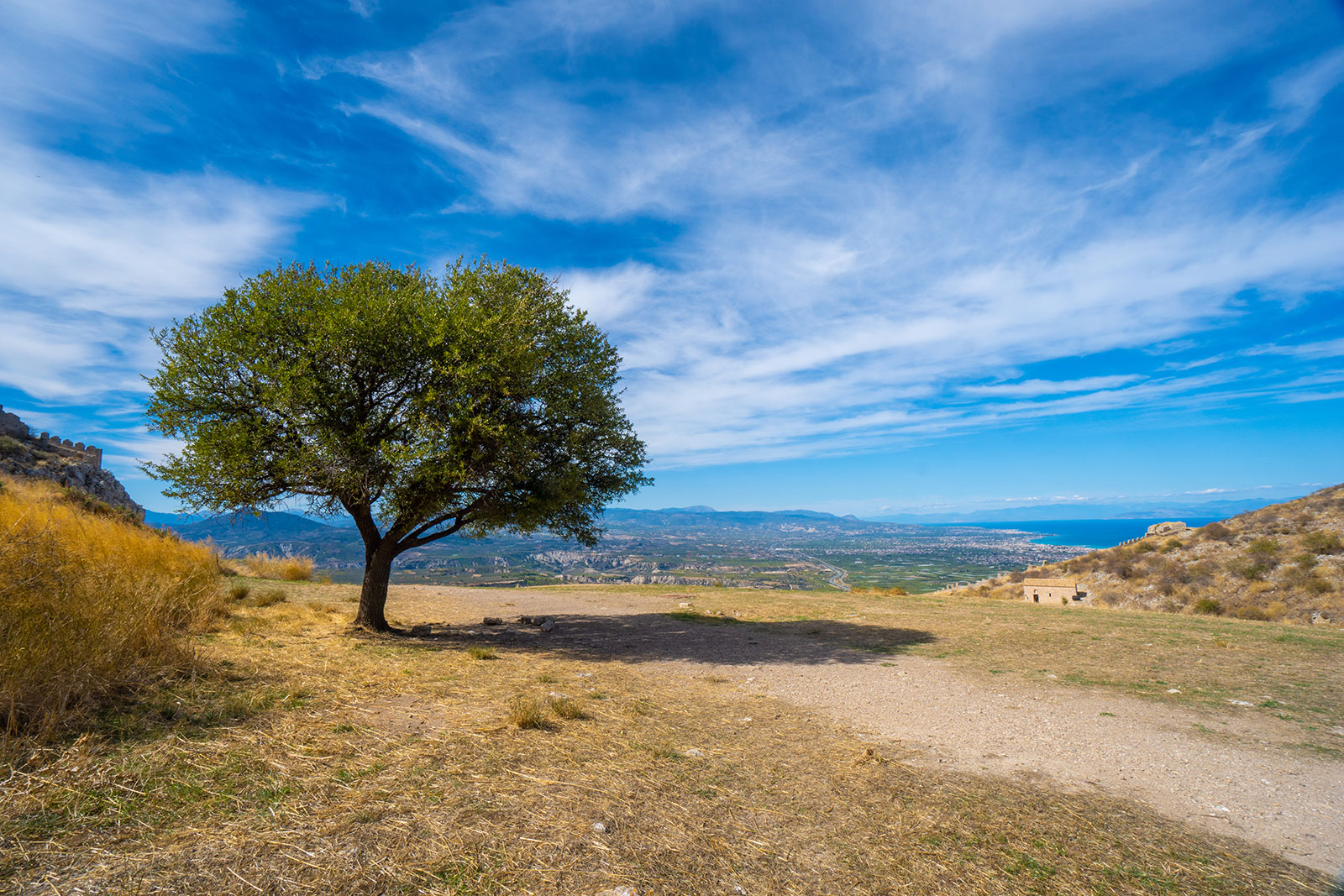
Acrocorinth is a rock formation standing at 579 meters, dominating the plain of Corinth. At its foot, the ancient city of Corinth was built. Due to its geographical features, it has been used as a fortress (acropolis) since ancient times.
History
According to Greek mythology, the owner of the area was the god Helios. He granted the land beneath Acrocorinth (where the city of Corinth would later be built) to his son Aietes, but the 240 acres of the Acrocorinth hill, the most valuable part of the area, were gifted to the goddess Aphrodite. Aphrodite, however, was indifferent to the gift, as she was far more content on Mount Olympus. In her honor, Medea built a temple at the top of Acrocorinth. Initially, it was a simple and humble structure, but this dramatically changed when water arrived—an achievement of King Sisyphus, the clever king of Corinth. One day, after witnessing Zeus abducting the daughter of Asopus, he told Asopus where she was hidden in exchange for resolving a water shortage on the hill. As a result, the Acrocorinth hill gained its first fountain, Pirene.
Acrocorinth was fortified for the first time by the tyrant Periander and his father Cypselus in the 7th-6th century BCE. Over time, it evolved into the Acropolis of Corinth. In the 4th century BCE, the Macedonians repaired and strengthened the walls. In 146 BCE, the Roman general Lucius Mummius Achaicus destroyed Corinth and its acropolis when he conquered Greece. Julius Caesar repaired the fortress in 44 BCE.
Another repair took place in the 6th century during the reign of Justinian, with further additions seen as late as the 12th century.
In 1210, the castle was captured by the Franks after the defender Leo Sgouros committed suicide by jumping on horseback from the walls. The Franks made several repairs.
The castle then changed hands several times. It was granted to the Italian families Gravinia and Acyaioli, and eventually, in 1395, it was passed on to Theodore Palaeologus, Despot of the Morea, who inherited it from his late father-in-law, Nerio I Acyaioli, Duke of Athens. Theodore later sold the castle for financial reasons to the Knights Hospitaller, who held it until 1404 when it was returned.
In 1458, Mehmet II the Conqueror took the castle, which was defended by the Byzantine Matthew Asan. In 1687, the castle came under Venetian control, who repaired it and gave it its current form. A few years later, in 1715, the Ottomans besieged and captured the castle, and it remained in their hands until 1827 when it was handed over to the Greeks.
Structural, Architectural, and Defensive Features
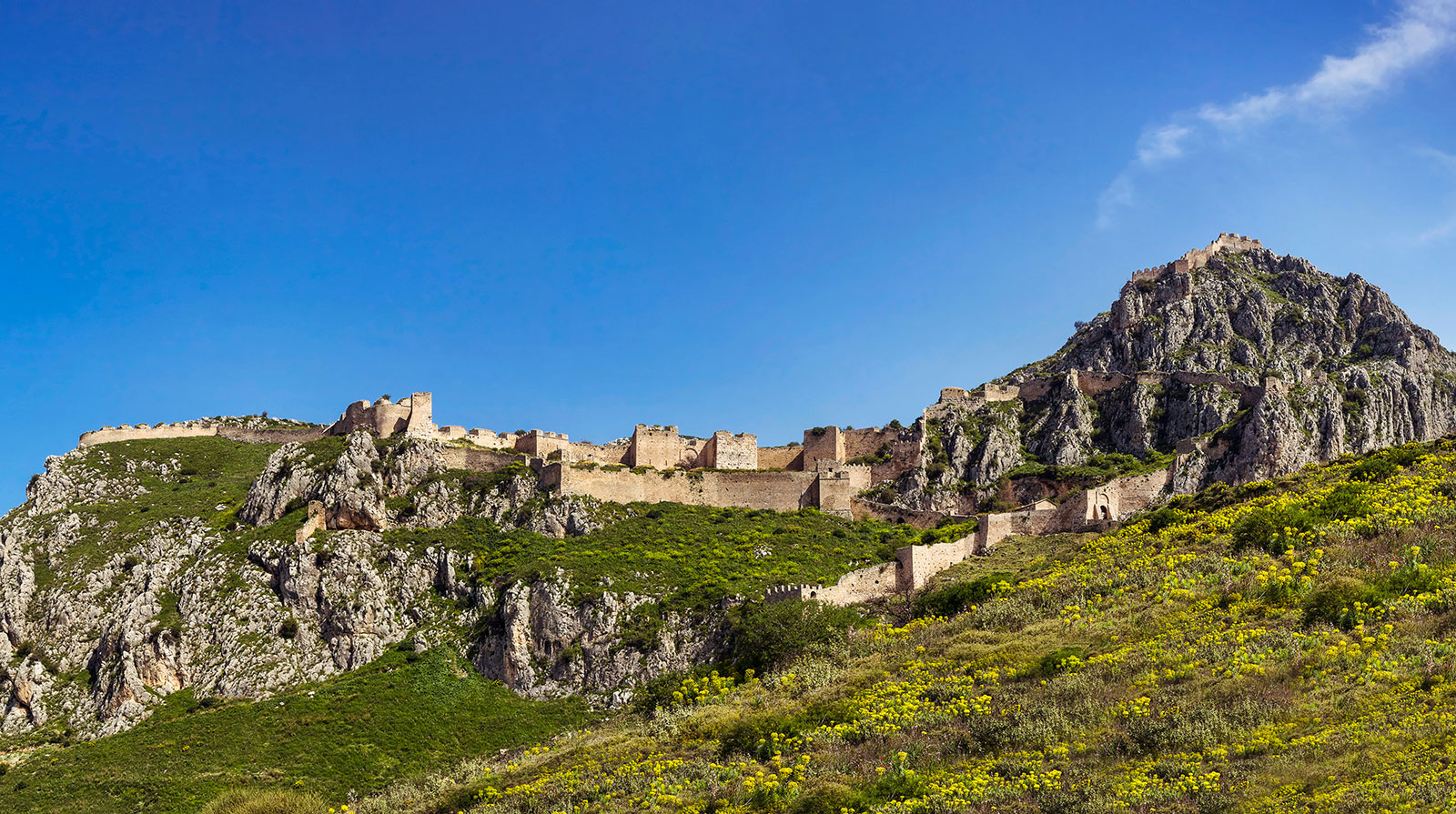
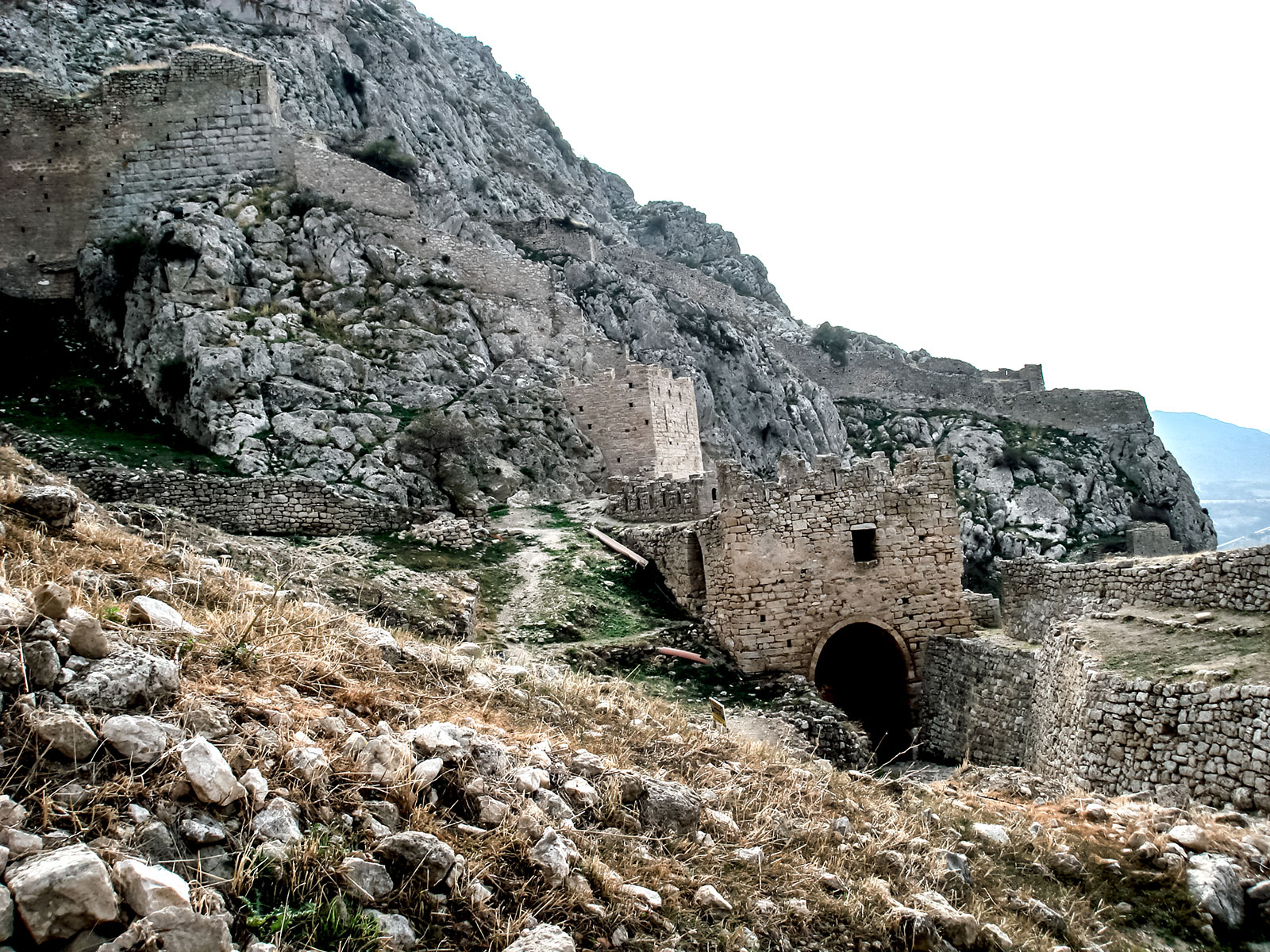
Acrocorinth is one of the largest castles in the Peloponnese, with a wall perimeter reaching 3 kilometers. Although its final form is due to repairs and additions made during the Ottoman period, most of the fortification work was carried out during the Byzantine era, particularly in the 12th century.
The Byzantine fortifications followed the layout of the ancient walls at the edge of the rock and incorporated sections that are still visible today.
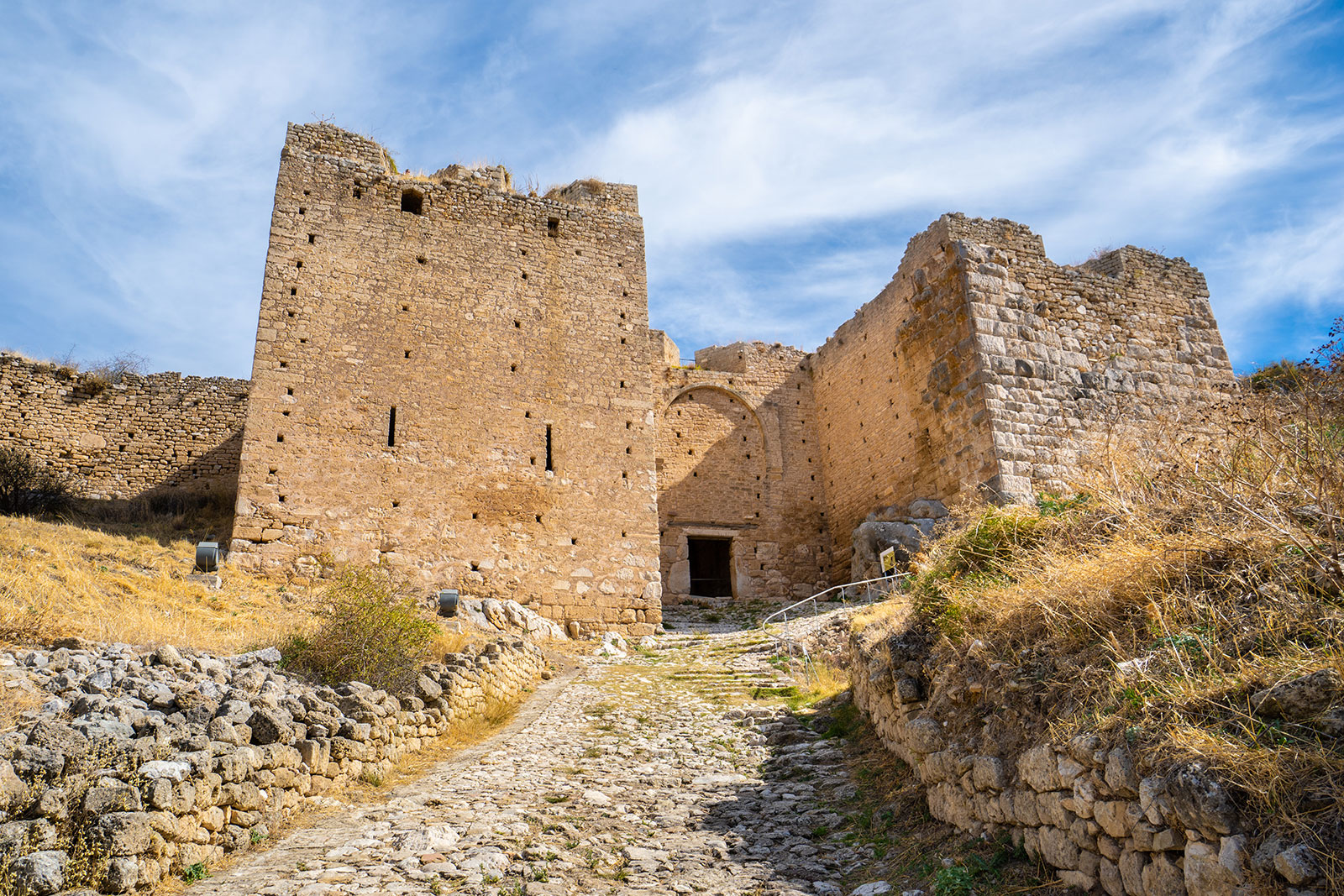
On the western side of the hill, which was the most vulnerable and served as the main entrance, an outer enclosure was added. In this area, the inner enclosure was formed in a semicircular shape, with two strong bastions at each end, in line with the ancient design, and six towers in between—two smaller ones and four more powerful ones. The two central towers protected the imposing gate of the inner line. There were also independent strong towers within the castle, at the southwest and northeast peaks of the hill.
Further phases of repair and addition to the walls took place under the Frankish conquerors after they took the city in 1210, such as the reconstruction of the southwestern tower. In the first half of the 15th century, a new phase of fortification (the first line of defense) was added to the western slope of the hill. With this new addition, the outer Byzantine enclosure was transformed into the intermediate line of defense (the second line).
During the post-Byzantine era, under Ottoman rule, repairs were made to sections of the castle, and modifications were made to modernize the fortifications in line with the new military technology of firearms. These interventions are visible in various parts of the castle, such as the strengthening of the second line of defense, the addition of cannon and rifle ports in the walls, and the conversion of the towers’ domes into artillery platforms within the inner enclosure (the third line of defense).
In the first Ottoman period (1458–1687), the tower at the southwest peak of the hill took its current form with the addition of two enclosures to create an acropolis. During the Venetian period (1687–1715), further modifications were made to the gates of the first and second lines of defense, and a moat and barricade were constructed outside the western walls.