Archaeological Site of Mycenae
Walking in the Footsteps of Myth!
The land of the Peloponnese hosts one of the most significant civilizations that flourished under the Greek sun: the Mycenaean civilization.
Mycenae – The City of the Legendary Agamemnon
Homer and ancient Greek tragedy preserved names and memories that have become ingrained in the collective unconscious of humanity. Agamemnon and Menelaus, Danae and Perseus, Atreus and Pelops, all appear as the forebears of Europe. The birthplace of all these figures is the golden Mycenae. The earliest archaeological remnants suggest that the Mycenaean area was inhabited as early as the 7th millennium BCE, during prehistoric times.
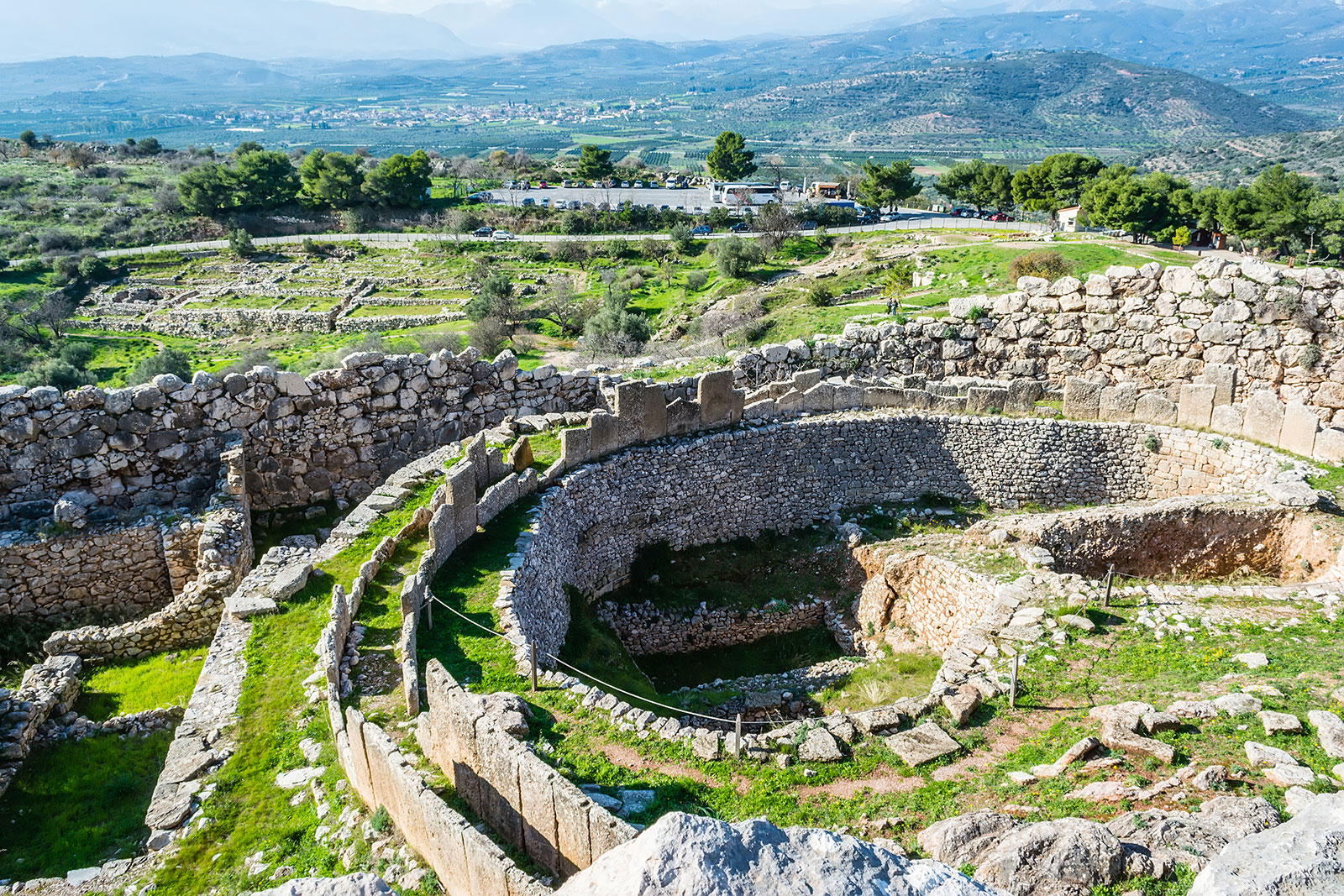
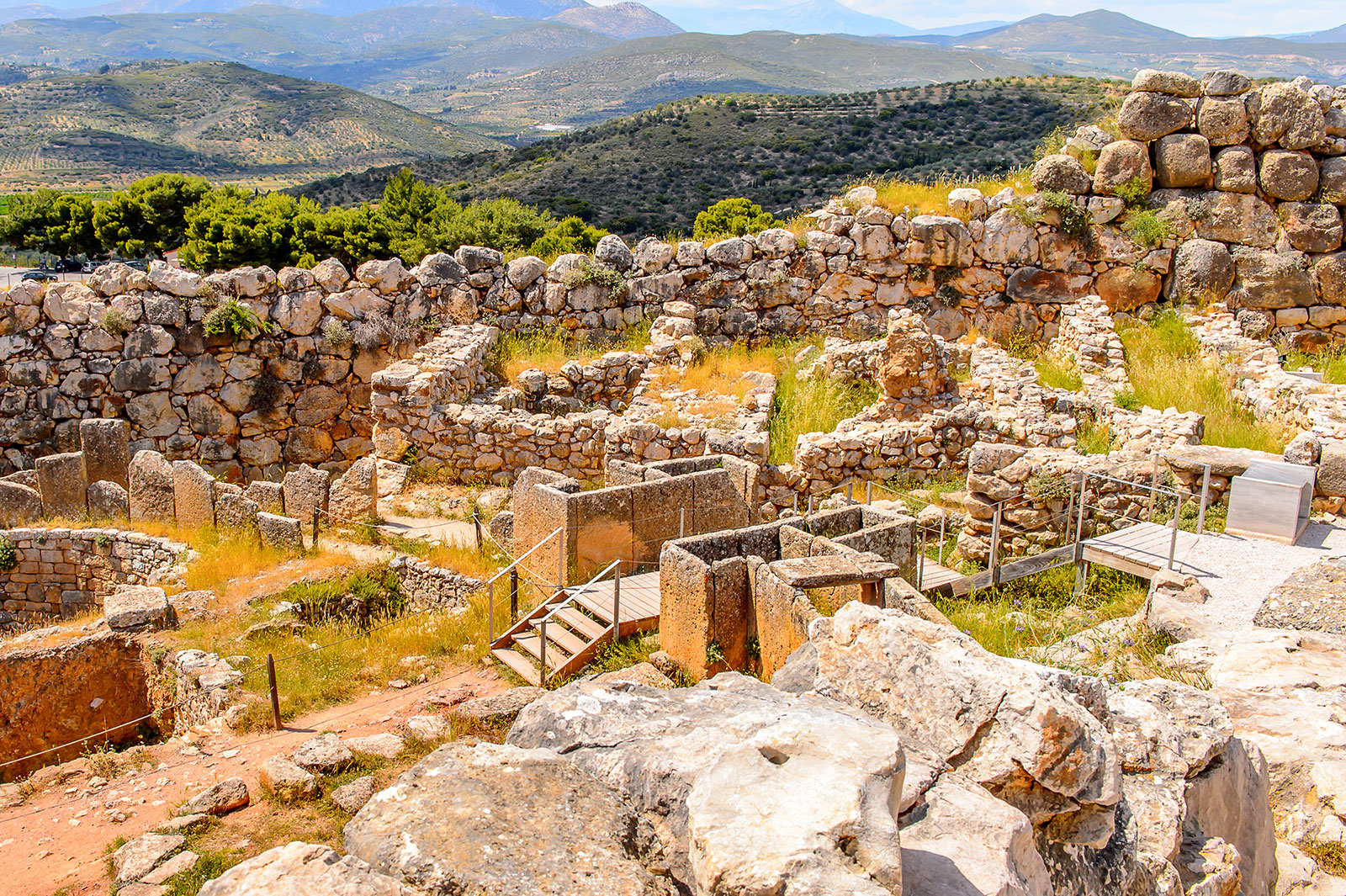
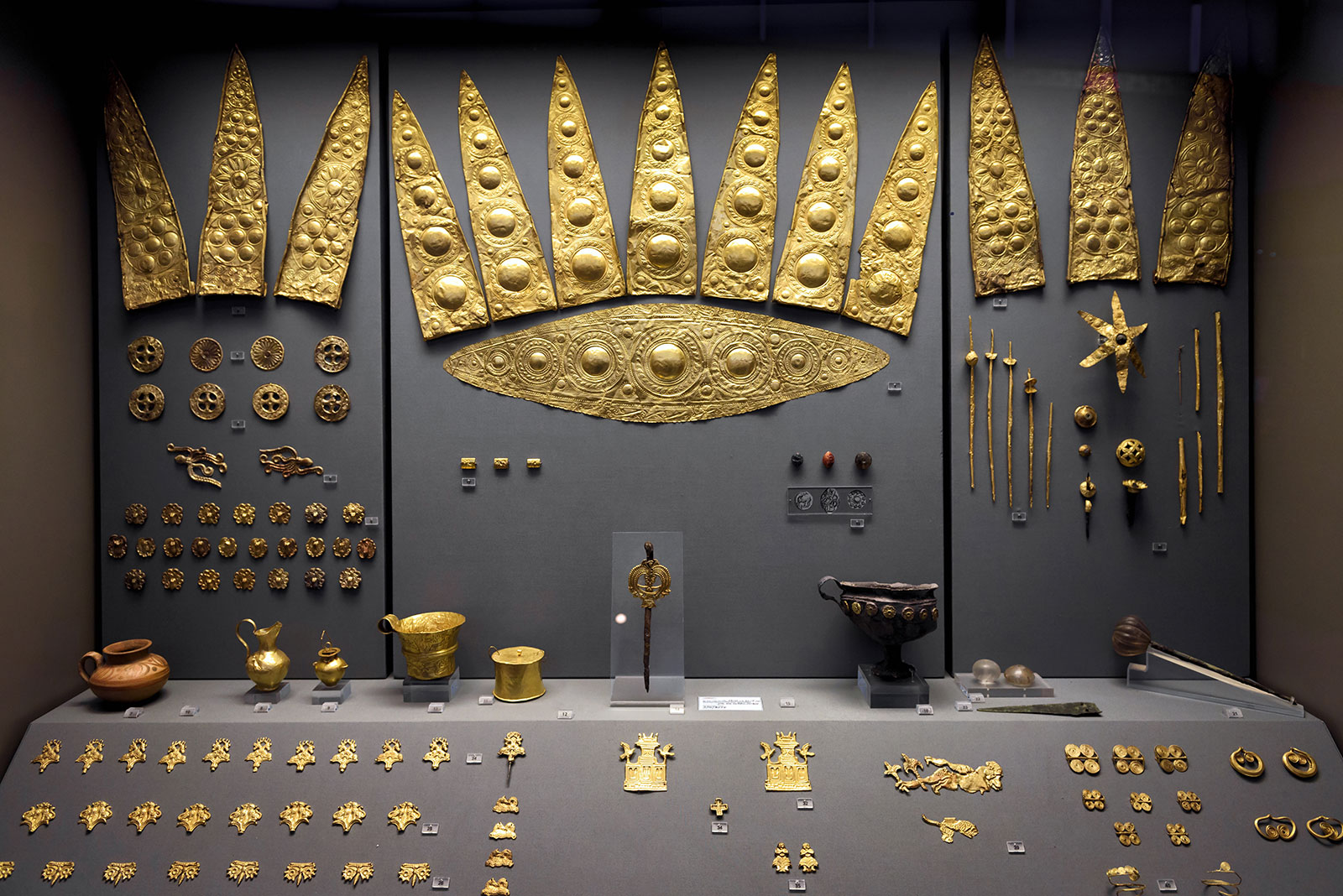
With its fortified and dominant position between the conical and serene hills of Prophet Elias and Sara, and abundant water, Mycenae became an ideal place for settlement and protection. The great prosperity of Mycenae, with its grand architecture, written monuments, and refined culture, reached its peak during the Late Bronze Age, between 1350 and 1200 BCE. The first chieftain tribes appeared as early as 1700 BCE, marking a distant historical depth. It is during this period that the first monumental tombs were constructed.
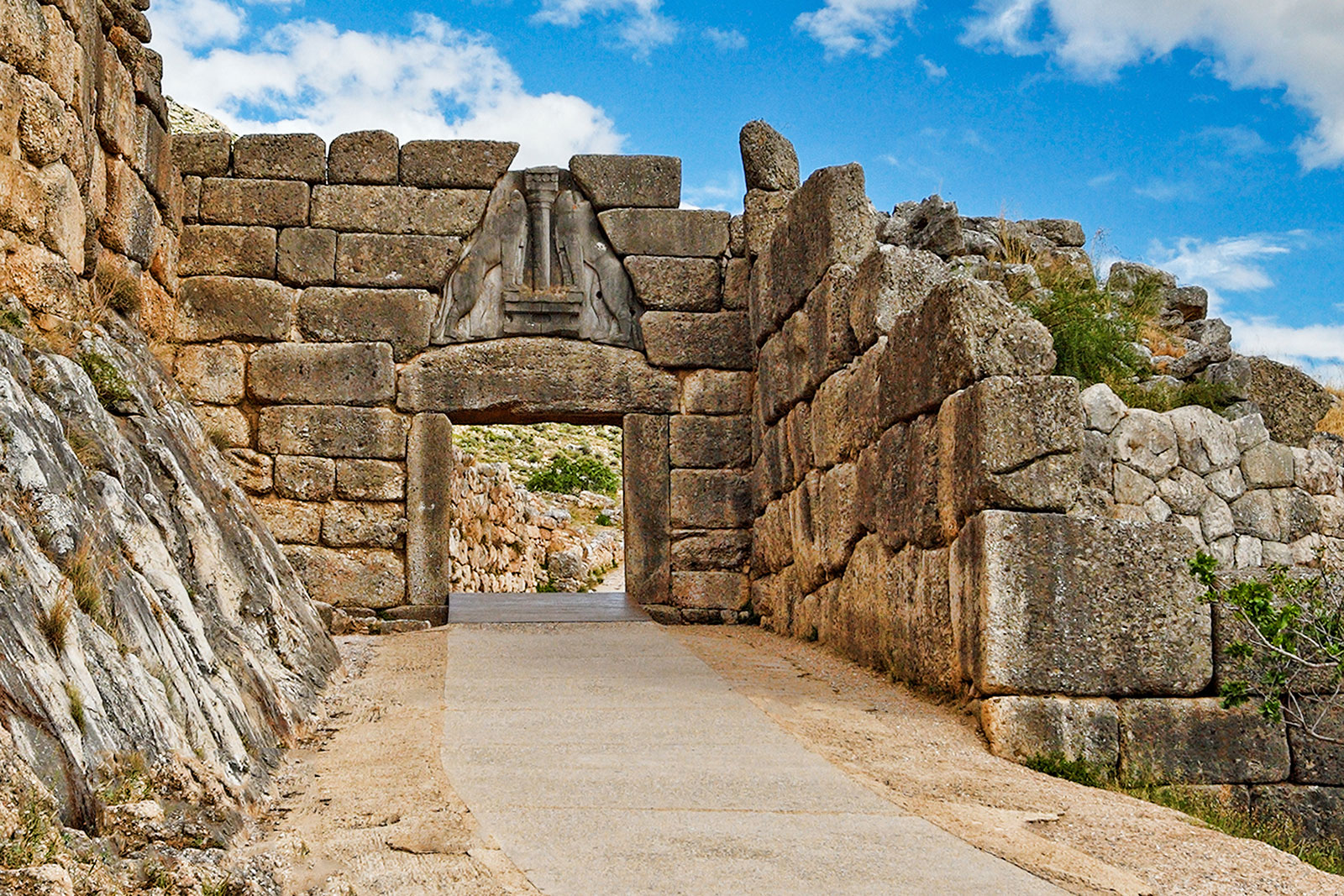
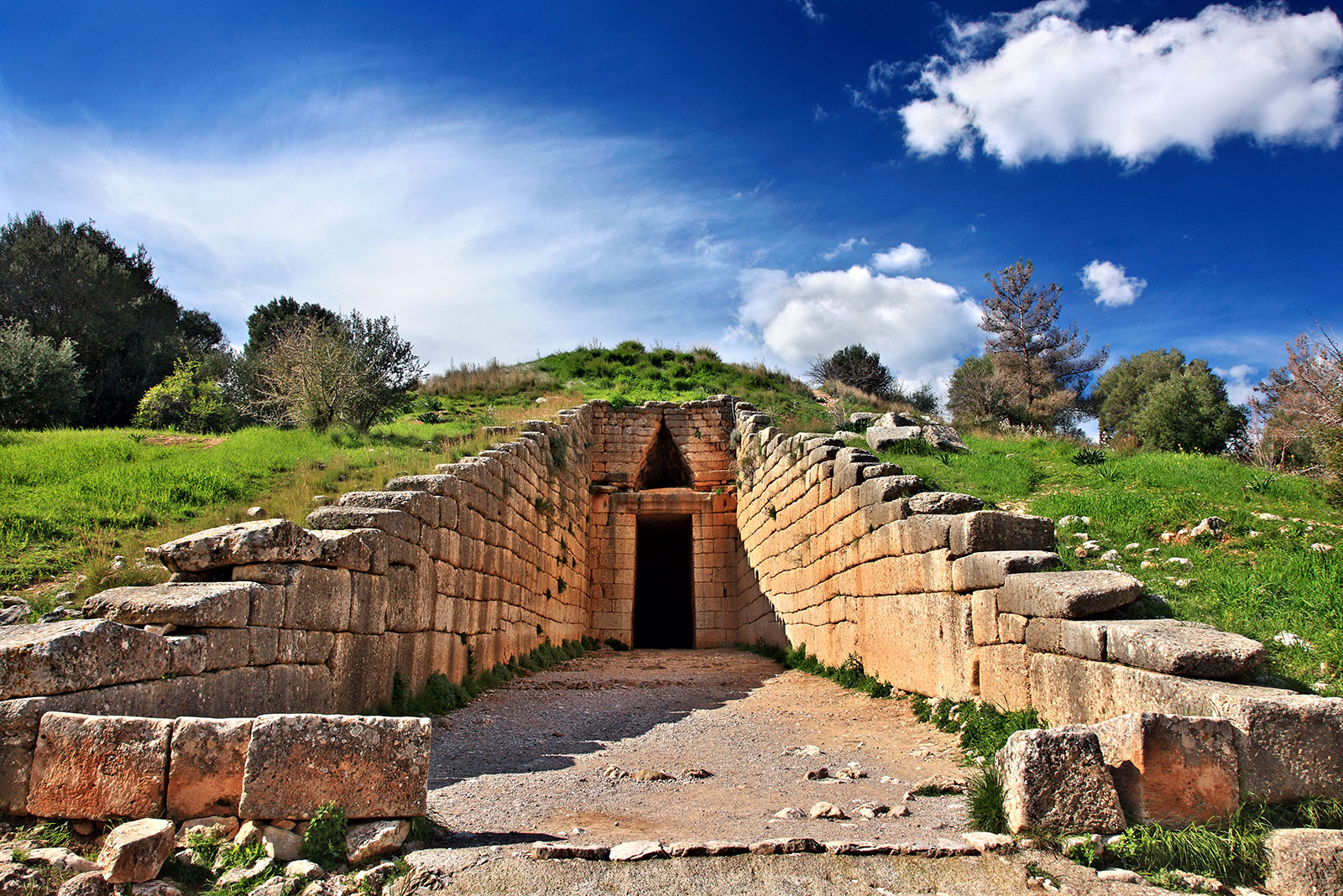
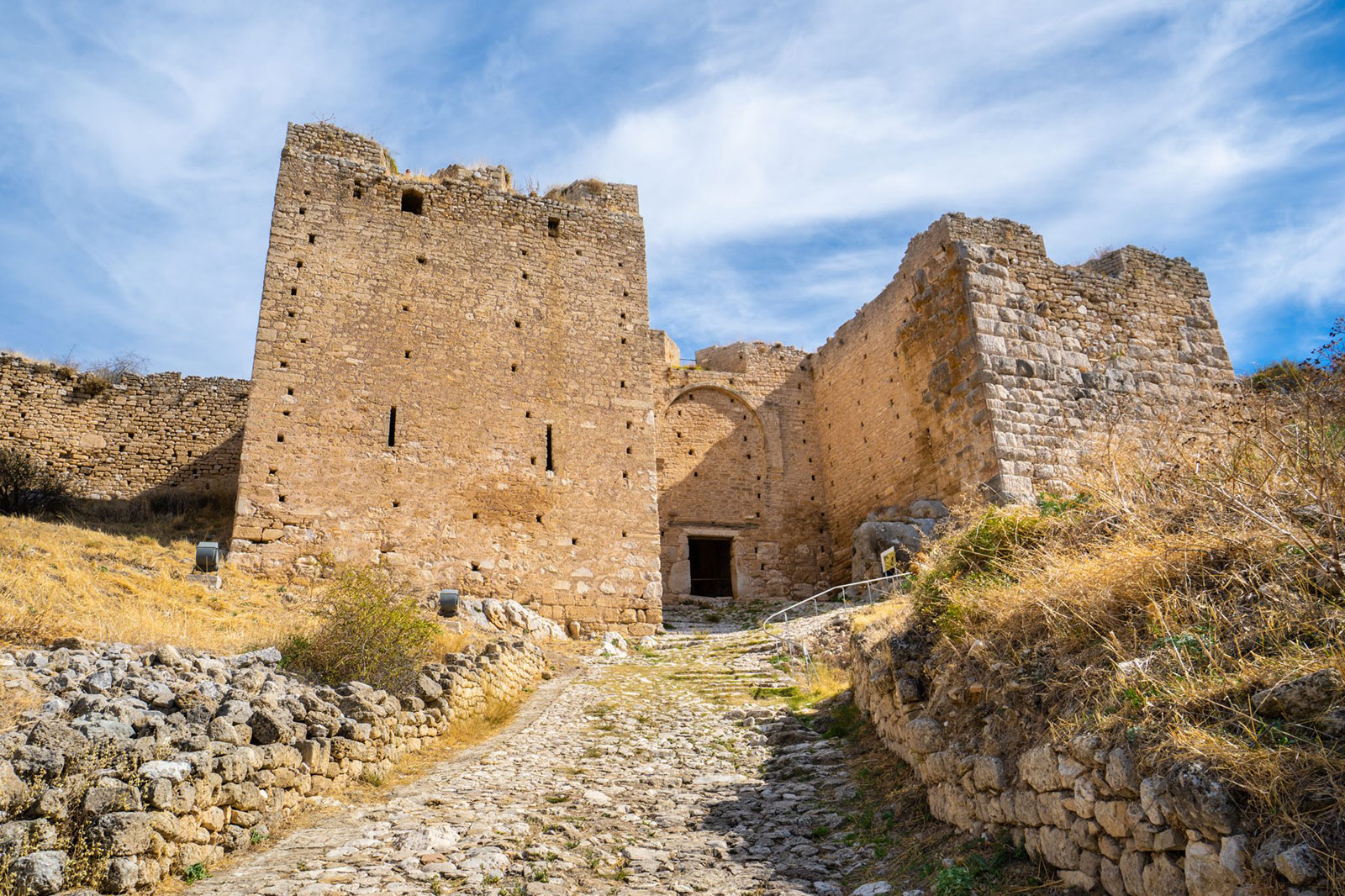
From that point, the development of the city accelerated rapidly. Palace complexes, Cyclopean walls that still inspire awe today, the famous “Treasury” or “Tomb” of Atreus, the enormous lintels, fountains, and bastions formed one of the most significant architectural complexes known to the ancient world.
Mycenae began to decline around 1100 BCE, possibly due to repeated destruction from earthquakes and fires. However, it had already risen to the status of a true empire, leaving an indelible mark not only on Greek history but on world history as well.
Mycenae is located 140 kilometers from Athens and 24 kilometers from Nafplio.